Narrow Console Table: The Row That Is Not Called Depth
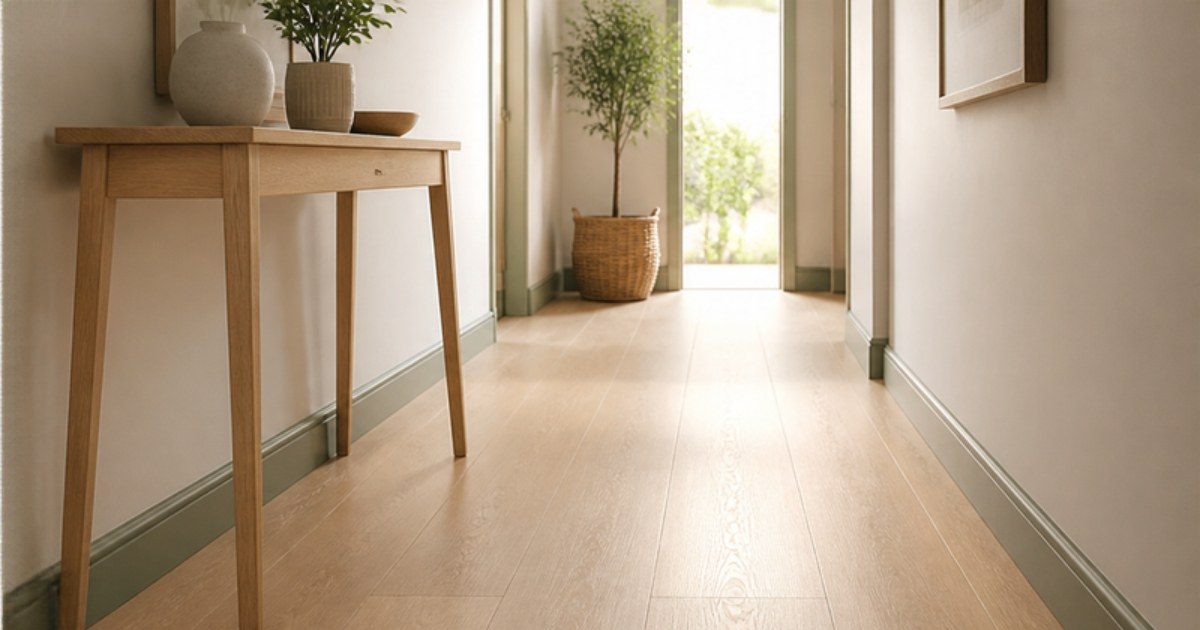
A narrow console table is decided by how far it sticks out from the wall, and on the two IKEA pages I read that figure is not called Depth.
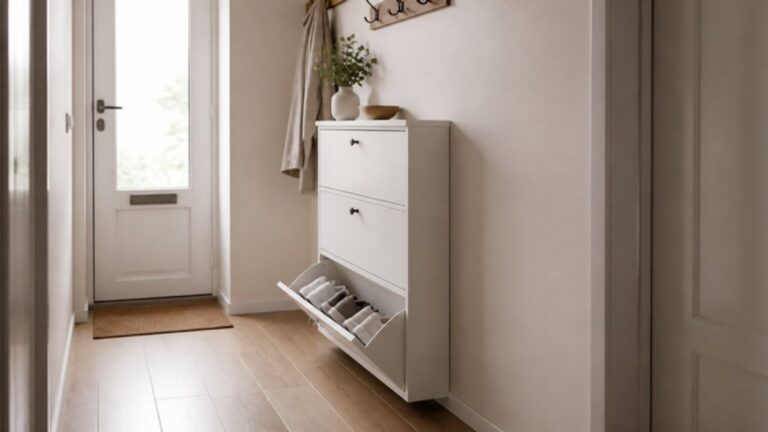
It is published under the label Width, and it reads 13 3/4 ” on the HAVSTA and 15 ” on the LISTERBY. On a table, Width sounds like the long side. Here it is the short one, and it is the one that decides whether your hallway still works.
- 13 3/4 “How far the HAVSTA comes out at you, printed under Width
- 15 “The same row on the LISTERBY console table, 505.622.48
- 44 lbMax. load on both pages, the figure for the table top
- 22 lbMax load/shelf on both pages, the row printed against the shelf
Both pages publish two load figures in Measurements, and people read the big one. Max. load reads 44 lb, and the Good to know section on both puts the same figure in a sentence: “Max load on table top: 44 lbs.” In that same Measurements section, both pages also print Max load/shelf 22 lb. That is the row printed against the shelf, the one where the basket of shoes ends up. So a lamp on top and something heavy below are answered by two different published rows.
On fixing the table to the wall, I have an absence rather than an instruction. In the Measurements, Good to know and Care sections of both pages I read, I found no sentence about fixing the table to the wall. The Care section on both pages does carry this line, which is a different thing: “Check regularly that all assembly fastenings are properly tightened and retighten when necessary.” Furniture and televisions tipping over is the subject of Anchor It, a public campaign from the Consumer Product Safety Commission, and its pages are where to read what they publish on anchoring rather than take my word for it. Your own listing and the instructions in the box are the other place to look.
The depth you can give up where you walk. Page 2 of the free Entryway Fit Planner is exactly this measurement: how much of your passage you can hand over before it stops working. Take it before you open a single listing. Five printable pages. Get the free planner
📏 Find out what the hallway has left once the table is against the wall Two numbers in, two more if you have them. And the tool names the row to read, because it is not the one you would look for. Try it ↓What a narrow console table publishes about its depth
13 3/4 “
That is the HAVSTA, and the LISTERBY publishes 15 ” under the same label. Length is the span along the wall, 39 3/8 ” on the HAVSTA. Width is how far it comes out at you. And in a hallway, the one that decides everything is the second. Neither Measurements section carries a row called Depth.
Measure your hallway before you read any listing
Step 1
Your hall, wall to wall
Take it at the exact spot the table would stand, not at the widest part of the hall. That is the only figure in this that belongs to you.
Step 2
Find the front to back figure on the listing
Whatever that listing decides to call it. On both pages I read it sits under Width, in the Measurements section, and there is no Depth row to look for.
Step 3
Subtract, then walk it
Take the listing figure off your hall. Then put a tape on the floor at that distance from the wall and walk past it once, carrying something. The number tells you what is left. Walking tells you whether it is enough.
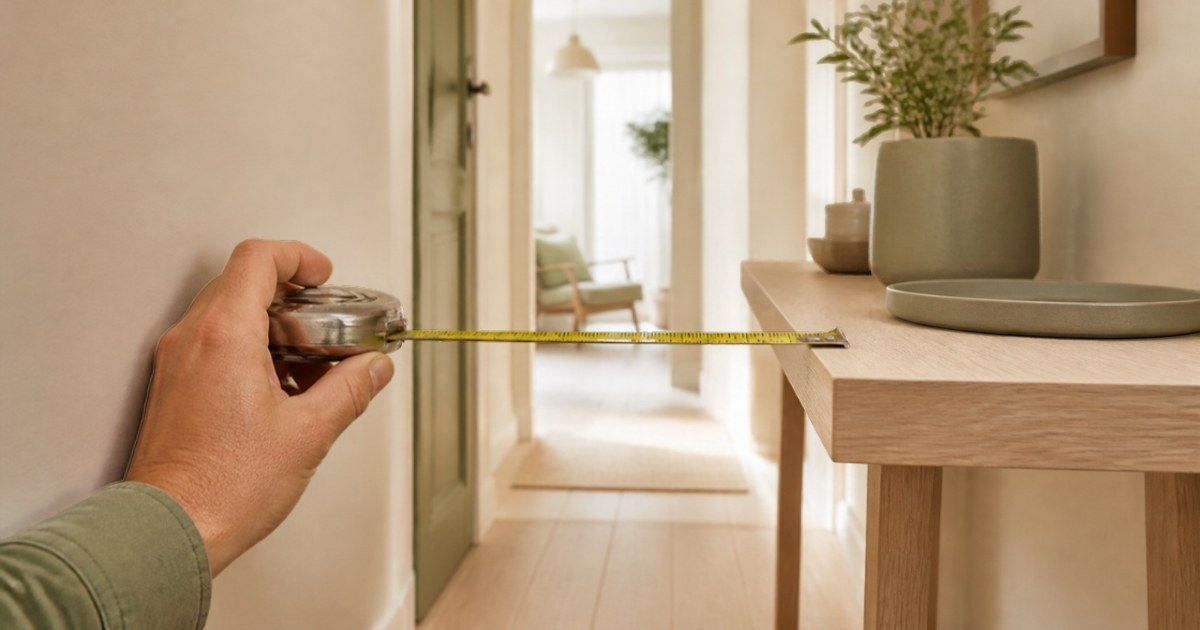
How much hallway is left once that table is in? Put your corridor and the figure on your listing into the tool further down, add the load if you have it, and it does the subtraction and names the row to read. Try it
What the two pages print, label for labelfive rows each, and the one that sounds wrong
Here is what the two pages print, label for label, in their Measurements sections.
| Label as IKEA prints it | HAVSTA console table | LISTERBY console table |
|---|---|---|
| Length | 39 3/8 “ | 36 1/4 “ |
| Width | 13 3/4 “ | 15 “ |
| Height | 24 3/4 “ | 28 “ |
| Max. load | 44 lb | 44 lb |
| Max load/shelf | 22 lb | 22 lb |
Read the second row again. On a table, Width sounds like the long side. Here it is the short one.
Length is the span along the wall. Width is how far it comes out at you. And in a hallway, the one that decides everything is the second.
Neither Measurements section carries a row called Depth.
Why that one label costs people a deliverythe mistake, step by step
Picture the mistake. You have a hallway, you want something by the door, and you check the width because width is the thing you worry about in a corridor.
You read 13 3/4 ” and think, that is slim, that will not block anything. But 13 3/4 ” is not the slim side. It is the part that comes out into the passage.
The span along the wall is 39 3/8 “, which is the figure you were picturing.
Take your own hallway first, wall to wall, at the exact spot the table would stand. Then take the listing figure off it, whatever that listing decides to call it.
Both pages publish two load figures44 lb and 22 lb, and which is which
Both pages publish two load figures, and people read the big one.
In the Measurements section of both pages, Max. load reads 44 lb. The Good to know section on both puts the same figure in a sentence: Max load on table top: 44 lbs.
In that same Measurements section, both pages also print Max load/shelf 22 lb. That is the row printed against the shelf, the one where the basket of shoes ends up.
So a lamp on top and something heavy below are answered by two different published rows, and the page prints 22 lb against the shelf rather than the 44 lb it prints against the table top.
What I could not verifyfour things, including a buyer who disputes the figure
Four things, said plainly.
In the Measurements, Good to know and Care sections of both pages I read, I found no sentence about fixing the table to the wall. The Care section on both pages does carry this line, which is a different thing: Check regularly that all assembly fastenings are properly tightened and retighten when necessary. Furniture and televisions tipping over is the subject of Anchor It, a public campaign from the Consumer Product Safety Commission, and its pages are where to read what they publish on anchoring rather than take my word for it.
The arithmetic on this page is your hall minus the table and nothing else. It does not include a coat on a hook, a bag on the floor, or anyone coming the other way.
And one buyer on the LISTERBY page disputes the figure itself. In the Reviews section, a reviewer called Jen writes that she specifically bought it because it was supposed to be 15 inches deep, and then: It’s not, it’s 12. That is a buyer report, not a specification, and I am not going to tell you which of the two is right.
But look at the word she uses. IKEA prints that figure under the label Width. Jen calls it depth, because depth is what she was shopping for. She got to the right figure in spite of the label, and her quarrel is with the object rather than with the page.
Which is the argument for putting your own tape on the thing rather than trusting any single number, mine included.
And both of these are IKEA. Two pages from one maker is not the market. Your own listing may well print a row called Depth. Read the label it gives you rather than the one you expect.
Frequently asked questionsdepth, weight, and whether it needs fixing to the wall
How deep is a narrow console table?
On the two IKEA pages I read, the front to back figure is 13 3/4 ” on the HAVSTA console table and 15 ” on the LISTERBY console table, 505.622.48. Both publish it in their Measurements section under the label Width, not Depth, and neither Measurements section carries a row called Depth. Measure your own hallway wall to wall at the spot the table would stand, then take the listing figure off it. On the LISTERBY page, a reviewer called Jen writes in the Reviews section that it is not 15 but 12, which is a buyer report rather than a specification, and a reason to take your own tape to the piece.
How much weight can a console table hold?
Read both figures, because there are two. On both IKEA pages I read, Measurements publishes Max. load 44 lb and Max load/shelf 22 lb, and the Good to know section puts the first one in a sentence: Max load on table top: 44 lbs. The second row is the one printed against the shelf. If your own listing publishes no load figure at all, that is the question to put to the seller in writing before you order.
Does a console table need to be fixed to the wall?
In the Measurements, Good to know and Care sections of the two pages I read, I found no sentence about fixing the table to the wall, so I am not going to tell you one way or the other. Furniture and televisions tipping over is the subject of Anchor It, a public campaign from the Consumer Product Safety Commission, and its pages are where to read what they publish on anchoring. Your own listing and the instructions in the box are the other place to look.
Our guide to entryway shoe storage runs the same check on two shoe cabinets, where the depth is published under the label you would expect. Our mudroom storage solutions guide has the tape test for deciding what a passage can give up.
How much hallway is left once that table is in?
Your corridor against the figure on the listing, plus what it is rated to carry.
Measured at the spot where the table would stand, not at the widest part of the hall.
Whatever the page calls it. On both pages we read it is labelled Width in Measurements, and neither Measurements section has a Depth row.
Weigh it. A stack of books and a lamp add up faster than you would think. Optional.
Leave empty if your page does not publish one.
The figures this tool compares yours against are IKEA’s, in the Measurements section of the HAVSTA console table and the LISTERBY console table, 505.622.48, the two pages we read in full for this article. Both publish Max. load 44 lb and Max load/shelf 22 lb. Neither of those Measurements sections publishes a row called Depth. On the LISTERBY page a reviewer disputes the 15 in figure in the Reviews section, which is a buyer report rather than a specification. The figures you type are whatever your own listing prints. Nothing you type leaves your browser.
Taking the tape to the hallway this weekend?
The Entryway Fit Planner gives you a box for the passage you can give up, the wall run you have, and what piles up by that door. Fill it in before you shop.
Saved in this browser, on this device. No account, nothing sent to us, and it goes if you clear your browsing data. See what you saved