
Home / Best-of guides
Best-of guides
The best organizers for your space, compared side by side
Here is how we compare the best home organizers for the space you have: who each one is for, where it falls short, and which one to pick.
When you buy through a link on Cozy & Tidy, we may earn a commission. It never changes the price you pay, and it never decides what we recommend. How it works
How we compare the best home organizers
A comparison is only useful if it tells you what will not work in your space. Ours start from the measurement that rules a product out, not from a star rating.
What we check on every product. The dimensions that decide whether it fits the opening you actually have. What the maker publishes about weight, and under what conditions that figure holds. What it costs against the thing it replaces.
What we do not do. We do not rank by how many reviews something has, and we do not call anything the best without saying who it is best for. A product that suits a deep cabinet is the wrong answer for a shallow one, however good it is.
Where the numbers come from. Manufacturer specifications and published planning guides, cited in each article. Where a figure is convention rather than a published specification, we say so in the text rather than presenting it as a measurement.
Each room guide already carries those measurements. Start with the closet or the kitchen, where the numbers that decide the fit are set out in full. Our editorial policy sets out where every figure comes from and what we do when we cannot find one.
The measurement that rules a product out, by category
Every category of organizer has one measurement that decides the whole purchase. Get it before you shop and most of the returns disappear. This is the list we work from.
Drawer organizers. The inside depth of the drawer, measured from the base to the underside of whatever is above it. A tray that is taller than that clearance stops the drawer closing, and it will seem to fit perfectly until you push the drawer shut.
Shelf bins and baskets. The shelf depth, and then the usable depth once the door is closed. A bin that matches the shelf exactly but sits proud of the frame is a bin that lives on the counter.
Stackable storage bins. The height of the opening they have to go through, not the height of the stack. Two stacked bins have to pass under the shelf above, and they have to come out again when the bottom one is full.
Over the door organizers. Door thickness, plus the gap between the top of the door and the frame. Both have to be in range or the hooks will not seat. On a bifold or a sliding door there is nothing for the hooks to go over, so the category is out.
Under bed storage. Floor to the underside of the bed frame rail, not to the mattress. Add the height of any casters to the bin, because wheels are part of what has to fit under there.
Hanging closet organizers. The drop from the rod to whatever is below it, usually a shelf or the next rod. The width is rarely the constraint; the drop usually is.
Shelving units. Not the unit, the route. Measure the narrowest point between the front door and the room it is going in, including the turn at the top of the stairs. A unit that fits the wall and not the hallway is a unit you assemble twice.
Lazy susans and turntables. The diameter of the clear circle, not the width of the cabinet. In a corner cabinet, the hinge and the door frame both cut into the circle the turntable has to turn inside.
Anything that mounts to a wall. What the wall is made of, before anything else. What is your wall actually made of, and what anchor does the mount call for? The weight rating printed on the mount’s own label assumes the anchor that label names, so read both before you drill.
Three things that make a product look better than it is
A high review count. It tells you how many people bought the product, which is mostly a measure of how long it has been listed and how much it is advertised. It does not tell you whether it fits your cabinet.
The phrase fits most. Where a product lists an actual minimum and maximum, you can hold it against your own measurement and get a yes or a no. Where all you are given is fits most, we have not found a range to check, so we treat it as unknown rather than as reassurance.
The photography. Organizers are photographed empty, in a cabinet built for the shot, holding four items in a room with nothing else in it. Look for the dimensions line instead, and if there is not one, treat that as the answer.
-
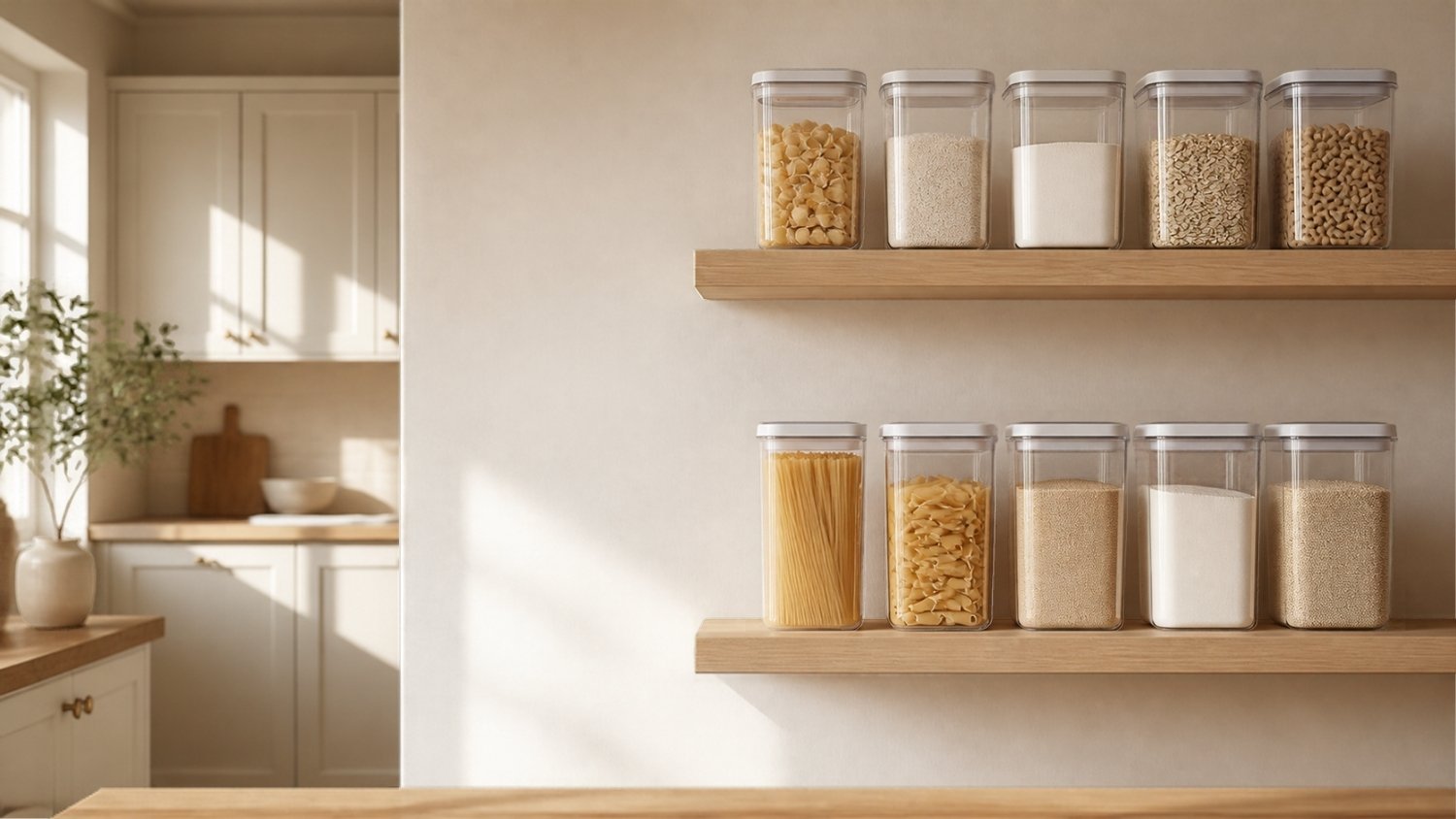
Food Storage Containers: What Decanting Actually Does, and What It Costs
Side-by-side table, pros and cons
-
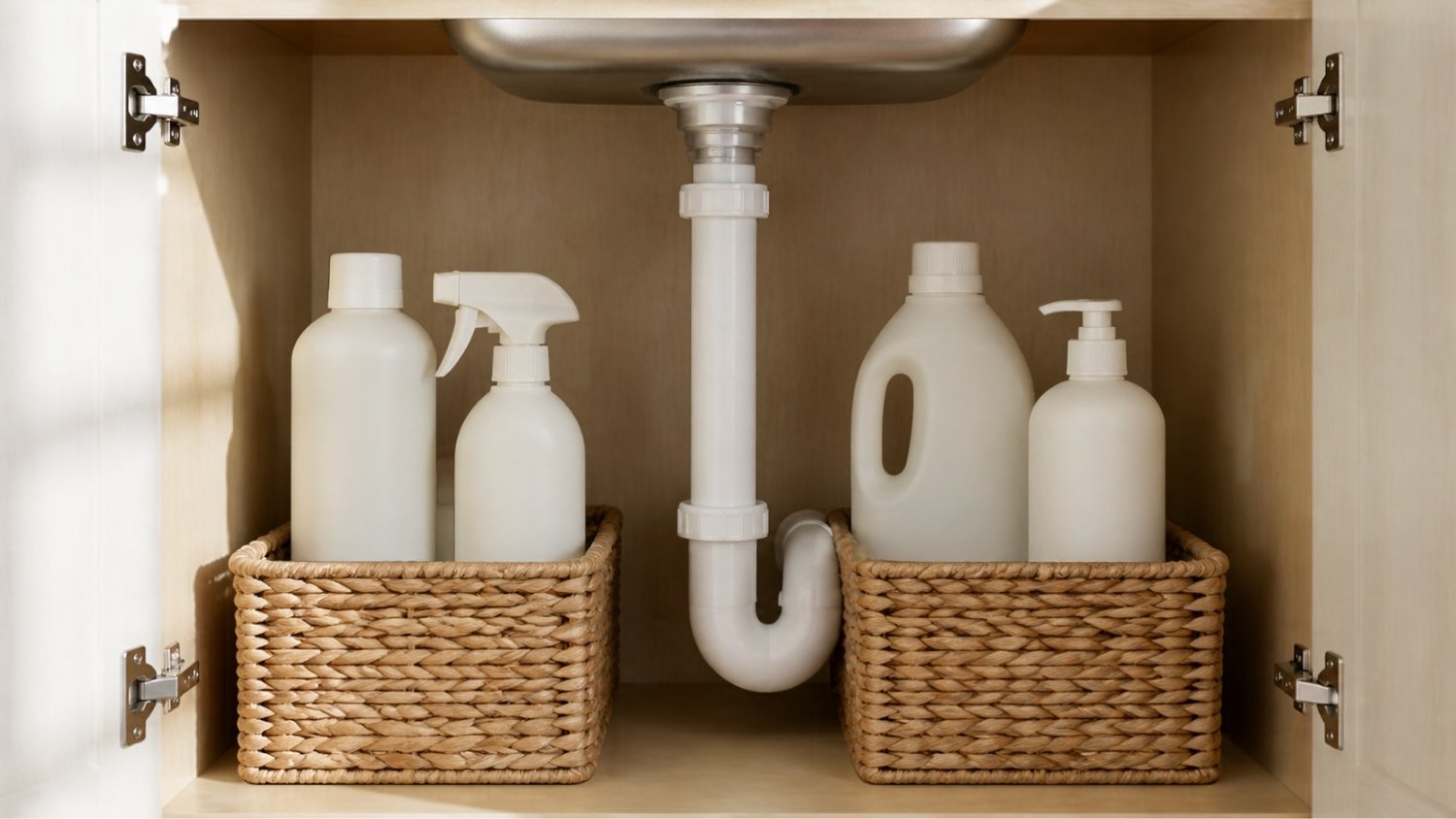
Under Sink Organization: What Belongs There and What the Plumbing Leaves You
Side-by-side table, pros and cons
-
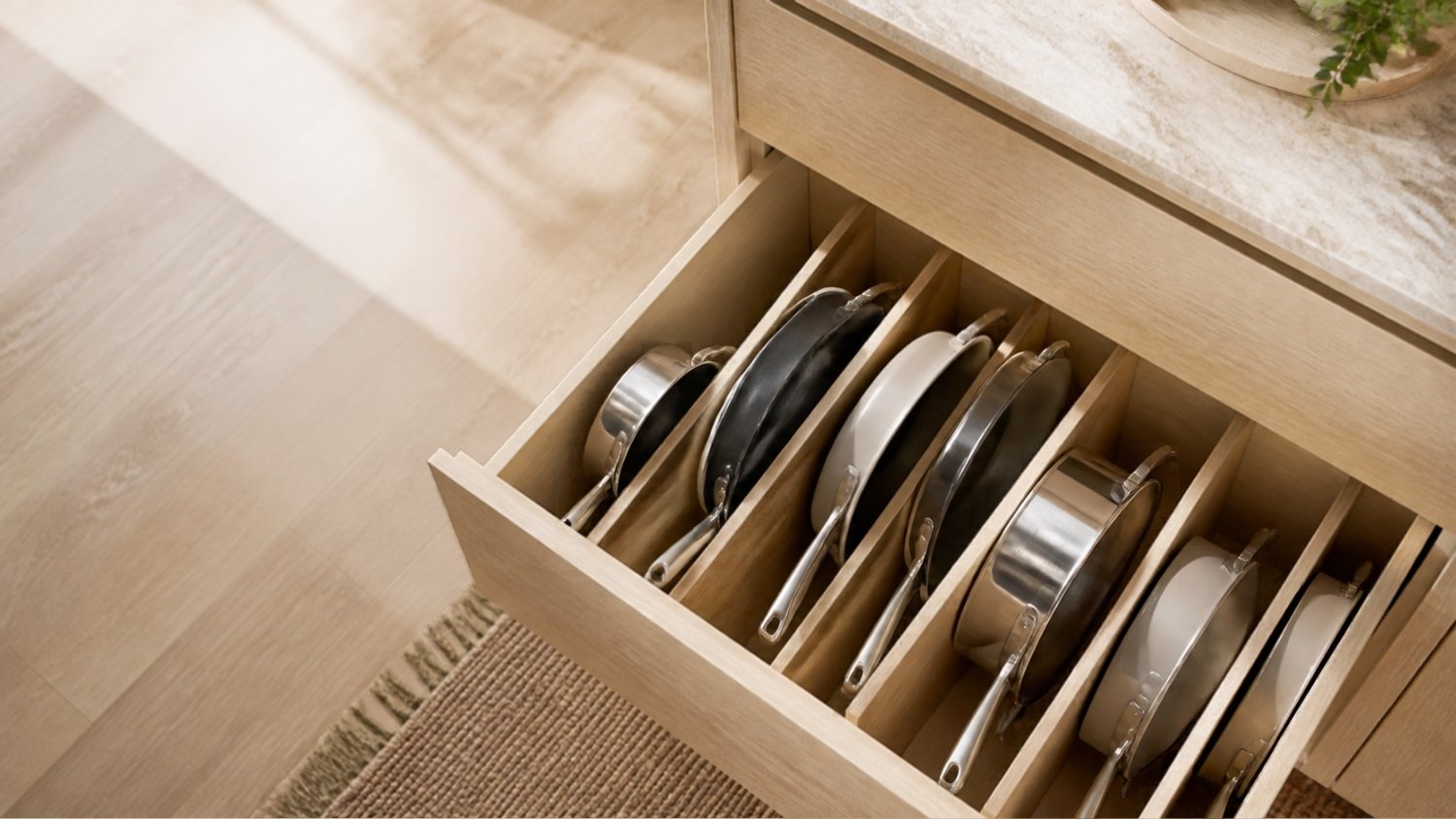
Pot and Pan Storage: Your 12 Inch Skillet Needs 20 Inches of Space
Side-by-side table, pros and cons
-
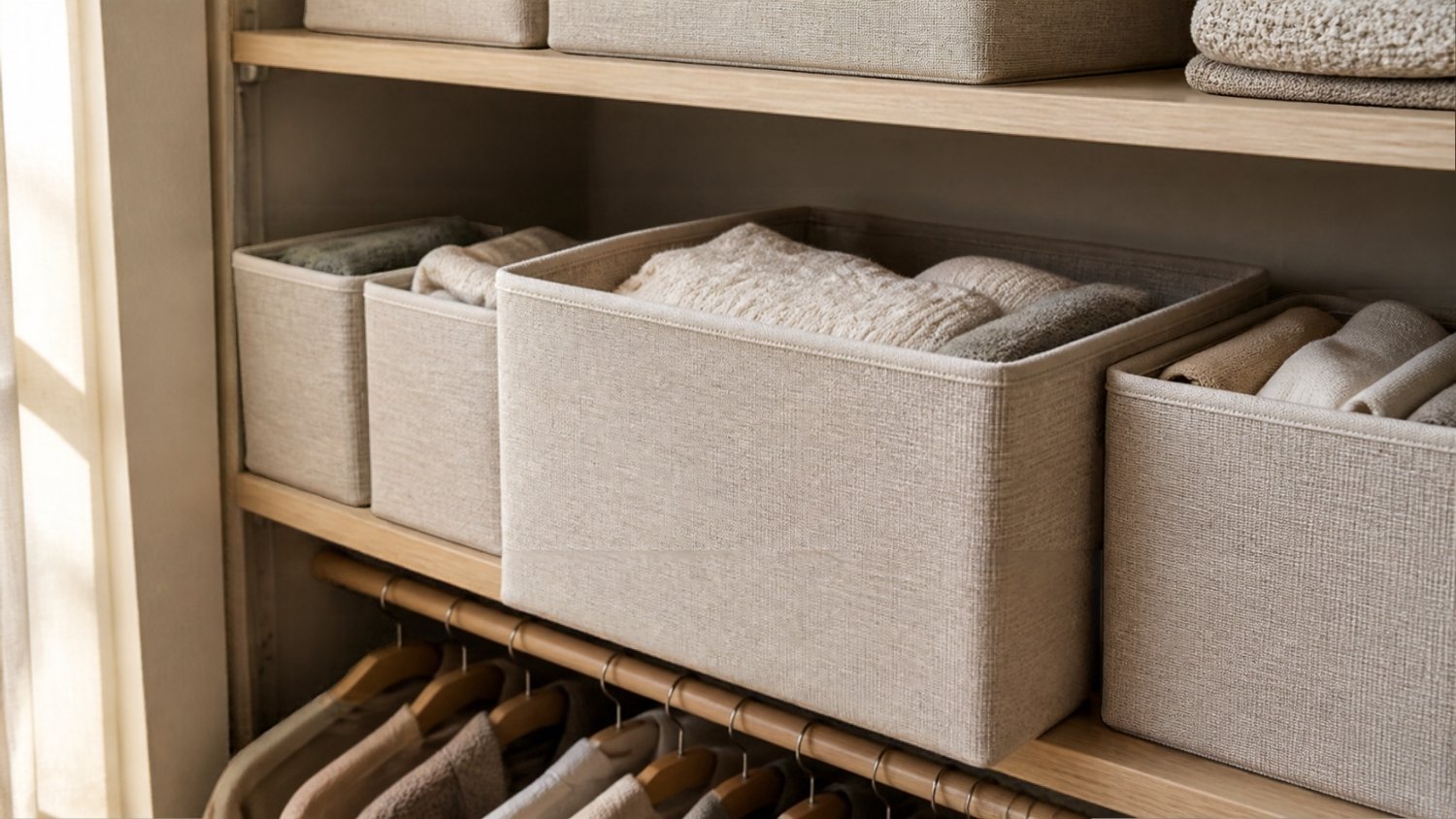
Closet Storage Bins and Baskets: The Sizes That Actually Fit
Side-by-side table, pros and cons
-
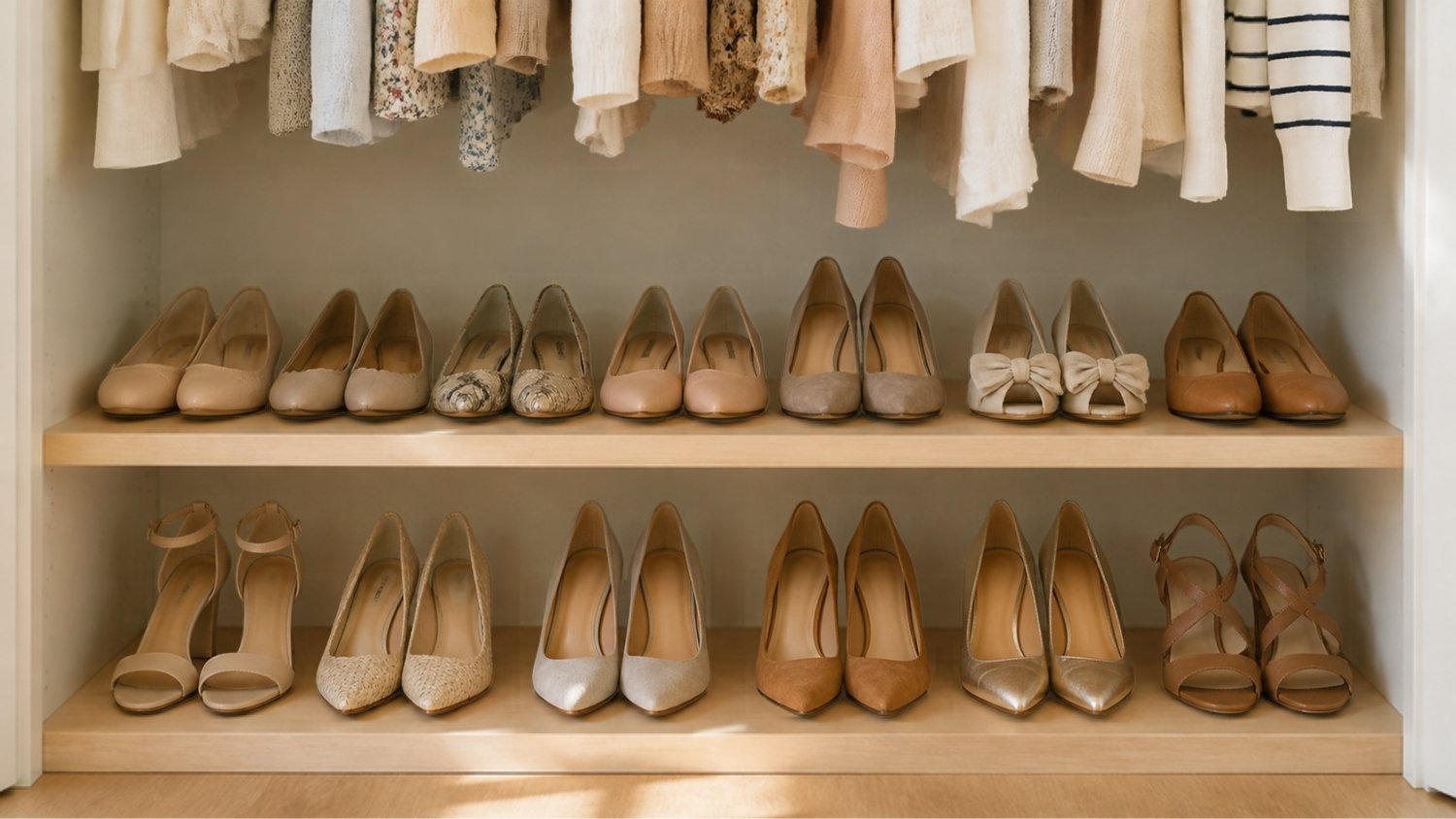
Closet Shoe Organizers: What Actually Fits, and What Ruins Your Shoes
Side-by-side table, pros and cons