
Home / Small Spaces
Room guide
Small space storage
Small space storage for apartments, rentals and tiny rooms: the space under the bed, what goes in front of the sofa, and what you can put up without losing your deposit.
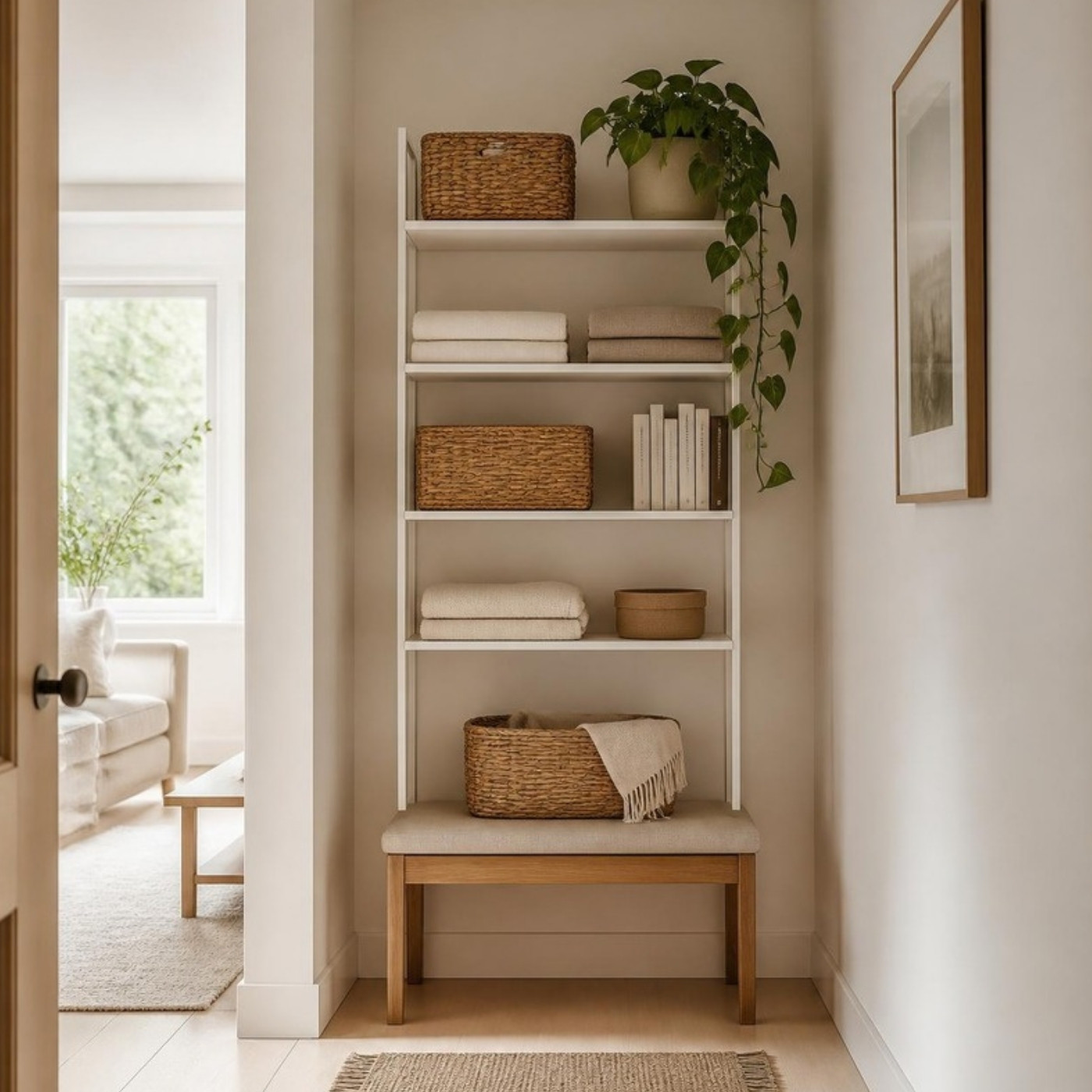
Check it fits before you order
Type in the measurement you took, and the tool tells you whether the thing on screen will go in.
- Under bed storageWill the box clear the lowest point?
- Beds with storage drawersWill the comforter lie down in there?
- Storage ottomanIs it lower than your sofa cushion?
- Narrow console tableWill it leave you a walkway?
- Garment rackIs your load under what the page rates it for?
- All the free tools13 calculators and 7 printable planners
Where the room actually is in a small home
Small space storage is rarely about what fits. It is about finding the room that is already there, in an apartment where every square foot is already doing a job.
There are three places, and they are the same in almost every small home: the entryway, the space under the bed, and everything above shoulder height. A fourth, the back of every door, costs nothing at all and is the one people forget.
In a rental there is one constraint on top of that, and it decides the method rather than the room: what you are allowed to fix to the wall, and what holds once it is up. A tall unit that holds real weight and comes out when you leave beats four light things stuck to the paint.
Below, each of those four in turn, with the one measurement that rules a product out before you spend anything.
Best-of guide
Our side-by-side comparisons start from the measurement that rules a product out, not from a star rating. How we compare
Free printables
Two planners for a small home
Start at the front door
The entryway now has a room guide of its own. Entryway organization takes the depth, the figure published per hook and the five guides in full. What follows is the short version, for a small home.
In a small home the entryway is where the mess starts, because shoes, bags and keys all arrive in the same few square feet and none of them have a place. Fix that one spot and the rest of the apartment gets noticeably calmer.
An entryway bench with storage is the piece that does the most work, because it does three jobs in one footprint: somewhere to sit while you take your shoes off, shoe storage underneath, and a surface on top for whatever comes out of your pockets.
Before you buy one, measure the width of the hall and subtract the depth of the bench. What is left is what you walk through, and a bench that leaves you edging past sideways makes the entry worse, not better. In a tight hall, drop the seat and keep the rest: a wall mounted shelf with hooks under it handles the bags, the keys and the surface, and takes no floor at all.
Shoes have three honest answers. An entryway shoe rack holds pairs flat and open, which is fastest but shows everything. A shoe cabinet hides them behind a door and takes the same floor. Mudroom cubbies assign one space per person, which is the version that does most to stop shoes drifting. Count the pairs that actually live by the door, not the pairs you own, and buy for that number plus a little.
Under the bed is the largest unused space you have
It is the size of your mattress, and almost nobody uses more than a corner of it. Two measurements decide what fits.
The first is the clearance, and it is the one people get wrong. Measure from the floor to the underside of the frame rail, not to the mattress. The rail is lower, and it is what the bin has to pass under.
The second is the center support. Look underneath before you shop, because many frames have a leg or two down the middle. Where there is one, you do not have a single clear space the width of the bed, you have two halves, each reached from its own side. Two under bed storage bins that each fit a half are the safe buy, and they are easier to pull out than one the width of the mattress.
Under bed storage with wheels is worth the extra only if you will pull it out regularly, and wheels add height, so subtract them from your clearance before you decide. On carpet, a flat fabric bag with a handle slides out more easily than a rigid bin on casters.
What belongs down there: out of season clothes, spare bedding, luggage, anything flat you touch a few times a year. What does not: anything you need weekly, because you will stop getting down on the floor for it by the second week.
What you can put up in a rental, sorted by what it holds
Renter friendly does not mean weak, it means reversible. Sort the options by load rather than by looks and the choice gets easy.
Tension rods hold things that hang, not things that sit. They need two surfaces facing each other, and they need those surfaces to be solid where the rod lands. Best answer inside a closet, a shower or a window recess. Worst answer across an open room.
Adhesive hooks and strips are for light things, and the published weight rating only holds on the surface the product is specified for. Check what that surface is, and test one in a corner before you commit a whole row, because on textured or freshly painted walls they can come away with the paint.
Over the door organizers are the one piece of free real estate in a rental. A door is not a wall, nothing gets drilled, and it comes down in a second. Measure the door thickness and check the gap at the top, since that is what stops the hooks seating.
Freestanding anything is the category that does not have to come down, and the one that holds serious weight without going into the wall. In a rental, one tall narrow shelving unit holds more than four small things stuck to the paint. Anything tall gets an anti-tip bracket, which is one screw and one hole you fill when you leave.
Up, not out
A small home is short of floor, not of air. Almost every real gain comes from using height: a unit that goes up toward the ceiling rather than spreading along the wall, stackable storage bins instead of a row of single ones, the shelf above the door frame that nobody ever installs.
The trade is reach. Everything above shoulder height is for things you take down rarely, and everything that needs a chair is for things you touch once a season. Decide which band each thing goes in before you buy the furniture, because a tall unit full of daily items is a tall unit you fight with.
Questions we get about small space storage
My apartment has no closet at all. Where do clothes go?
A freestanding clothes rack plus a chest of drawers covers it, and it is worth accepting that the rack will be visible. Hanging space on show looks better than a wardrobe you cannot close. If the room allows it, put the rack on the wall you see least from the door.
Is furniture with built in storage worth it?
When the storage is reachable without moving the furniture, yes. A bed with drawers in the base, a bench that lifts, an ottoman that opens. When you have to take the cushions off and lift a lid to get at it, you will only ever use it for things you store, not things you use.
What is the one thing to do first?
Give the things that come in and out every day a place within arm’s reach of the door. Keys, bag, shoes, mail. That is the pile that makes a small home feel full, and it is the cheapest one to fix.
Fixes by problem
Watch the fix
Sixty seconds, one spot, no music
Shop this look
Everything in this photo, with the figure that decides it
Each number on the photo is one product, with the measurement its own listing publishes.
-
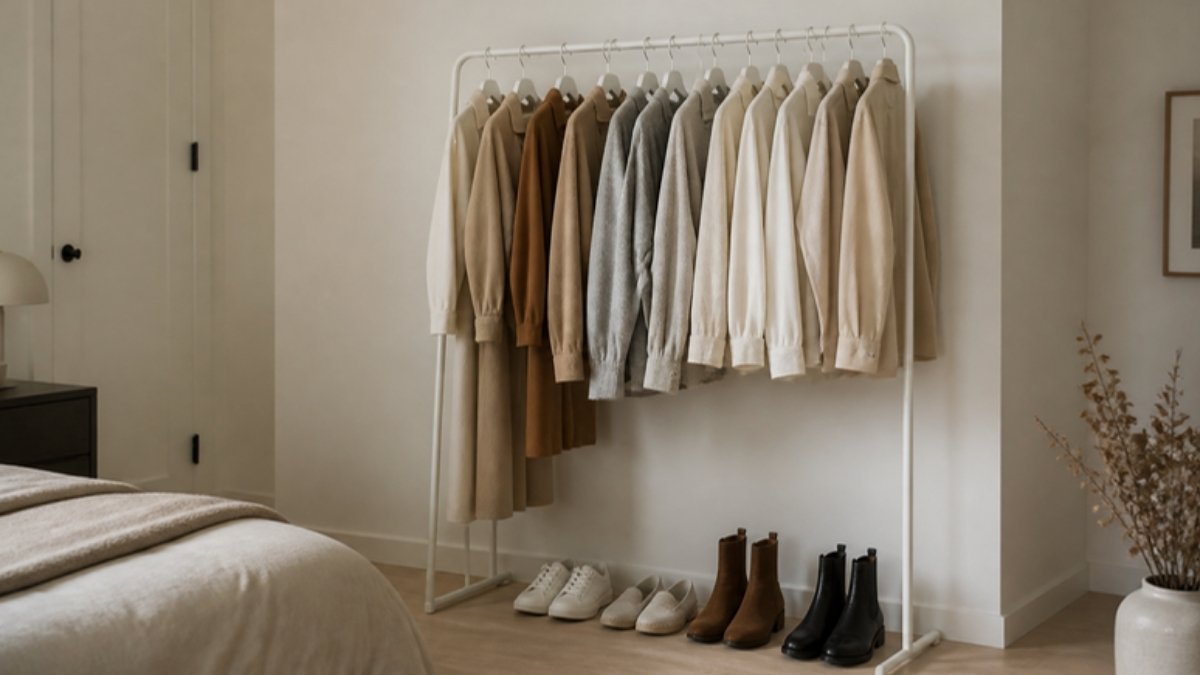
Garment Rack: Two IKEA Pages Publish 44 lb and 77 lb
Read the fix →
-
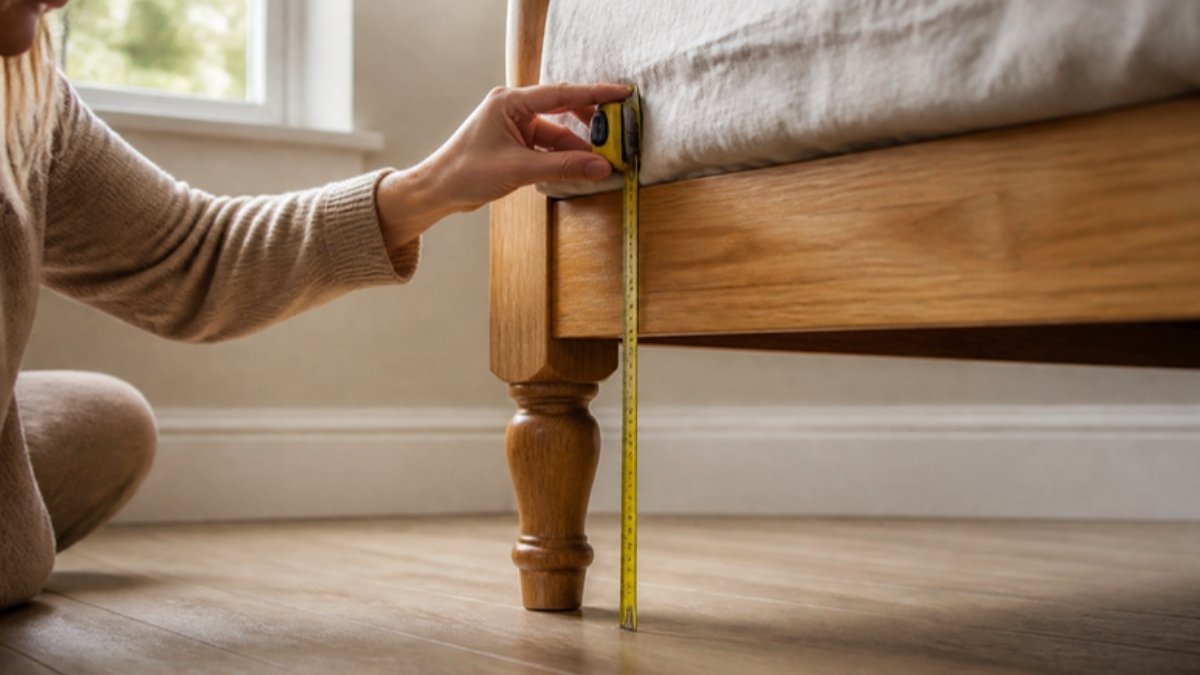
-
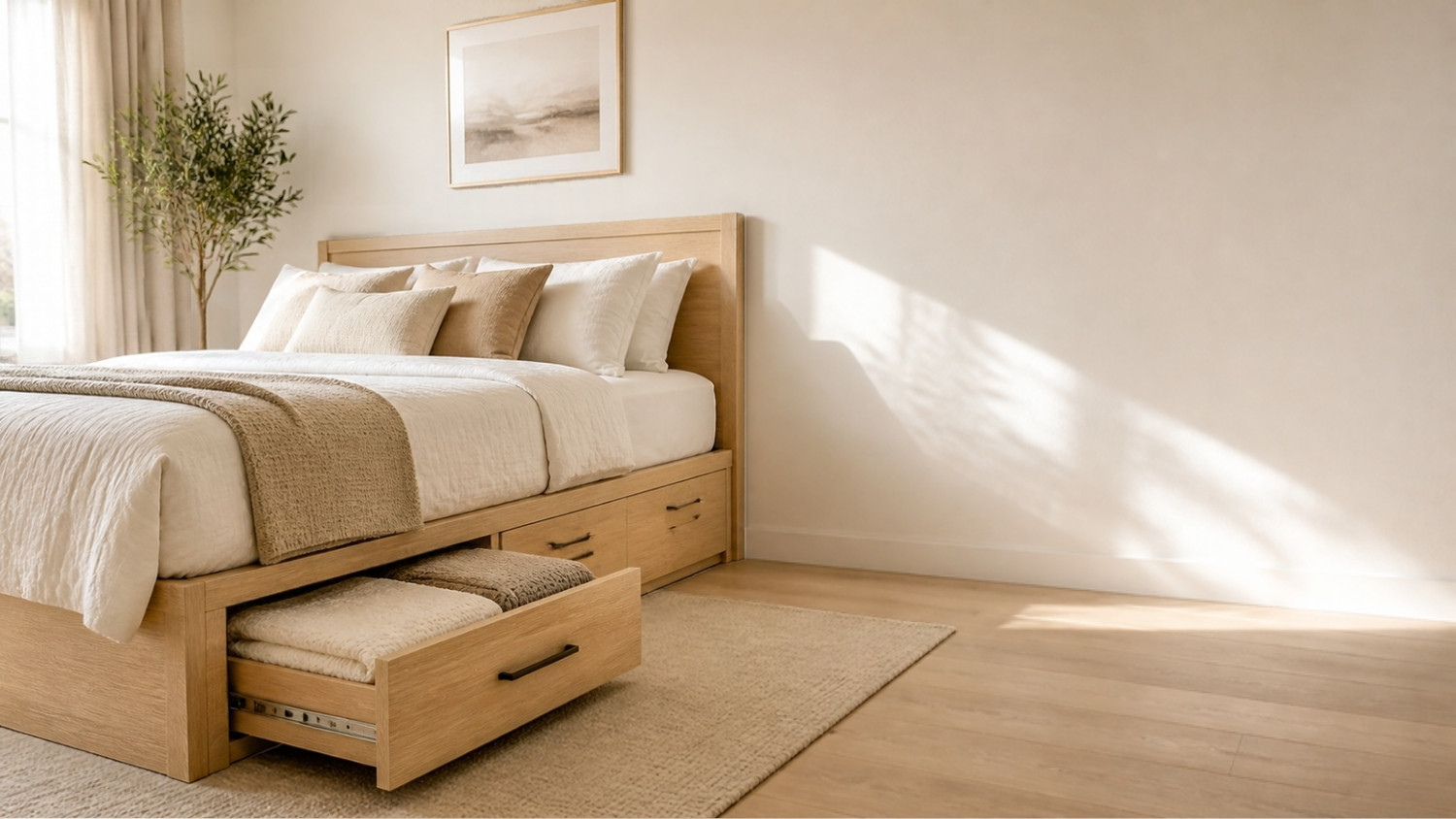
Beds with Storage Drawers: Measure What You Mean to Store
Read the fix →
-
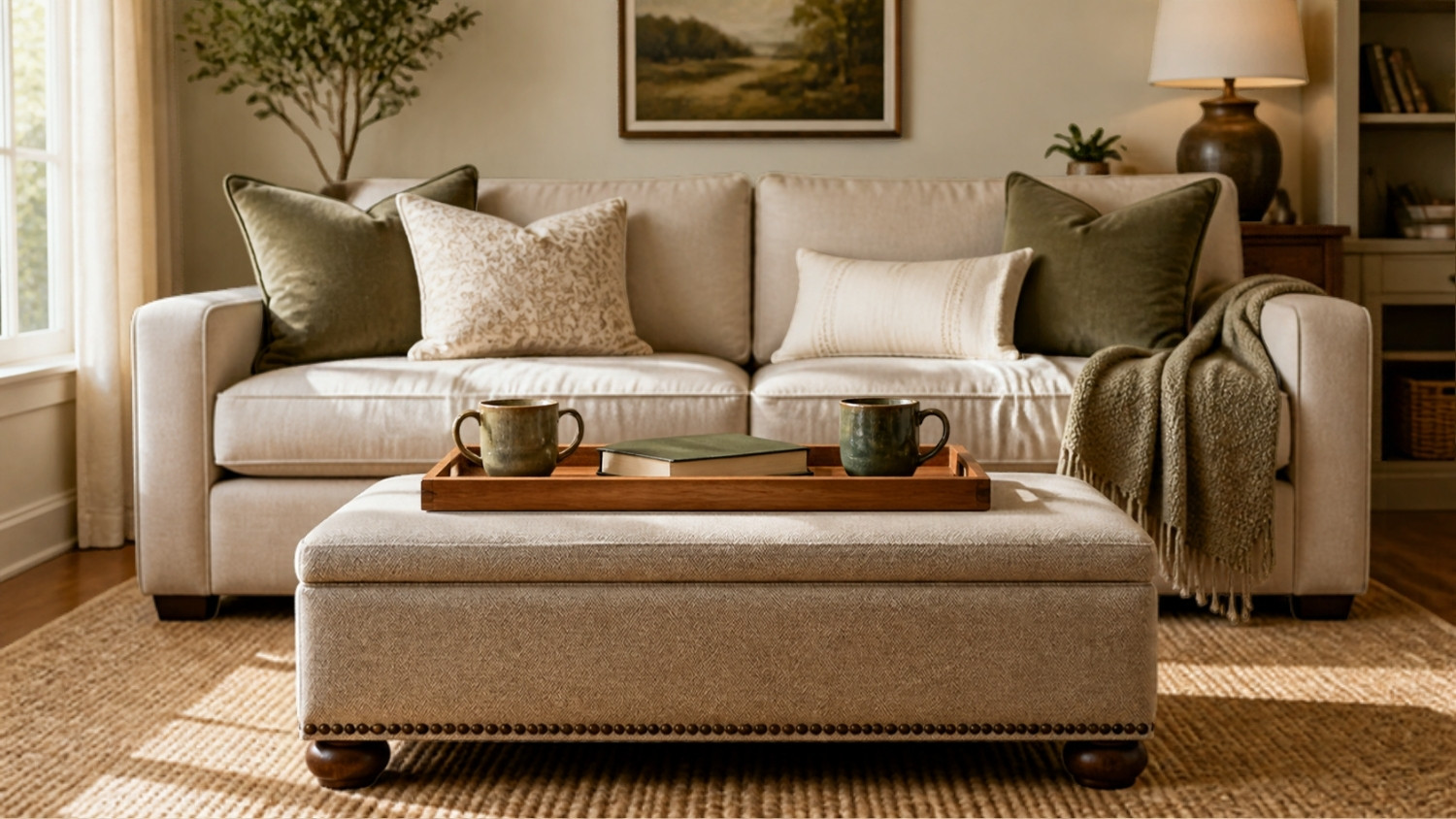
Storage Ottoman: Measure Your Sofa Before You Buy One
Read the fix →