
Home / Pantry
Room guide
Pantry organization
Pantry organization for deep shelves that hide everything, a tiny cabinet doing the work of a pantry, food you buy twice. Start with the shelf that annoys you most.
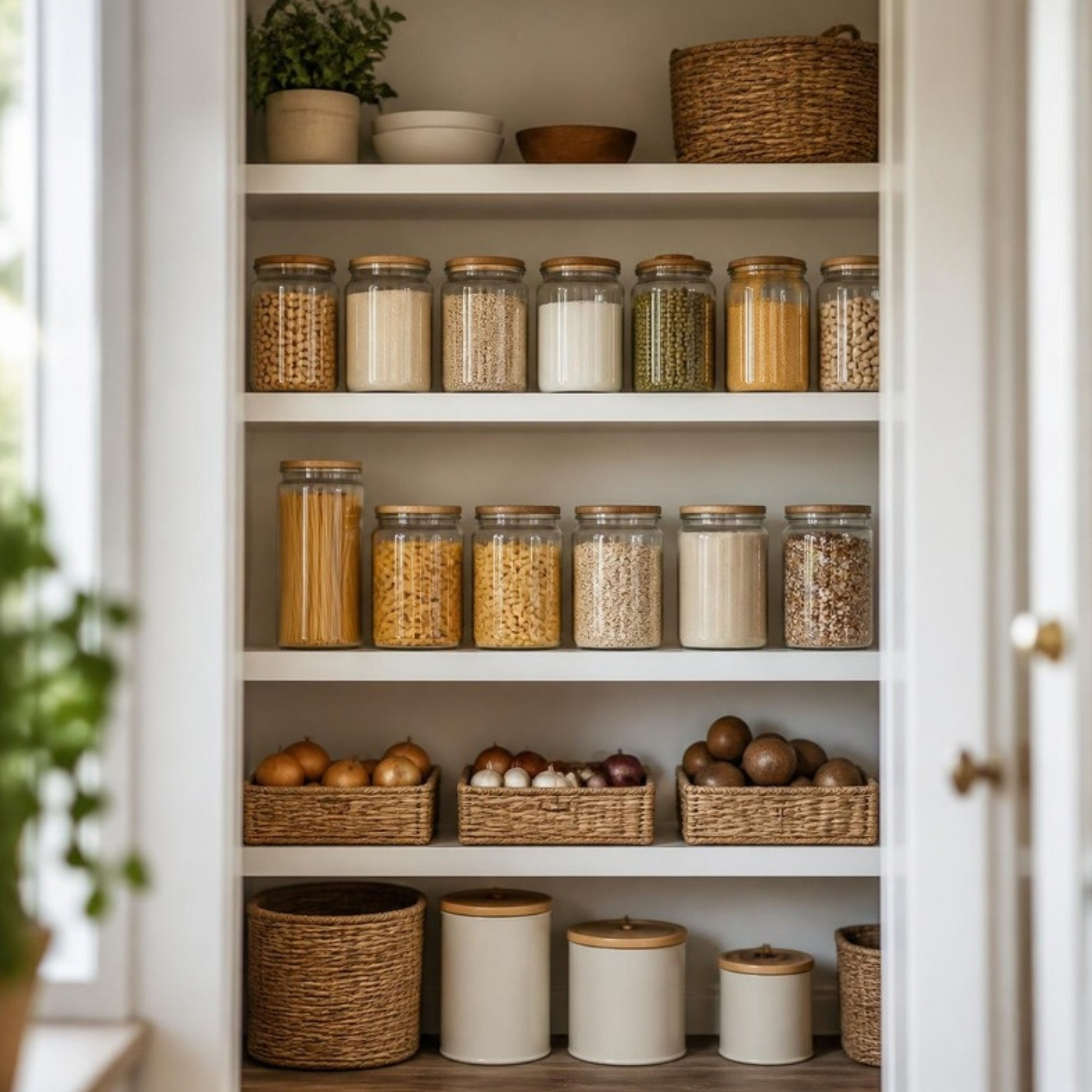
Check it fits before you order
Type in the measurement you took, and the tool tells you whether the thing on screen will go in.
Deep shelves are the problem, not the space
A pantry rarely runs out of room. It runs out of visibility. On a deep shelf, whatever lands at the back stops existing, and a month later you buy it again.
Treat the back half as long-term storage. The things you open once a month live there. Everything you reach for weekly belongs in the front half, where you can see it without moving anything.
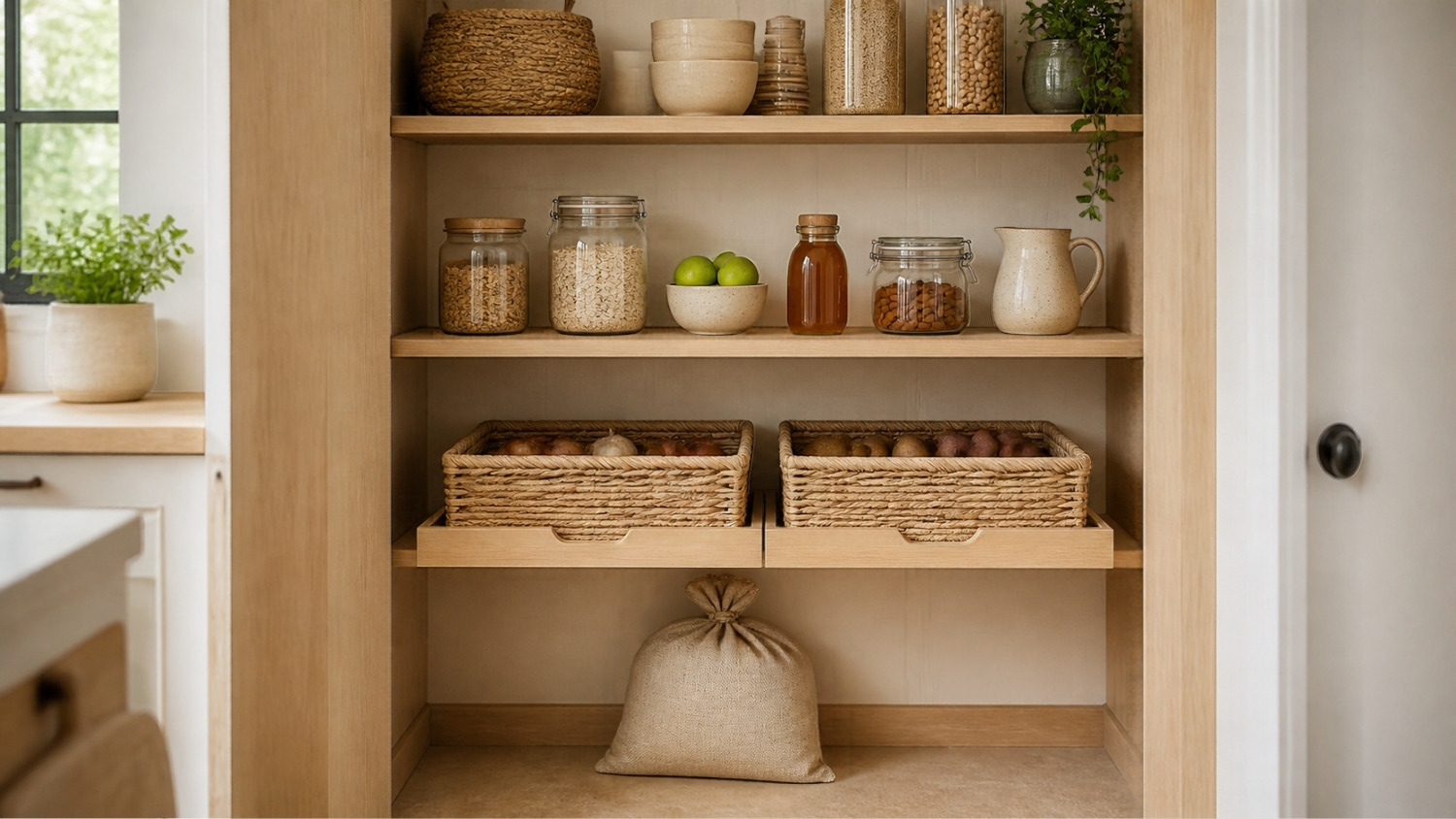
Turn the back half into a drawer. A shallow bin with a handle makes the unreachable part of a deep shelf pull out like a drawer. You take the whole bin, use what you need, push it back. That is what containers are really for: the reach, not the look.
Group by meal, not by type. Breakfast in one bin, baking in another, lunchboxes in a third. You pull out one bin instead of hunting six separate items.
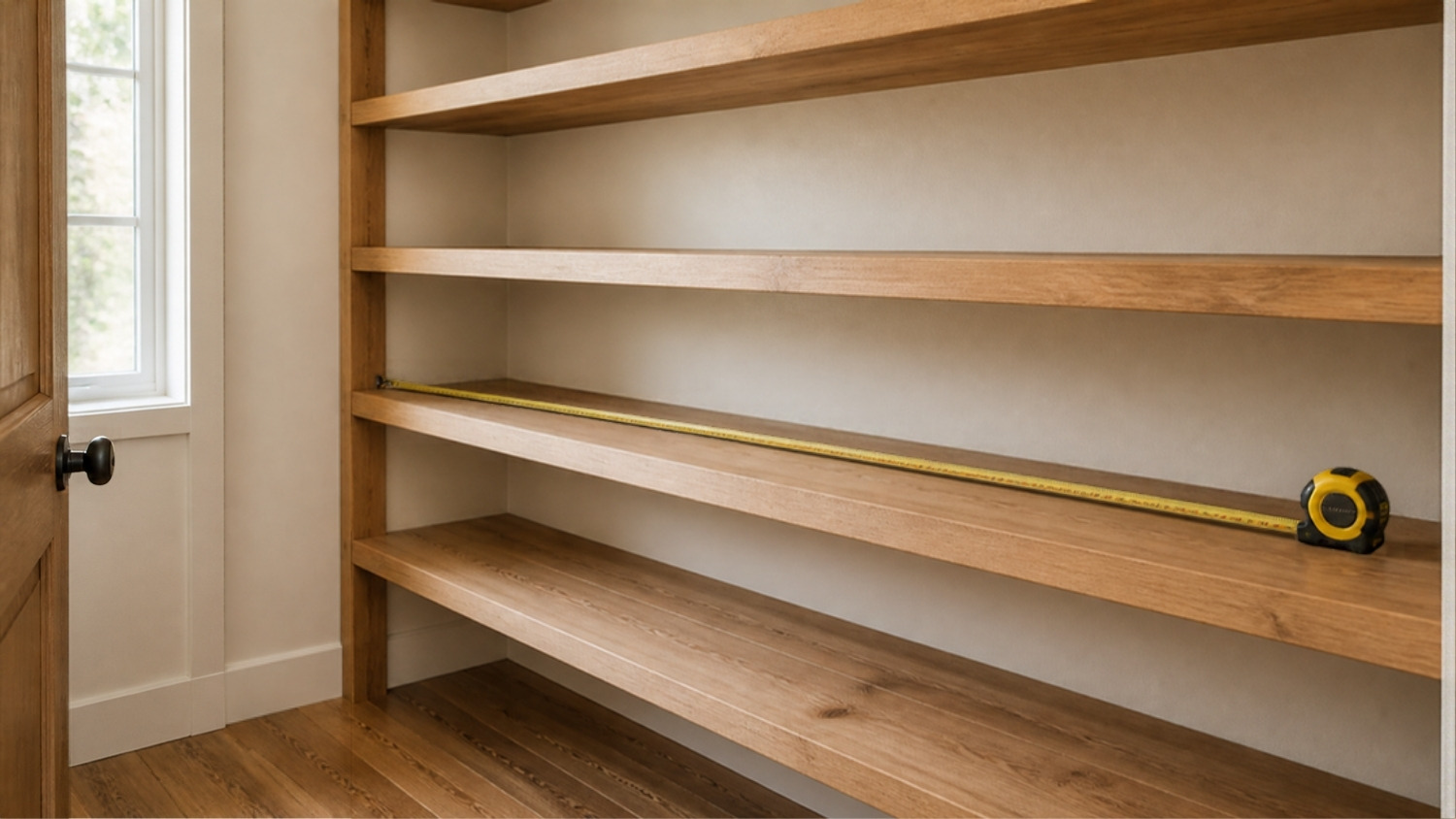
Containers come last, not first. Measure the shelf depth and the gap between shelves before you shop, because those two numbers rule out most of what you would otherwise have bought.
Best-of guide
Our side-by-side comparisons start from the measurement that rules a product out, not from a star rating. How we compare
Free printables
The Pantry Fit Planner
The four pantry shapes, and what each one gets wrong
Pantry advice falls apart because the word covers four different rooms. Work out which one you have first, because the fix is different in each.
The cabinet pantry. One or two kitchen cabinets doing pantry duty. Wide, shallow, with doors. In an upper cabinet nothing gets lost at the back, so the problem is vertical: one usable band at eye level and a lot of air above the cans. Shelf risers and a second tier earn their room in this shape more than anywhere else. A base cabinet pressed into pantry duty is a different animal, with the depth problem the kitchen guide deals with.
The pantry closet. A door, a light if you are lucky, and wire shelving that came with the house. Deep front to back, which is exactly the shape that swallows food. The fix is to stop treating the depth as one unit: bins that pull out, or two rows where the back row holds only things you buy in multiples.
The corner pantry. A diagonal door with a triangle of dead space behind each side wall. A turntable is the standard answer here, the same lazy susan sold for a corner kitchen cabinet. Measure the diagonal of the door opening, because that is what limits what you can carry in and out, not the width of the shelf.
The walk in pantry. You stand inside it, so the floor is taken and the wall above waist height is usually empty. The upgrade here is rarely more shelving. It is pantry shelving at a depth you can see into, plus the door and the wall you walk past.
Containers: when decanting helps, and when it costs you room
Food storage containers are sold as the answer to a pantry, and they are only sometimes the answer. A container saves room when it is squarer than the packaging it replaces. A bag of flour slumps into whatever shape is left. A square canister does not, and it stacks. That is a real gain.
It costs you room when the container is taller or wider than what went in. Cereal is the classic case: the box is already square and already stacks, so pouring it into a round canister usually loses you shelf.
Airtight food storage containers matter for what goes stale or attracts pantry moths: flour, rice, sugar, cereal, pet food. They matter much less for the pasta you will finish this week. Buy airtight for the staples and stop there.
Glass against plastic is a weight decision as much as a looks decision. Glass food storage containers are heavier when full, so they belong at or below eye level, not on the shelf you reach up to without looking.
The order that prevents the whole problem: measure the shelf height and depth, then buy the container. Never the other way round.
Spices are a separate problem from food
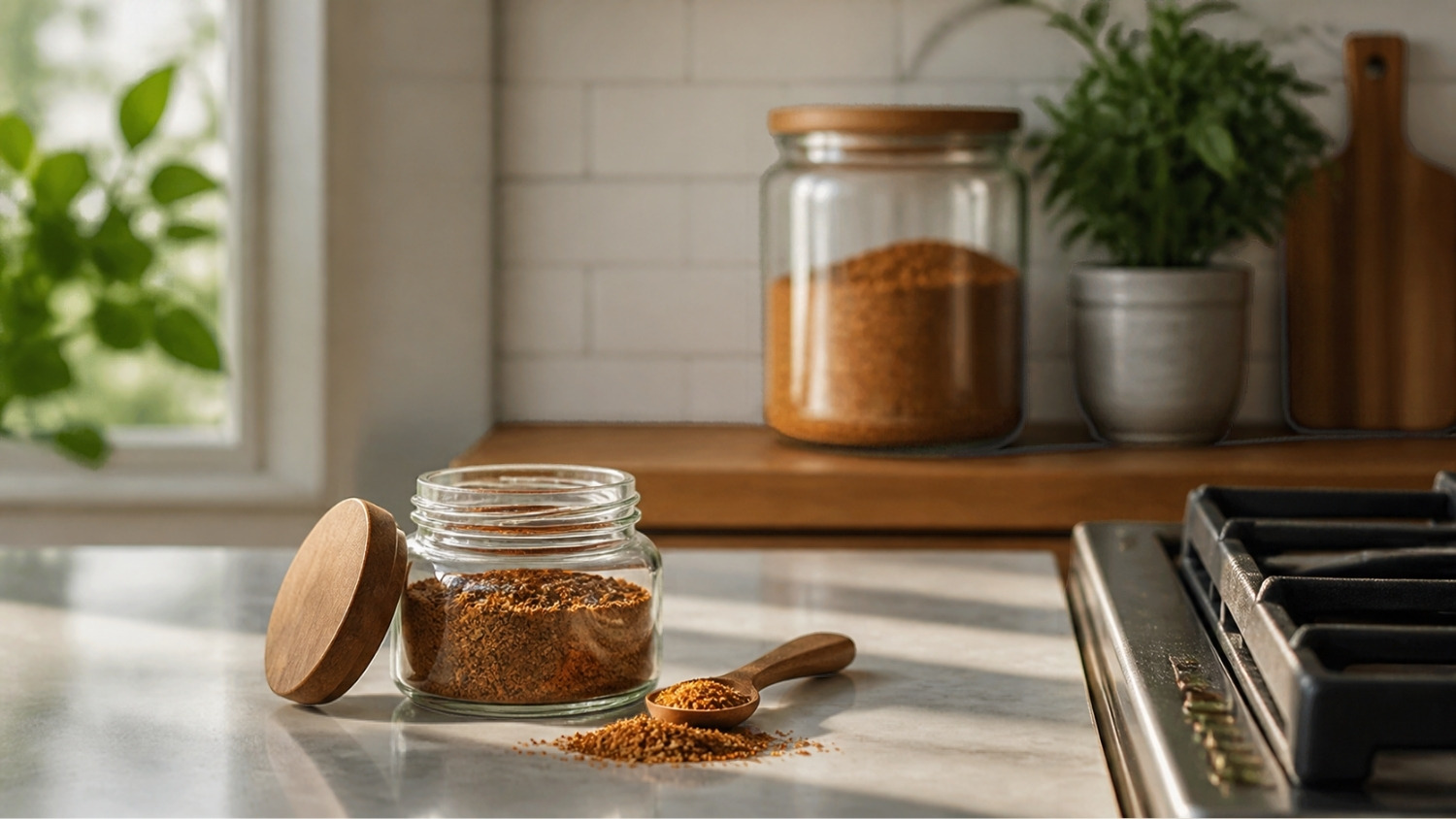
Spice jars are small, numerous, and identified by a label you have to read. That combination makes them the one pantry category where putting them in a bin fails outright, because a bin turns reading into rummaging.
A flat spice rack on a deep shelf wastes most of that shelf, since only the front row is usable. A vertical spice rack or a tiered riser gives every jar a front position. A drawer insert puts the jars where you read them from above, which is why people relabel the lids. An over the door spice rack uses space that was not storage at all, and it needs the shelf edges to clear the door as it swings.
The test for all of them is the same: can you find the one you want without picking up two others?
The door is storage you already own
An over the door pantry organizer is about the cheapest shelf you can add, because the space is already paid for. Two things rule it out. If your shelves run all the way to the door frame, the pockets will hit them when the door closes, so measure the gap between the closed door and the nearest shelf edge. And on a bifold or sliding door there is nothing to hang from in the first place.
Questions we get about pantry organization
How deep should a pantry shelf be?
Deep enough for what you store and no deeper. A shelf deeper than two of your largest regular items, front to back, will grow a layer at the back that you never see. If the shelves are already deep and you cannot change them, the answer is pull out bins rather than new shelving.
Do I need to decant everything?
No. Decant the things that come in bags and go stale. Leave the things that come in boxes and already stack. A fully decanted pantry photographs well and charges you a weekly transfer job on items that did not need it.
Where do bulk buys go?
Not in the pantry. The pantry holds the open packet. The unopened multipack goes somewhere you walk past less often, oldest at the front. Trying to fit both on the same shelf is what makes a pantry look full while you still cannot find anything.
Fixes by problem
Watch the fix
Sixty seconds, one spot, no music
Shop this look
Everything in this photo, with the figure that decides it
Each number on the photo is one product, with the measurement its own listing publishes.
-
-
-
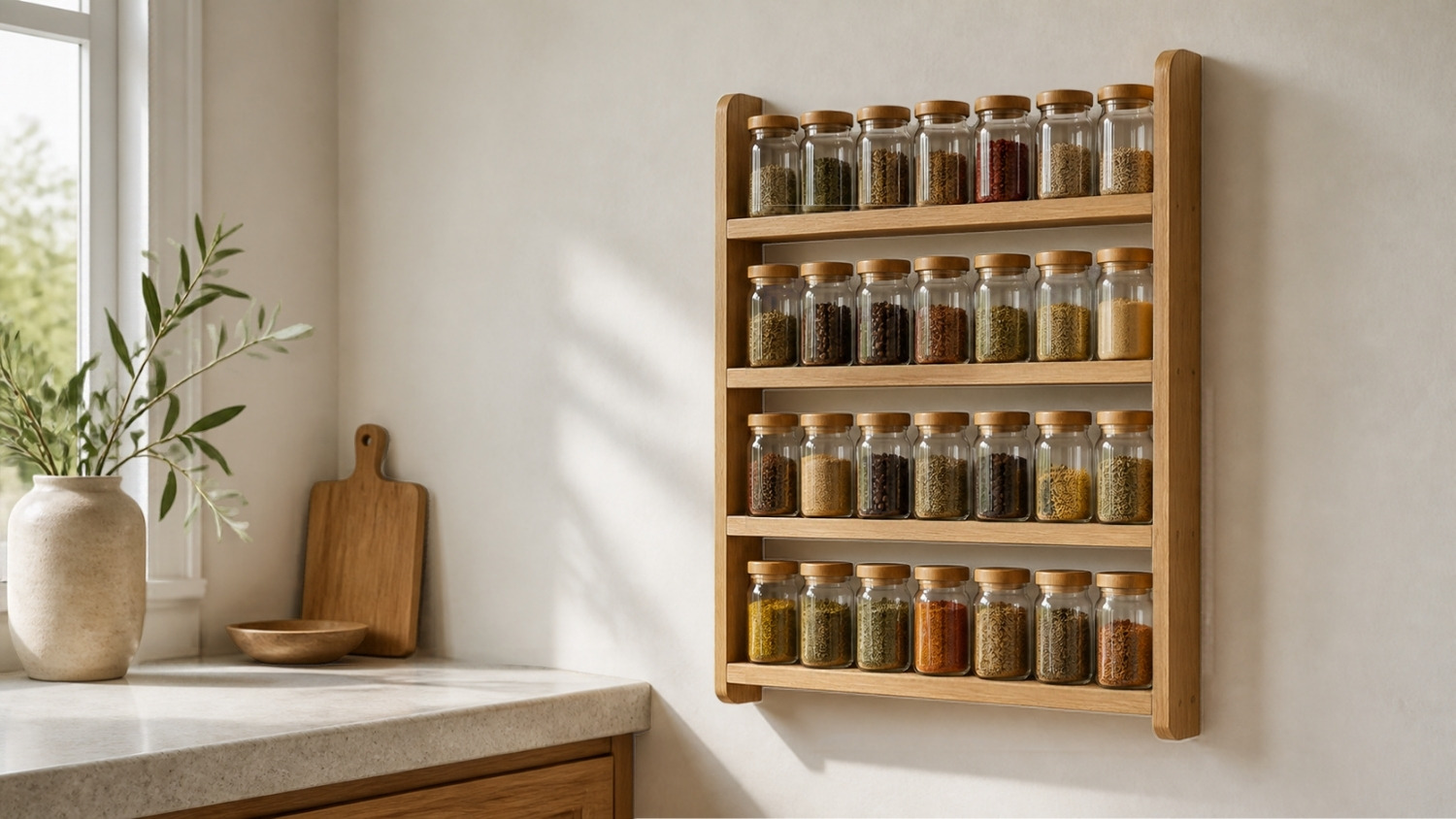
Vertical Spice Rack: How to Finally See Every Label
Read the fix →
-
Small Pantry Organization: The Four Zones That Hold
Read the fix →