Bathroom Counter Organization: Why It Fills Up Again
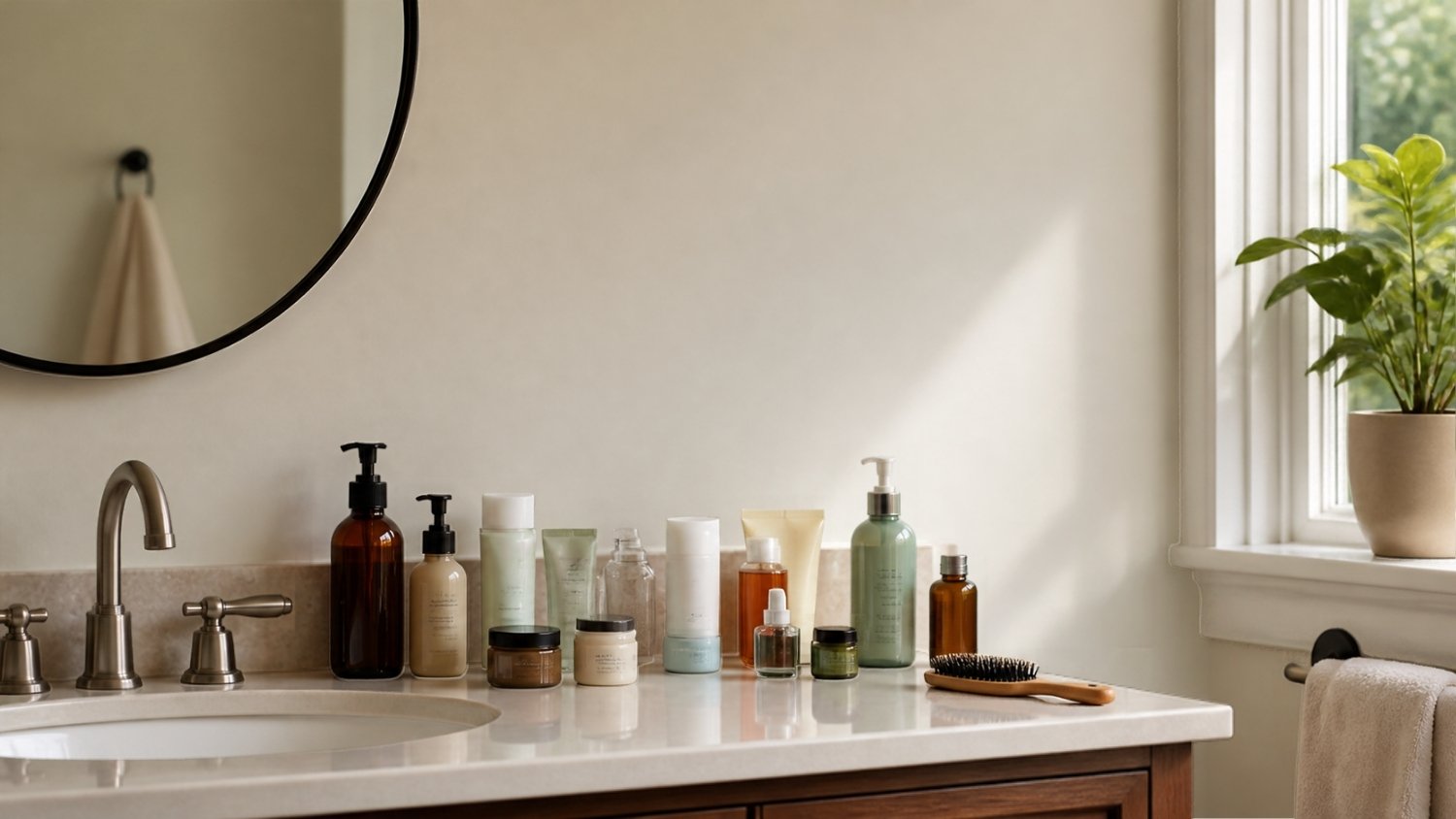
Bathroom counter organization starts here: only the toiletries you use every day stay on the counter.
The weekly ones go behind a door, and if the bathroom is your smallest storage space, the rarely used ones leave the room, bar a spare roll of toilet paper. You clear the counter on Sunday and by Thursday it looks the same because those things have no easy home, not because you are untidy. There are two answers worth testing on every item: it has no home, or its home is too much trouble to use.
- DailyThe only pile that has earned counter space
- WeeklyBehind a door you can open with one hand, razor and scissors excepted
- RarelyOut of the room, if the bathroom is your smallest storage space
- TwoThings to lift when you wipe: one tray, and the toothbrush cup
We do not write safety guidance in our own voice, so here is who publishes it. Razors, spare blades and nail scissors are covered by Preventing Cuts, a parent guide from Nemours KidsHealth. Medicines are covered by Storing your medicines on MedlinePlus. Anything that could be swallowed, such as mouthwash or nail polish remover, is covered by Poison Prevention Tips from Safe Kids Worldwide, which also gives the national Poison Help number. Those pages are where to read what they recommend.
Medicines are a separate question, and the answer is not this room. MedlinePlus says “the heat and moisture from your shower, bath, and sink may damage your medicines”, and to store them in “a cool, dry place”, “out of reach and out of sight of children”, in “a cabinet with a child latch or lock”: Storing your medicines, MedlinePlus. Everything below is about toiletries. Medication and first aid supplies stay out of the sorting altogether, whatever a pile would say, and first aid belongs where you can find it fast.
The razor and the nail scissors are the exception to everything below, whoever lives in the house, and it is worth saying why: a blade or a point standing up in an open cup is at hand height, where you reach in without looking. So they are not tray items and not cup items. Spare blades and spare nail scissors are the exception wherever the spares live, and not a box at floor level. Mouthwash, nail polish remover and anything else you would not want tasted stay out of the tray as well, and the pages linked above cover both.
Nothing on the counter that can hang. A wall holder for the hairdryer, not a hook through its cord, and not directly above the sink or the tub, plus a hook for the back brush. Both are fixed to the wall or stuck to it, within what the mount is rated for. Unplug the hairdryer when you are done and keep it away from the sink. And if you drill, remember you cannot tell from the surface what is inside a bathroom wall, and pipes and wiring can run through it. If you are not sure, have the holes placed by someone who can check.
Measure first, buy second. The free Bathroom Fit Planner is a printable you fill in at the room. Four measurements, five pages, and a source line under every published figure. You take it to the bathroom with a tape measure instead of shopping from memory. Send it to me
Bathroom counter organization: the one number to take shopping
Yours
This is the figure that sends tray sets back. A set that looks right in the photo and is too deep for your counter is the set that goes back, and no listing can take this one for you. Measure from the wall to the front edge, write it down, and take that number shopping.
Do this first: sort by how often you touch it
Toiletries only, as the panel above says. Take them off the counter and put them in three piles. If your counter is carrying all three piles at once, only the first one has earned the space.
Pile 1
Daily
Toothbrush, toothpaste, the face wash you use every morning, deodorant, the one moisturizer you actually finish. This is the only pile that stays out.
Pile 2
Weekly
Nail scissors, the hair mask, the razor, cotton pads. This pile goes behind a door you can open with one hand. Whether you shave every day or not, the razor and the nail scissors are the exception to everything here.
Pile 3
Rarely
Backup stock, the travel sizes, the gift set, the thing you bought and did not like. If your bathroom is the smallest storage space you have, this pile leaves the room.
Then
One tray, plus the toothbrush cup, and nothing else
A home is not a pile. A container gives the group a border, so you lift a tray and a cup when you wipe the counter instead of five loose items. Three small trays instead of one put you back to lifting things one at a time.
Then
Upright for anything with bristles
Toothbrushes and brushes go in a cup, bristles up. Laid flat they spread across the surface and end up pushed to the back.
Then
Leave the corners empty
Keep the corners clear and you keep somewhere to put a thing down. Anything you move off the surface is surface you get back.
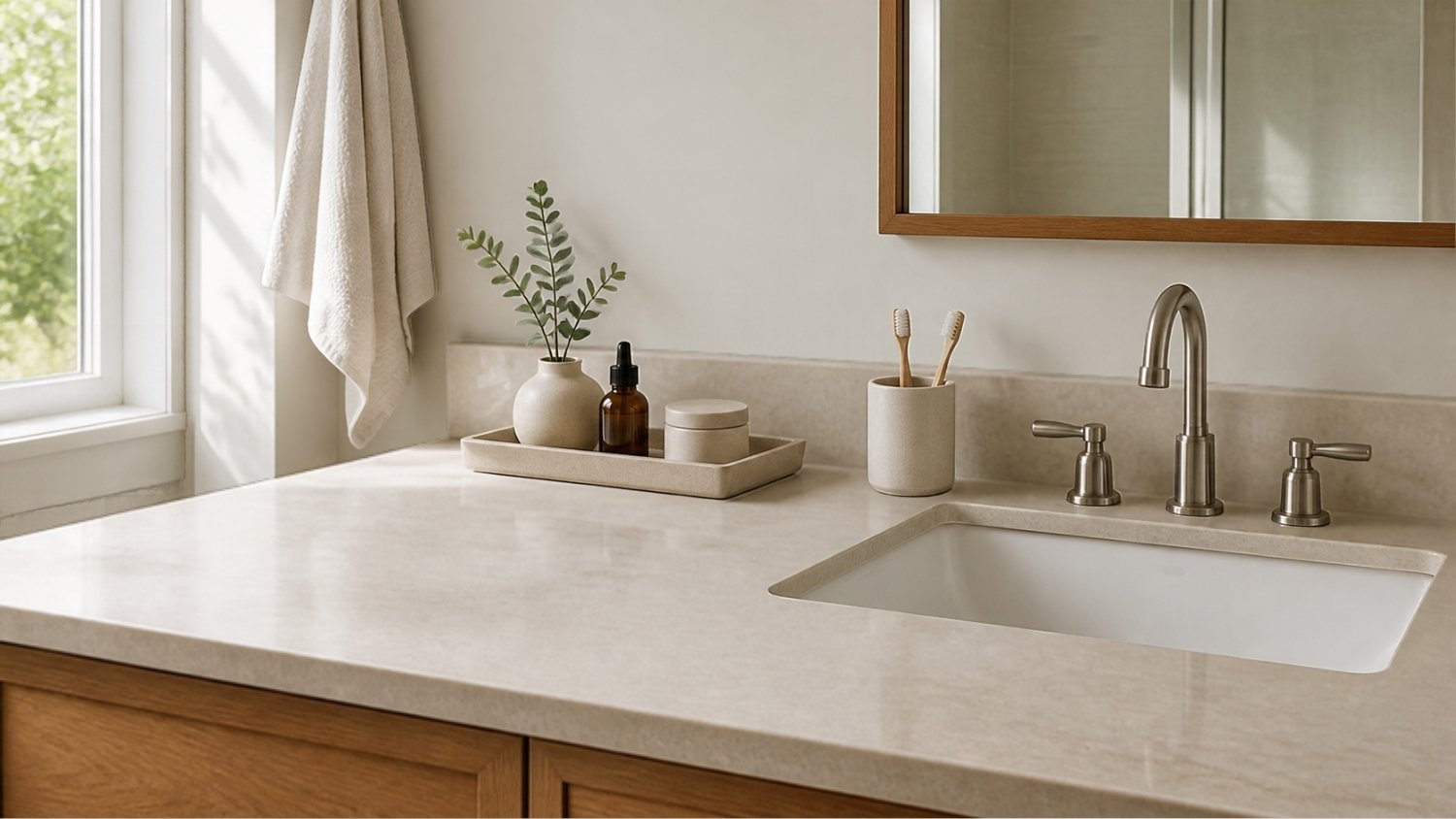
Take your numbers with you. Print the planner, fill it in at the room, and shop from your own measurements instead of from memory. Step 4 is the counter, which is the figure that sends tray sets back. Get the free planner
The three rules that keep it clearand the one exception that feels wrong and works
These three rules are for toiletries. Medicines are the exception, and they belong out of this room: the MedlinePlus lines at the top of the page say where they go.
Only the daily pile stays out. The weekly pile goes behind a door you can open with one hand, except the razor and the nail scissors. And if your bathroom is the smallest storage space you have, the rare pile leaves the room.
One exception before that: keep a spare roll of toilet paper in the room and move only the surplus. That aside, the rare pile leaving the room is the one that feels wrong and tends to work anyway. Backup shampoo does not have to live in the smallest room in the house. A hall closet, the top of a bedroom closet, a box under the bed, whichever of those you actually have: anywhere you can walk to without thinking about it is close enough for something you only need now and then. Spare blades and spare nail scissors are the exception wherever the spares live, and the child safety panel above links the page that covers them.
When there is no cabinet at alla pedestal sink, and the four places left
If you have a pedestal sink and no storage under it, the counter may be the only surface in the room you can put anything down on, which is part of why it fills.
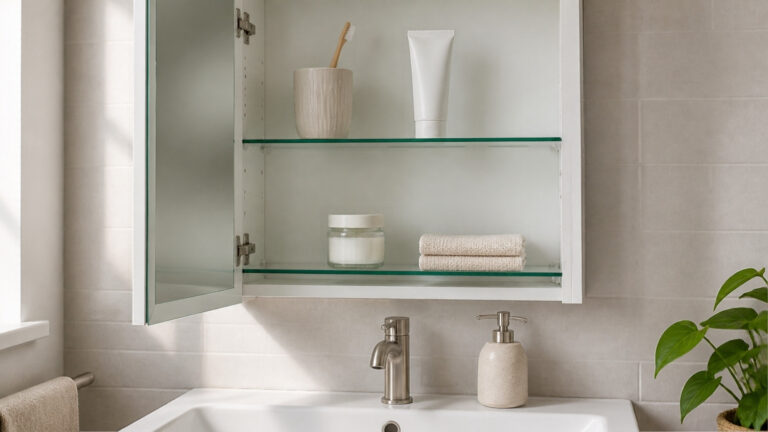
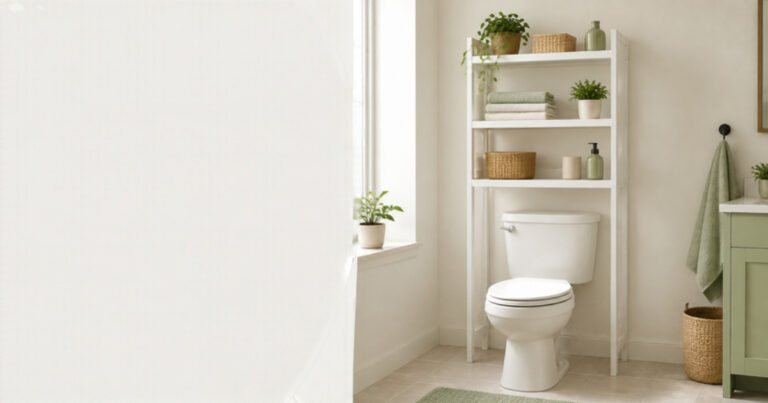
The storage has to go up, behind, or into the gap beside the sink. A narrow shelf above the toilet, a wall cabinet above the door frame, an over-the-door rack, a slim rolling cart beside the sink. The principle does not change: the daily toiletries stay within arm’s reach of where you stand, and the rest of the toiletries go to whichever of those you can fit. The razor and the nail scissors are the exception here as everywhere else, open shelf and door rack included. Medicines are not part of this: MedlinePlus warns that the heat and moisture of a bathroom may damage medicines, and says to store them in a cool, dry place, out of reach and out of sight of children, in a cabinet with a child latch or lock. If there is no latchable cabinet in this room, that is one more reason the medicines live somewhere else: a latched or locked box, or a high cabinet with a child lock in a cool, dry room. Never the open shelf, never the door rack.
Of those four, the wall cabinet above the door frame has to be fixed, and within what the cabinet and its fixings are rated for. Put nothing loose up there that could fall when the door swings, and make sure you can reach it safely before you fill it. A shelf above the toilet has to be fixed too, and within what the shelf and its fixings are rated for, unless you choose a free-standing unit that straddles the toilet, which needs no drilling. Check on its product page how much room it needs over your toilet before you order, and remember that a free-standing unit stands on nothing but its own feet, so if a child might pull on it, it needs securing to the wall. You cannot tell from the surface what is inside a bathroom wall, and pipes and wiring can run through it. If you are not sure, have the holes placed by someone who can check. A rack that hangs over the door needs no fixing and has to fit the thickness of your door, so check the thickness it is made for before you order; keep it within what the rack is rated for, because a loaded rack can swing when the door is closed. The rolling cart needs no fixing either, within what it is rated for, and kept out of the way if a child might pull on it. If you cannot drill, adhesive and tension mounts are the other route, within what the mount is rated for, and in a bathroom they also have to cope with steam.
Our over the toilet storage guide has the three numbers for the wall above the toilet, and the figure the listing has to beat.
What to stop buyingthree things, and why each one comes back
Counter organizers with lids. A lid you cannot flip with one hand means two hands every morning, and a lid you have to hold open tends to be left open. This is about the daily toiletries on the counter, and the razor and the nail scissors are not counter items.
Anything that matches but does not fit. A set that looks right in the photo and is too deep for your counter is the set that goes back. Measure the counter depth from the wall to the front edge first, and take that number shopping.
More storage before you have removed the rare pile. Buying containers for toiletries that should not be in the room is how a small bathroom gets smaller. Medication and first aid are not part of this sorting at all. Medicines are the exception, and they belong out of this room: the MedlinePlus lines at the top of the page say where they go.
Frequently asked questionsfive, with the medicine line repeated in each one
How do I keep my bathroom counter clear?
Let only the toiletries you use every day stay out, put the weekly ones behind a door, and if the bathroom is the smallest storage space you have, move backup stock and the rarely used toiletries out of the room entirely. Keep a spare roll of toilet paper in the room and move only the surplus. The razor and the nail scissors are the exception to that door, whether you shave every day or not. Medicines are a separate question, and the answer is not this room. MedlinePlus says “the heat and moisture from your shower, bath, and sink may damage your medicines”, and to store them in “a cool, dry place”, “out of reach and out of sight of children”, in “a cabinet with a child latch or lock”: Storing your medicines, MedlinePlus. Clearing the counter again on Sunday is not the fix. Giving each item a home that is easy to use is.
What should stay on a bathroom counter?
The toiletries you reach for every morning: toothbrush, toothpaste, face wash, deodorant, and the one moisturizer you actually finish. The razor and the nail scissors are the exception, whether you shave every day or not: never in the tray and never in the cup. Keep the rest in one tray plus the toothbrush cup rather than standing loose, and keep the corners of the counter clear. This is for toiletries. Medicines are not part of this: MedlinePlus warns that the heat and moisture of a bathroom may damage medicines, and says to store them in a cool, dry place, out of reach and out of sight of children, in a cabinet with a child latch or lock.
How do you organize a bathroom with no cabinet?
Go up, behind, or into the gap beside the sink. A narrow shelf above the toilet, a wall cabinet above the door frame, an over-the-door rack, and a slim rolling cart beside the sink. The wall cabinet has to be fixed, and so does a shelf above the toilet unless you choose a free-standing unit that straddles it, which needs no drilling, and the instructions that come with it name what it has to be secured to and what it carries. Load only within what the unit is rated for. Before you drill in a bathroom, remember you cannot tell from the surface what is inside that wall, so if you are not sure, have the holes placed by someone who can check. Stay within what the cabinet or shelf and its fixings are rated for in any case. A rack that hangs over the door and a rolling cart need no fixing, and the rack has to fit the thickness of your door and stay within what it is rated for. Keep the daily toiletries within reach of where you stand and put the rest of the toiletries on the higher or further storage, except the razor and the nail scissors, open shelf and door rack included. Medicines are a separate question, and the answer is not this room. MedlinePlus says “the heat and moisture from your shower, bath, and sink may damage your medicines”, and to store them in “a cool, dry place”, “out of reach and out of sight of children”, in “a cabinet with a child latch or lock”: Storing your medicines, MedlinePlus. If there is no latchable cabinet in this room, that is one more reason the medicines live somewhere else: a latched or locked box, or a high cabinet with a child lock in a cool, dry room. Never the open shelf, never the door rack.
Should I use a tray on the bathroom counter?
One tray helps, for a practical reason rather than a decorative one: it gives you one thing to lift when you wipe the counter, and one place a stray daily toiletry belongs, the razor and the nail scissors excepted: never in the tray and never in the cup. With the toothbrush cup beside it that is two things to lift. Several small trays give you several, which is the problem you started with. Medicines are not part of this: MedlinePlus warns that the heat and moisture of a bathroom may damage medicines, and says to store them in a cool, dry place, out of reach and out of sight of children, in a cabinet with a child latch or lock.
Where should backup shampoo go?
Out of the bathroom if the bathroom is the smallest storage space you have. A hall closet, the top of a bedroom closet, a box under the bed, whichever of those you actually have, is close enough for a spare toiletry you only need now and then, and it leaves the bathroom for what you use daily. Spare blades and spare nail scissors are the exception wherever the spares live, and not a box at floor level. Medicines are not part of this: MedlinePlus warns that the heat and moisture of a bathroom may damage medicines, and says to store them in a cool, dry place, out of reach and out of sight of children, in a cabinet with a child latch or lock. Never a box under the bed for medicines: that is within a child’s reach. Toilet paper is the other exception worth naming: keep a spare roll in the room and move only the surplus.
More bathroom fixes are in our bathroom storage guide, and if you do have a cabinet above the sink, our medicine cabinet guide covers what to keep in it and what to move out. Medicines are not part of what goes in that cabinet, and the MedlinePlus lines at the top of the page say why and where they go instead.
Take your numbers with you
Print the planner, fill it in at the room, and shop from your own measurements instead of from memory. Four measurements, five printable pages, and a source line under every published figure.
Saved in this browser, on this device. No account, nothing sent to us, and it goes if you clear your browsing data. See what you saved