Home / Kitchen
Room guide
Kitchen organization
Kitchen organization for cabinets that swallow everything, drawers that stick and counters that never stay clear. One fix at a time.
Start here
The width nobody measures
Your drawer front is wider than the inside of the drawer, which is why the organizer went back. The four numbers to take before you order anything.
Free printable
The Kitchen Fit Planner
The 6 openings that decide whether an organizer fits, and the one measurement to check per item type. 5 printable pages, free.
Cabinets: the problem is depth, not the number of shelves
A base cabinet is deeper than your forearm and you reach into it through a door. That geometry is the whole problem. The front half gets used, the back half collects the slow cooker you bought once, and adding a shelf only splits the same unreachable depth in two.
There are only two real answers. Either the contents come out to you, which means a pull out, or you stop using the depth as one unit and put the back half in a bin you lift out. Everything else is rearranging.
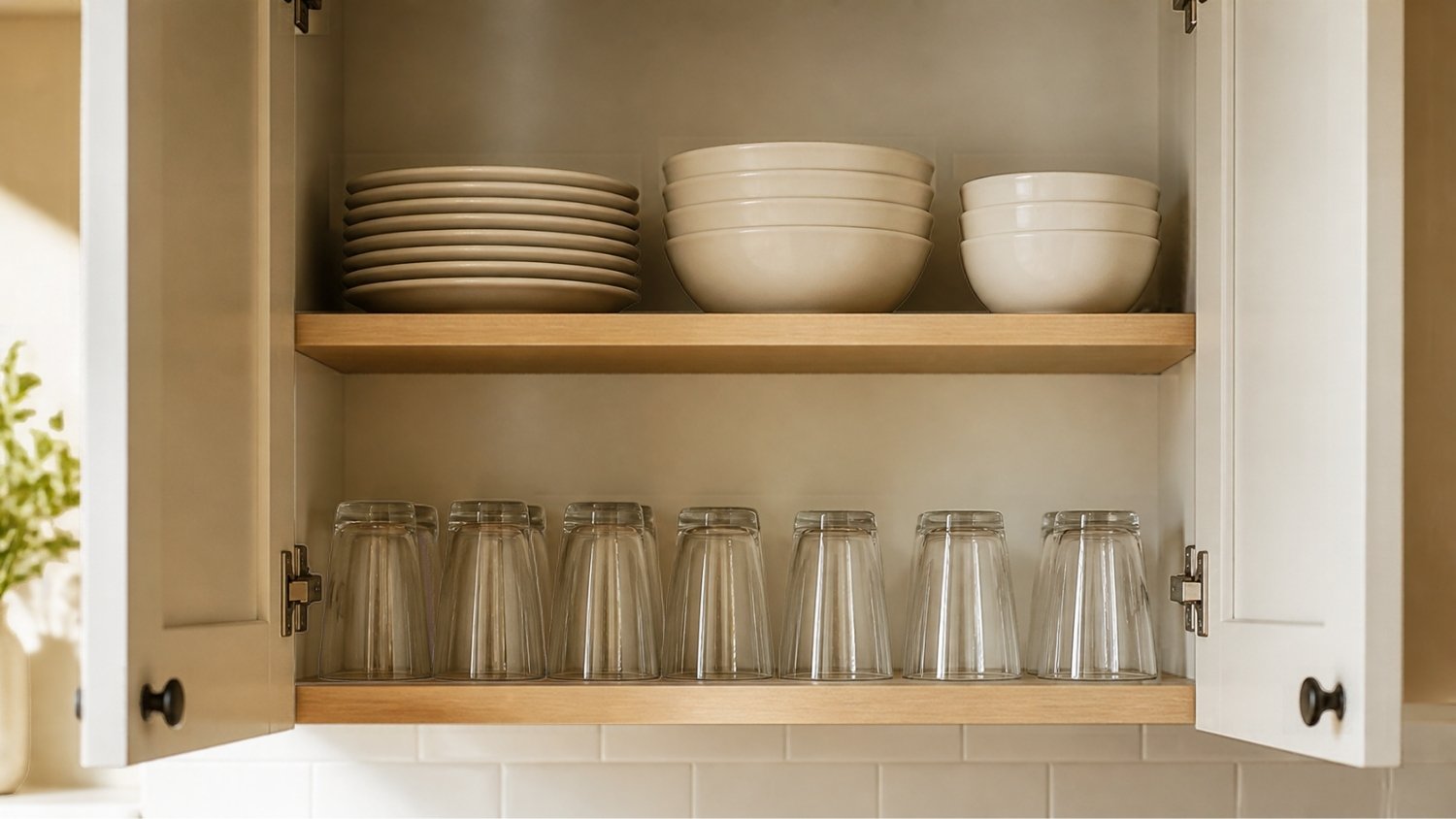
Upper cabinets have the opposite problem. They are shallow enough to reach into, and far too tall for a stack of plates, so most of the height is air. That is where shelf risers and a second tier earn their keep, and the cabinet guide works through which goes where.
Pull out shelves: the retrofit that actually changes a kitchen
A pull out shelf brings the back of the cabinet to you instead of making you reach for it. It is the upgrade that does the most to make an existing kitchen feel rebuilt, and it is also the one people order wrong most often, because three measurements have to be right and only one of them is obvious.
Width, at the narrowest point. Not the width of the cabinet box. Open the door fully and measure the clear opening between the inside edges of the frame, because on a face frame cabinet the frame runs inward from the box sides and narrows the opening on both sides. A frameless cabinet has no frame in the way and gives you close to the full box width, less whatever the hinge plate takes on the side panel. The same cabinet, in those two constructions, takes two different pull outs.
Depth, from behind the closed door. The slide needs its full length behind the door, so measure from the inside face of the closed door to the back wall of the cabinet, and watch for plumbing or a gas line coming through the back.
What it has to hold. The load sits on the tray, travels through the slides and ends up in the cabinet, so read what the weight rating on the listing applies to: the whole unit, or the slides on their own. If you are planning to put a stand mixer or a stack of cast iron on it, read that rating before you look at the finish, because it is the one thing no amount of care around the install will fix.
The corner cabinet
Every kitchen has one cabinet that is effectively a cave, and the answers are a lazy susan, a pull out corner unit, or giving up and using it for the things you touch twice a year.
If you go for a lazy susan cabinet turntable, the measurement is the diameter of the clear circle inside the cabinet, not the width of the cabinet itself. In a corner cabinet the opening is narrower than the space behind it, so measure the narrowest point the tray and the things on it have to pass through, then take a little off so a tall bottle does not catch on the way around.
The honest third option is worth saying out loud. A corner cabinet used deliberately for the roasting pan, the party platters and the spare appliances is working. A corner cabinet full of things you need weekly is not, whatever is installed in it.
Drawers: the width you measured is not the width you have
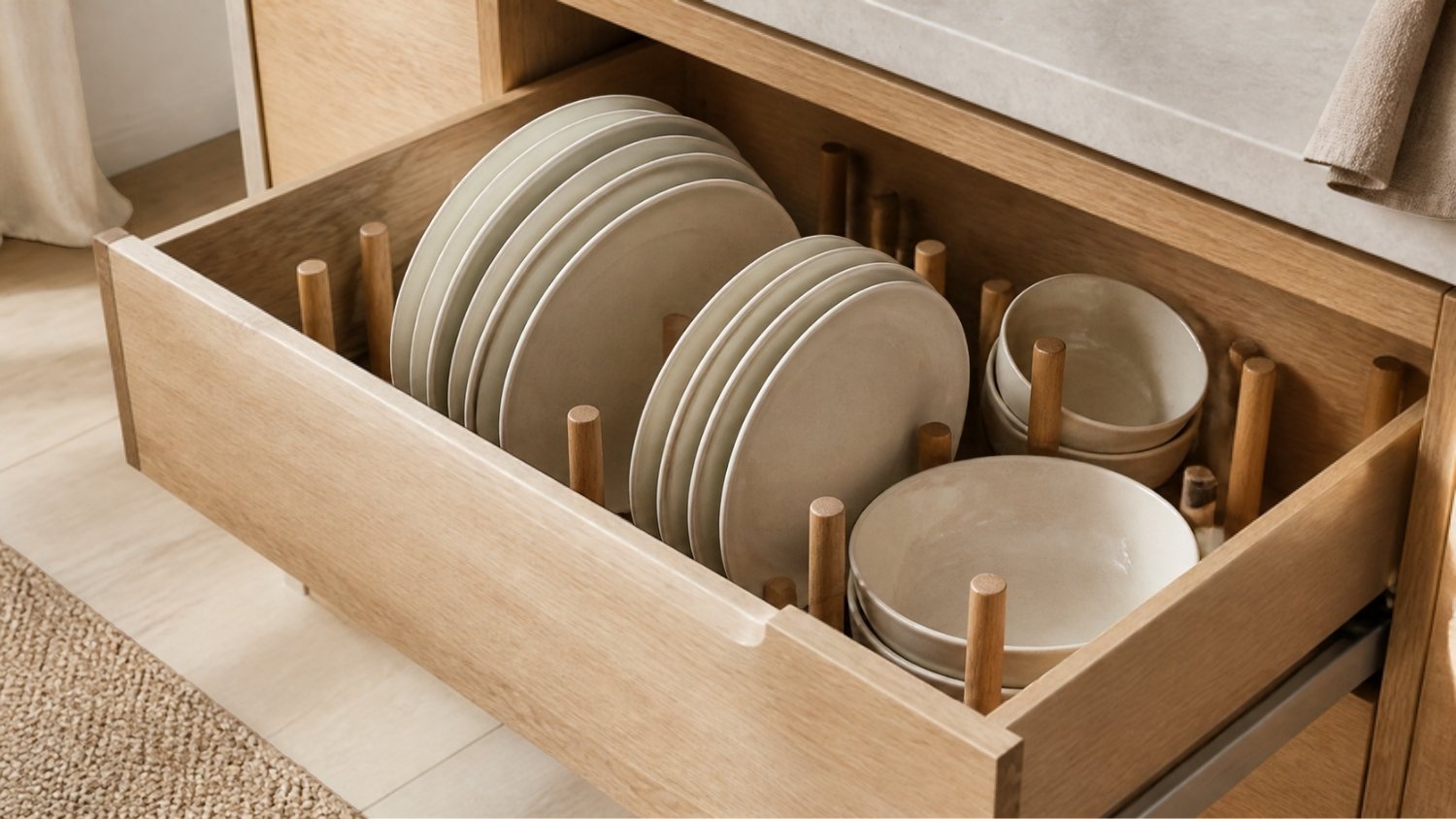
A kitchen drawer organizer gets returned more than almost anything else in the kitchen, and nearly always for the same reason. The drawer front is wider than the drawer box behind it, and people measure the front.
Measure inside the box, at the back as well as the front, because some drawers taper. Then measure the clear height from the drawer base to the underside of the counter or the cabinet rail above, with the drawer closed. That height is what stops a tall organizer, and it is invisible until the drawer refuses to shut.
Expandable dividers suit a drawer you are not sure about. Fixed trays suit a drawer whose job will not change, like cutlery. Loose bins suit everything that moves around, because you can rearrange them without buying again. The drawer guide has the four numbers in order.
Pots, pans and lids
Pots take up more room per item than most of what a kitchen holds, and the reason is that they nest badly and their lids do not nest with them.
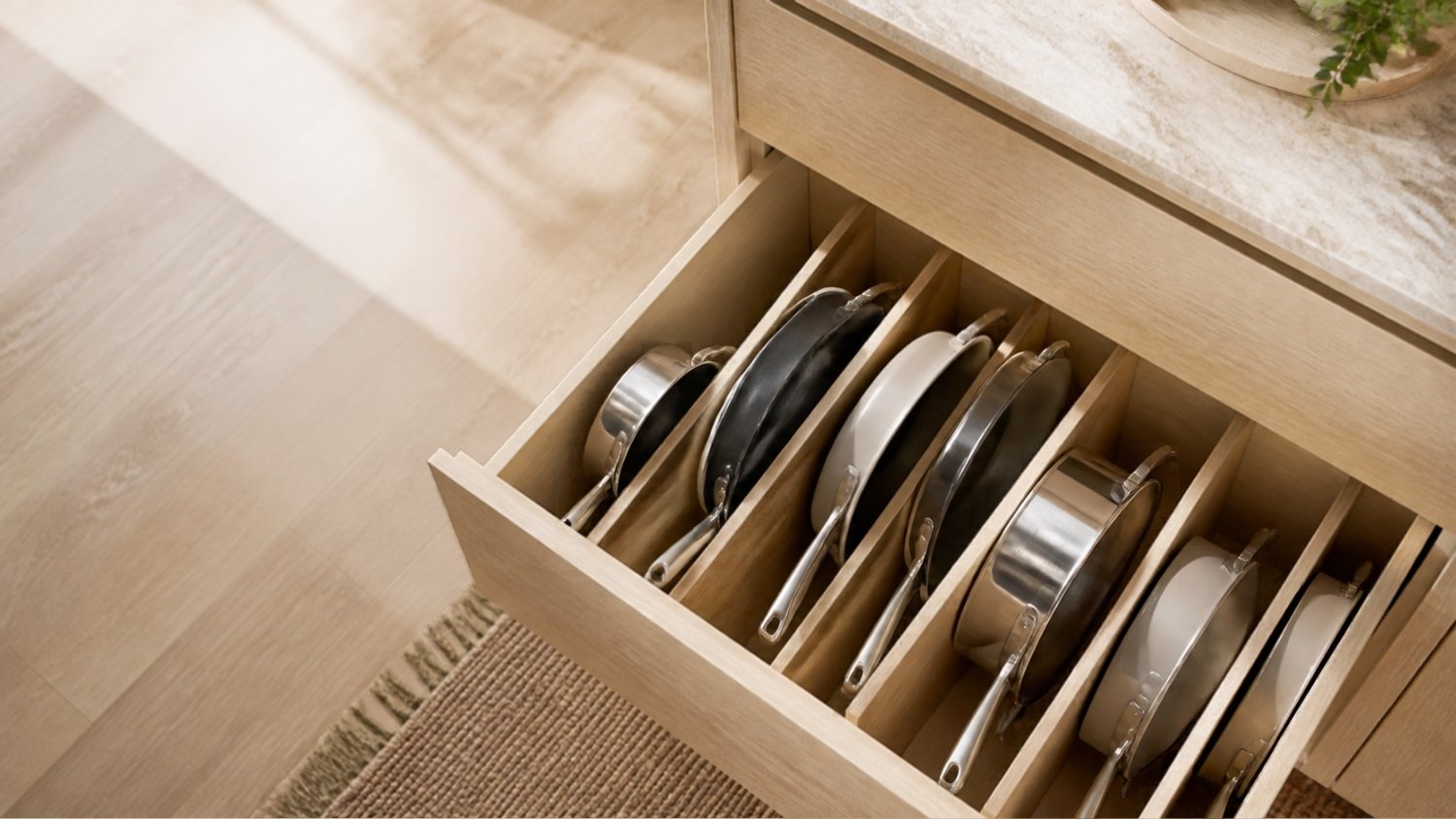
Stacking saves room and costs you access, since the pan you want is under two others. Standing them on edge in a deep drawer with dividers costs more room and gives the access back. Hanging them gets them out of the cabinet entirely, and what a rack can be hung from is named in the rack's own instructions.
Lids are the separate problem and they have their own answer: on edge, in a rack, either in the cabinet door or standing in the drawer. Stacked flat they slide and spread, and that is what keeps the cabinet looking untidy. More in pot and pan storage.
Questions we get about kitchen organization
Where do I start if the whole kitchen is a mess?
With the drawer nearest the stove, because that is the one you open most and it will show the gain the same day. Kitchens get organized around the cook's route: the things you reach for while something is on the heat go nearest the heat, and everything else moves outward from there.
Are pull out organizers worth it compared with bins?
In a deep base cabinet, usually yes, because the pull out solves the reach problem permanently and a bin only moves it. In an upper cabinet, almost never, since you can already reach the back. Spend the money where the depth is.
What about the containers?
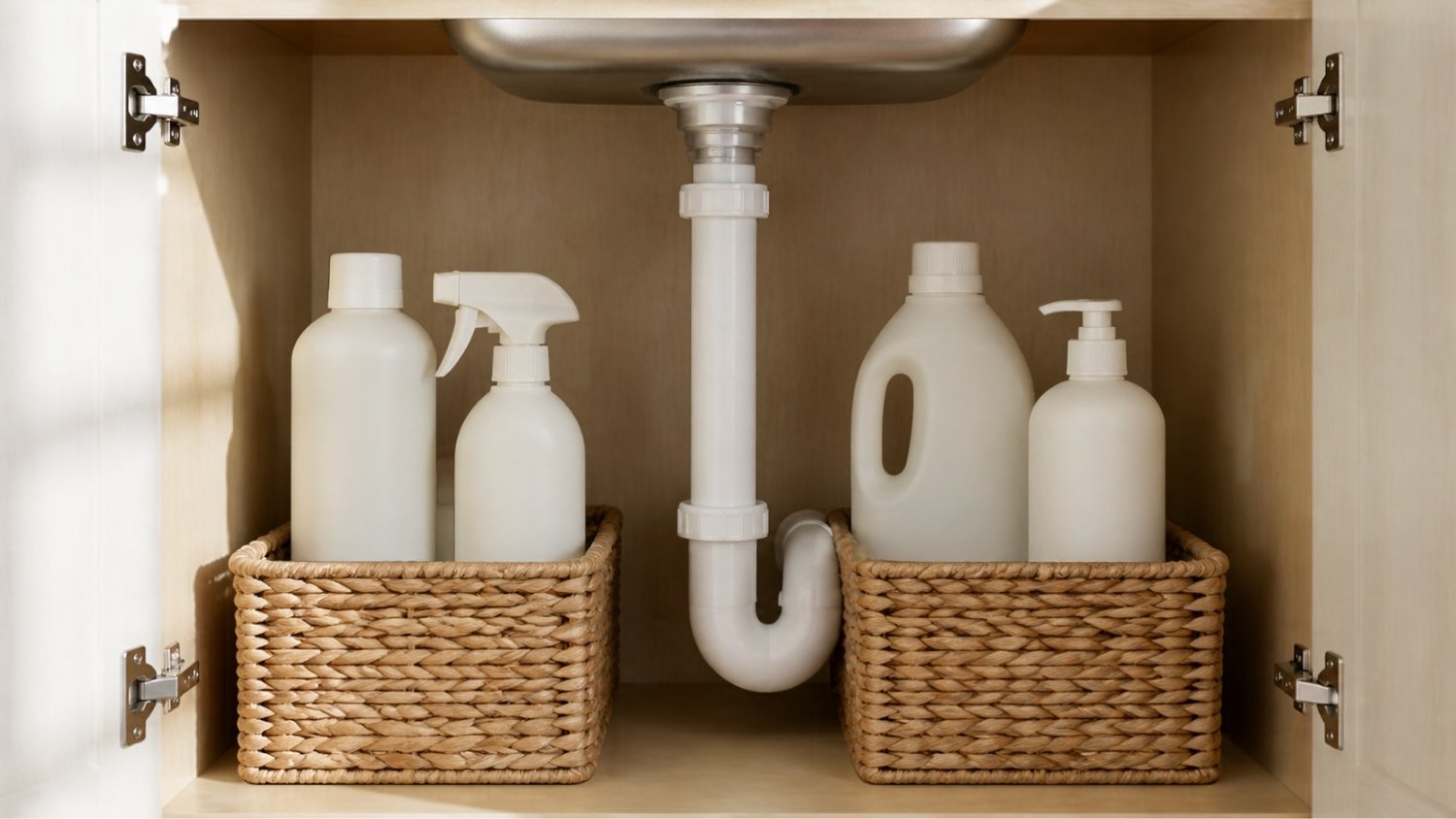
Containers are a separate problem from cabinets, and the thing that fixes the cabinet is usually reducing the number of shapes rather than adding storage. One set that nests, with lids that fit each other, in one place. We go through it in food storage containers, and under the sink covers the cabinet everyone gives up on.
Fixes by problem
Check it fits before you order
Type in the measurement you took, and the tool tells you whether the thing on screen will go in.
Watch the fix
Sixty seconds, one spot, no music
Shop this look
Everything in this photo, with the figure that decides it
Each number on the photo is one product, with the measurement its own listing publishes.
-
-
-
-
Kitchen Drawer Organization: The Width Nobody Measures
Read the fix →
-