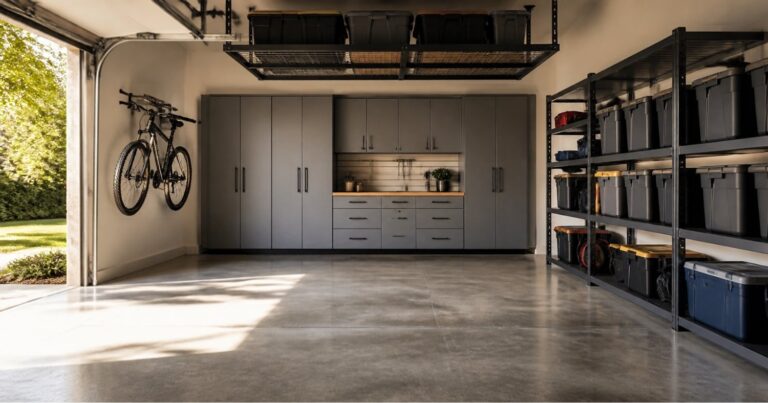
Garage Closet Systems: Closed Storage That Survives a Garage
When you buy through a link on Cozy & Tidy, we may earn a commission. It does not change the price you pay, and it does not decide what we recommend. How it works
Part of the garage organization guide.
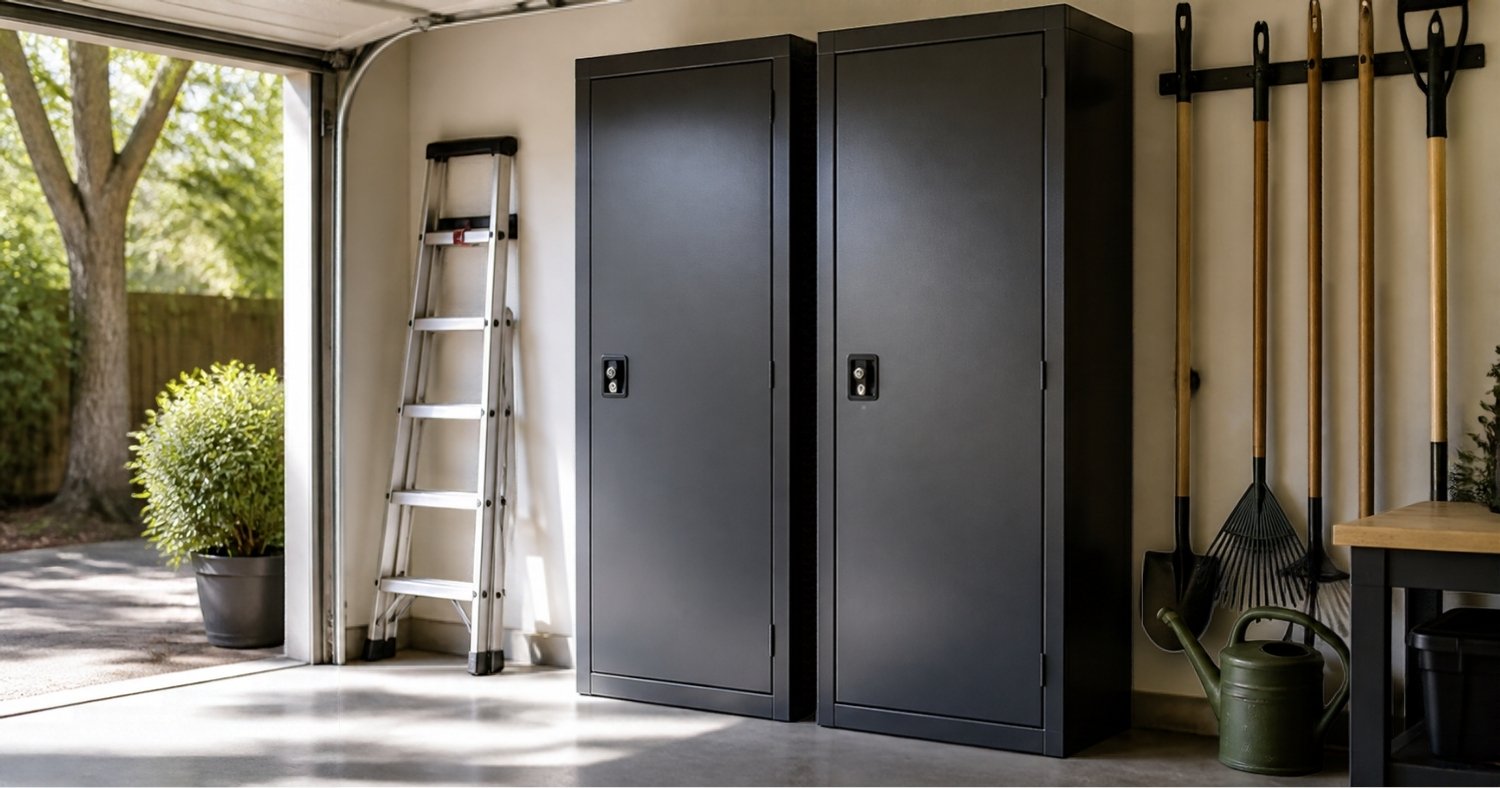
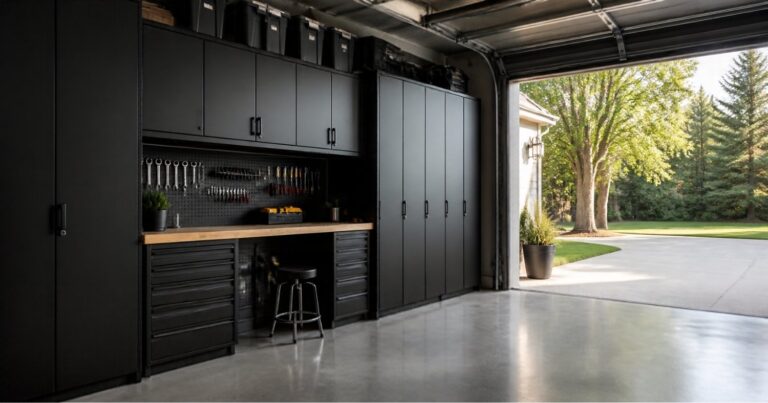
Garage closet systems are closed storage built against a garage wall. The difference from a bedroom closet is what they have to put up with: damp, dust, temperature swings and knocks from a car door.
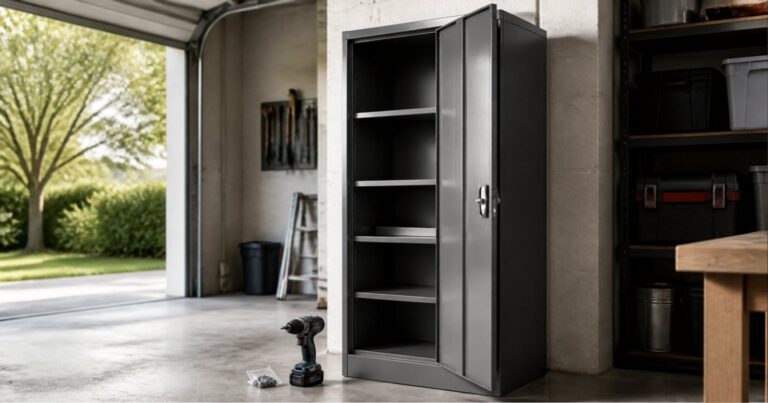
Tall closed units take the gear that will not lie flat. Anchoring comes before loading, and the instructions that come with the unit name what it anchors to.
- 1the depth left once both car doors are open
- 2the length of wall with nothing in the way, page 2 of the planner
- 3your tallest item, standing up, page 5
- 4the anchoring, done before anything goes in
Before you drill, check what is inside that wall. Scan with a detector that finds metal and live wires while the power is still on, then turn that circuit off at the panel, then drill. If anything in your garage runs on gas, a water heater, a furnace or a dryer, a gas line may run in that wall too, and that is not something to find with a drill. When you are not certain what is behind the spot you picked, have the holes placed by a licensed professional. The full list of checks is in the garage guide.
Tall closed units get anchored to the wall, following the instructions supplied with them, which list the wall types they are approved for and the fixings each one needs. Do it even if the unit feels heavy enough on its own, and do it first, before anything goes in. Tip-over is the subject of Anchor It, a public campaign from the Consumer Product Safety Commission, and its pages are where to read what they publish on anchoring a tall unit.
Locks and flammables. If a unit holds anything a child should not reach, paint, power tools, blades or car products, use one that locks. And keep flammable liquids such as gasoline, solvents and lighter fuel away from any cabinet near a water heater, a furnace or a pilot light, stored as the product label tells you.
A closed run needs a length of wall with nothing in the way, and it needs to swallow your tallest item standing up. Page 2 and page 5 of our free Garage Fit Planner are those two numbers. Print it and take it to the garage.
The measurement that rules a garage closet in or out
What to measure
Your tallest item standing up, against the clear height inside the unit, and the depth left once both car doors are open
Depth first, as with every garage purchase: park the car, open both doors, and measure what is left between the door and the wall. Then read the depth given for the locker you are looking at and check it fits inside that figure. Height next: a closed run earns its place by swallowing what will not lie flat, so measure that item standing up.
What garage closet systems are actually for
1
Tall gear that will not lie flat
Ladders, string trimmers, long handled tools, folding chairs. This is the one job open shelving cannot do, and it is the reason to spend on a closed run at all.
2
Anything a child should not reach
Paint, power tools, blades, car products. Behind a door is better than on a shelf, and behind a lock is better still. The lock and the flammables are covered in the box above.
3
Things that suffer in dust
Camping gear, sports gear, anything fabric. A garage makes dust whether you do anything in it or not, and a door is the cheapest way to keep it off.
4
Check what the unit is rated for before it moves in
Board and melamine units are usually sold for indoor rooms. Check what the maker says the unit is rated for before you put one in a garage, and look for a range that names garage conditions. Steel is what the garage ranges are built from, and it takes damp and knocks better than board.
Armadillo Tough sells gear lockers, extenders and cabinet sets from the same range, in what the maker describes as heavy gauge steel. See the lockers and cabinets
How it sits beside the rest of the garagefour systems, four jobs
Closed storage for what should be out of sight, open shelving for the bins you reach weekly, hooks for the awkward shapes, a rack overhead for the seasonal boxes. The four systems are set out in garage storage systems.
Frequently asked questionsfour answers
What is a garage closet system?
A run of closed storage against a garage wall, typically cabinets and tall lockers, built to take damp, dust and knocks.
Can I use a bedroom closet system in my garage?
Check what the maker rates the unit for. Many board and melamine units are sold for indoor rooms, while steel ranges are sold for garages. The product page is where that is stated.
How deep should a garage closet be?
Measure what is left once your car doors are open, then compare that with the depth on the product page. The measuring sequence covers it in full.
Do garage lockers need anchoring?
Anchor tall units to the wall, following the instructions that come with them, which tell you which fixings suit your type of wall. Do it before loading.
Two numbers before you price a run
A closed run needs a length of wall with nothing in the way, and it needs to swallow your tallest item standing up. Page 2 and page 5 of our free Garage Fit Planner are those two numbers. Print it and take it to the garage.
Compare locker and cabinet configurations
Gear lockers, extenders and cabinet sets come from the same range.
Saved in this browser, on this device. No account, nothing sent to us, and it goes if you clear your browsing data. See what you saved