Vertical Spice Rack: How to Finally See Every Label
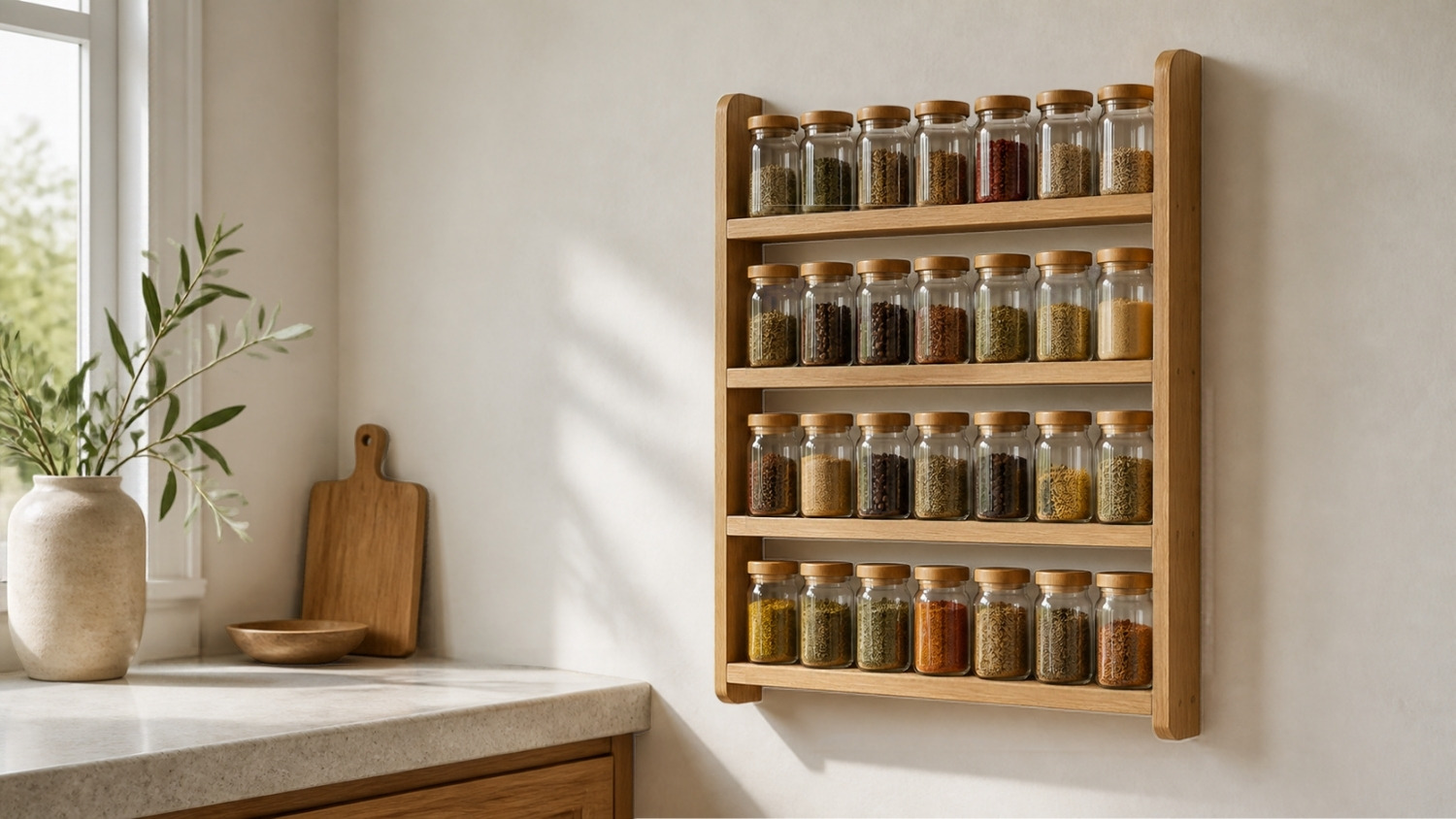
A vertical spice rack solves a reading problem: you cannot find the cumin because you cannot read the labels.
And you cannot read the labels because the jars are lying down, or standing in rows where the front row hides the rest. A rack fixes that by giving every jar a front position. Which of the four places it goes, a wall, the inside of a cabinet door, an angled drawer insert or a tiered shelf, comes down to four things: where you have room, whether you can drill, whether your own jars fit the rack, and whether it leaves slots free for the jars you buy next.
- Four placesA wall, a cabinet door, an angled drawer insert, a tiered shelf
- Two numbersYour tallest jar and your widest one. Both, every time
- No holesThe door rack and the tiered stand both go up without drilling
- Last monthCount the jars you actually cooked with, and buy for that plus room
Whose words these are. We do not write safety guidance in our own voice. Nemours KidsHealth publishes a parent guide called Preventing Cuts that is organized by room and includes the kitchen, and its pages are where to read what they recommend.
If you are drilling into the wall. Before you drill anywhere in a kitchen, find out what is behind the wall. You cannot tell from the surface what runs inside a kitchen wall. Scan the exact spot with a wall scanner before the drill touches it, and know that a common stud finder will not pick up plastic water lines. Stay off the wall directly above or below a sink, a faucet, an outlet, a switch or an appliance. Have the holes drilled by a licensed pro whenever you cannot confirm what is behind them. Do not drill a spot you have not checked. Fasten a wall rack into solid support, not into bare drywall: locate a stud, or use wall anchors rated for more than the weight you are hanging. Follow the load limit in the rack’s own instructions. If the rack states no load limit, treat it as light duty: hang part of your collection on it and keep the rest somewhere else. Retighten the screws a few weeks after you load it.
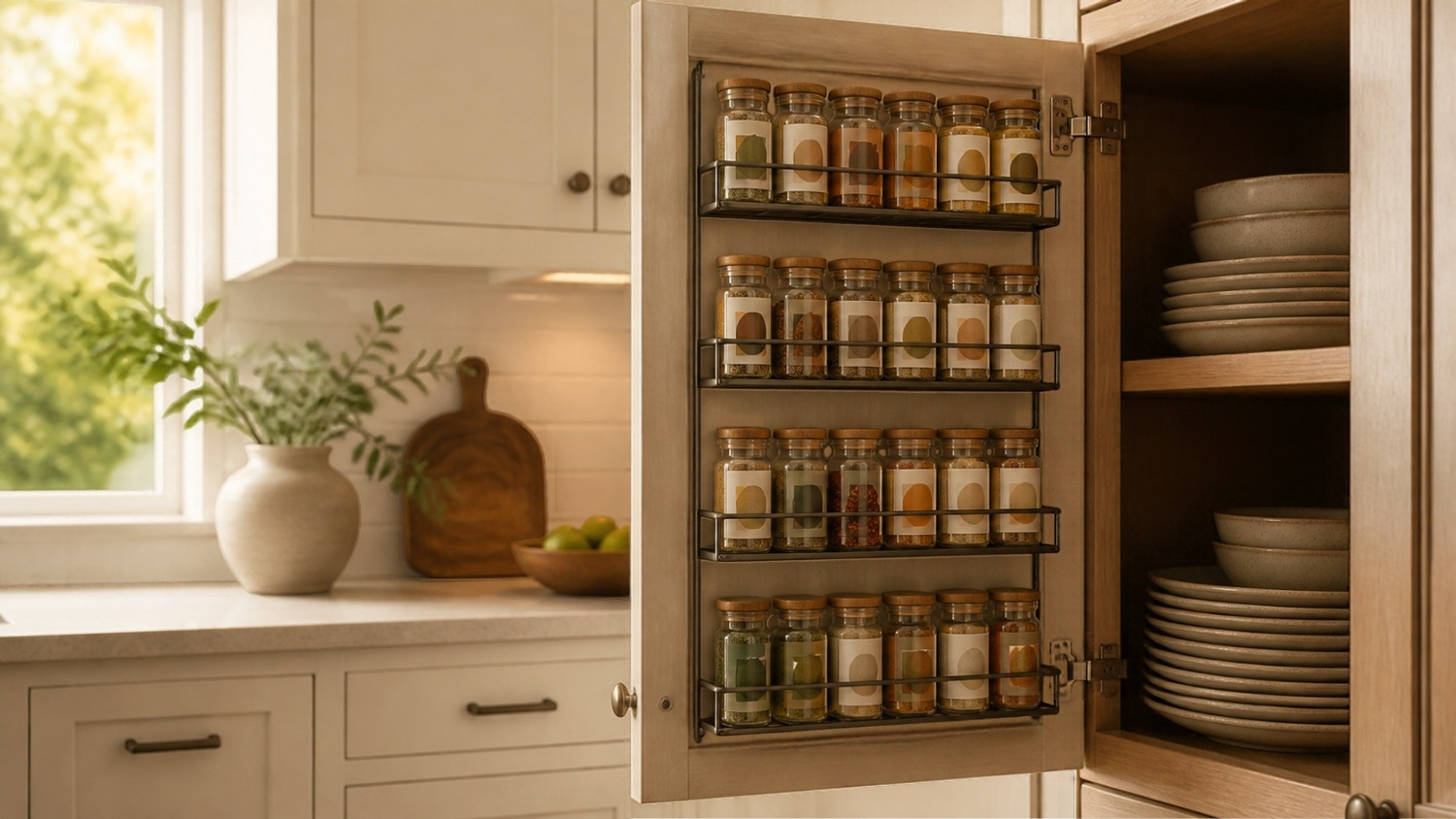
What a loaded door weighs. Full spice jars are heavy, and all of that weight swings on the door and its hinges every time you open it. Load a door rack lightly, keep it to the jars you reach for most, and check the hinges and their screws when you load it and again a few weeks later. Take the jars off if the door starts to sag or catch.
Height, for a second reason. A rack at child height is a rack a small child can empty, and a jar that falls can break. Mount the rack high rather than low, and remember a household with no children today can still have a visiting child in it tomorrow. If the only free wall you have is a low one, put the rack inside the door of an upper cabinet instead, high enough that a child cannot reach the jars when the door swings open. The door of a low base cabinet puts the same jars back within reach, so that is not the fallback. And put a wall rack within easy reach of where you cook but not on the wall behind or above the cooking surface, so you never have to reach across a hot burner for the cumin.
Measure the spot before you order the rack. The free Pantry Fit Planner takes the three figures a rack is judged on: the gap it has to fit under, the depth in front of it, and the height and diameter of your own spice jar. Five printable pages. Send it to me
📏 Hold your own jars against the rack before you order The step it is easiest to leave until after the box arrives. Your tallest jar and your widest one decide it. Try it ↓A vertical spice rack is judged on two of your own numbers
Two
Height decides whether a jar clears the tier above it or the cabinet door. Width decides whether it drops into a slot or a clip, and on a square jar the widest point is corner to corner. Hold both against the clearance between tiers and the slot size on the rack page, and rule out any rack that lists less than your two numbers, or that does not list them at all.
Before you buy, measure and count
Step 1
Measure the spot
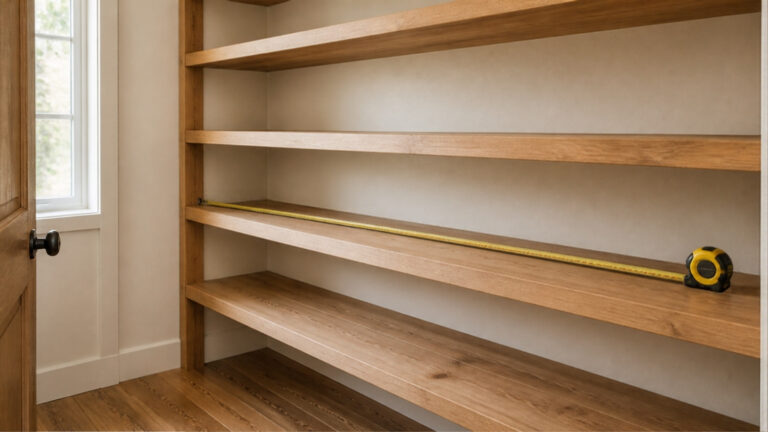
The width of it, the depth available in front of it, and the height of the gap if it is going inside a cabinet or on a shelf under another shelf. The gap is the easy one to forget, and a tiered stand that does not clear it has to go back.
Step 2
Measure a jar
This is the step it is easiest to leave until after you have ordered. Take your tallest jar and your widest one, and write both numbers down. A rack that takes one of your jars can still refuse the other.
Step 3
Count twice
Count your jars, and count the ones you actually cooked with in the last month separately. Buy for the second number plus room to grow, not for the first. The jars you have not touched in a year are a sorting problem, not a storage problem.
Will your own jars fit that rack? Put your two jar numbers and the two from the rack page into the tool below, and it tells you which one refuses, or that the page does not publish the figure at all. Work it out
Will your own jars fit that rack?
Two numbers off your shelf, two off the rack page.
Stand it on the counter and measure to the top of the lid.
The widest point, which on a square jar is corner to corner.
Leave empty if the page does not list it.
Leave empty if the page does not list it.
Every figure here is one you read: two off your own shelf, two off the rack page in front of you. We publish none of our own. The rule the tool applies is the one in the article above, that a rack listing less than your two numbers, or listing neither, is a rack to rule out. Nothing you type leaves your browser.
Why spices disappear in a tidy kitchenthree arrangements, all with the same flaw
If you have ever come home with your third jar of paprika, you are in good company. A jar you cannot read is a jar that is easy to buy again, and that is the part a rack can fix. It is a small job rather than a remodel.
Look at how yours are stored right now. In a drawer, lying down, with the label on a lid you cannot see. In a cabinet, standing up in rows, where the front row hides everything behind it. Or in a basket you lift out and rummage through.
All three have the same flaw. You can see some of the labels, or none of them, so you cook from the ones you can see, and the rest stay at the back of the shelf.
Here is one way a spice collection grows. You cannot find the paprika, the recipe needs paprika, so you buy paprika. The new jar goes at the front, where you can see it, and the old one moves one row further out of reach.
The fix is not a bigger rack. It is an arrangement where every label is readable from where you stand, without moving another jar first.
The four places a vertical spice rack can goand what each one costs you
| Where | What it suits | What it costs you |
|---|---|---|
| On the wall | A kitchen with free wall beside the counter, off to the side of the range | Drilling, and wall space you may want for something else |
| Inside a cabinet door | A kitchen with no free wall, and shallow jars | Door clearance, and the shelf behind it loses depth |
| In a drawer, on an angled insert | A spare drawer with enough height for the jars to sit at an angle | A whole drawer |
| On a shelf, on a tiered stand | A shelf with depth to spare, and no drilling at all | Shelf depth, since the tiers need room front to back |
None of these is the right answer in general. The right answer is the one that fits the room you have, the drilling you are willing to do, the jars you already own, and the jars you will buy next.
If drilling is off the table, decide that before you shop, not after. A tiered stand on a shelf and a rack that hangs over a cabinet door both go up without a single hole, and either one gives you the front position a flat row does not.
What going vertical actually buys youtwo things, and one it does not buy
Two things, and it is worth being precise about which.
The first is that every label faces you at once. A tier, a wall rack and a door rack all do this. A drawer does it too, if the jars are angled rather than lying flat. That is the real win, and it is the part that takes away the reason you bought the duplicate.
The second is the counter space you get back. This one depends entirely on what was on the counter before, and it only lasts if the new home is easier to use than the counter was.
What going vertical does not buy you is capacity. A rack that holds your current collection exactly leaves no slot for the next jar you buy, so leave yourself a gap when you choose.
Label the surface you actually look atnot the one the printing was on
Whatever you buy, the label that matters is the one facing you. Look at your own jars and find the surface you will actually be looking at. If the printing is somewhere else, write it where you will see it.
If your jars stand upright and you look down at them, the top of the lid is the label. If they sit in a wall rack and you look at them straight on, the side is the label. Write on the surface you will actually be looking at rather than the one the printing was on.
Write the name large and plain. Decorative labels in a small script are the ones you tend to pick up to read, which puts you back where you started.
Group by how you cook rather than alphabetically, unless alphabetical is how you think. Baking spices together, the ones you reach for at the stove together. Alphabetical ordering looks neat in a photograph and asks you to remember a spelling with a pan on the stove.
The rest of what to check before you orderdoor depth, jar shape, and where freshness is decided
If the rack is going inside a cabinet door, measure the depth the door needs to close over it and check what is on the shelf behind. A door rack takes its depth out of the shelf behind it, so a shelf that is already full is not a candidate.
Then shop with your two jar numbers in hand: on the product page, look for the slot size and the clearance between tiers, and rule out any rack that lists less than your two numbers, or that does not list them at all. A rack that takes one of your jars can still refuse the other. Height decides whether a jar clears the tier above it or the cabinet door. Width decides whether it drops into a slot or a clip.
Note the shape too. A slot, a clip or a ring holds a round jar and a square jar differently, so if your jars are square, check that the rack you are looking at takes square jars and not only round ones.
Where to keep spices for freshness rather than for findability is a different question, and it is not the one this article answers. Look at what your own spice packaging says about storage.
Frequently asked questionsseven, including where a wall rack should go
Is a wall or door rack better than a drawer insert?
Neither is better in general, and they solve the same problem in different rooms. Both put every label in a front position, which is the whole point; they just spend different space. A wall or door rack costs you wall or door space, and an angled drawer insert costs you a whole drawer. And if you want neither a hole nor a whole drawer, a tiered stand on a shelf spends shelf depth instead. Choose on what space you actually have spare. Jars lying flat in a drawer with the label on the lid is the arrangement that defeats you, whichever route you take.
Where should a wall spice rack go?
Within easy reach of where you cook, but not on the wall behind or above the cooking surface, so you never have to reach across a hot burner for the cumin. Put it high rather than low, and scan the wall before you drill, every time: you cannot tell from the surface what runs inside it. Stay off the wall directly above or below a sink, a faucet, an outlet, a switch or an appliance, and have the holes drilled by a licensed pro whenever you cannot confirm what is behind them. Fasten the rack into a stud, or into wall anchors rated for more than the weight you are hanging, and follow the load limit in the rack’s instructions. If the rack states no load limit, treat it as light duty: hang part of your collection on it and keep the rest somewhere else. Retighten the screws a few weeks after you load it.
How many spices should a rack hold?
More than you own today. Count the jars you actually cooked with in the last month, buy for that number plus room to grow, and treat the untouched jars as a sorting job rather than a storage job. A rack that fits your collection exactly leaves no slot for the next jar you buy.
Should I decant spices into matching jars?
Only if you are going to label them properly, and the label goes on the surface you look at rather than the one the printing was on. Decanting into identical unlabeled jars turns a findability problem into a worse one. If you do decant, write the name large and plain rather than in a small decorative script.
Do I alphabetize or group by use?
Group by how you cook unless alphabetical is how you think. Baking together, the stove group together. Alphabetical looks neat and asks you to remember a spelling with a pan on the stove.
Can I hang a spice rack on a cabinet door?
Yes, and it is the route that needs no holes, but mind the weight. Full spice jars are heavy, and all of that weight swings on the door and its hinges every time you open it. Load a door rack lightly: follow the load limit in the rack’s instructions, and keep it to the jars you reach for most. Check the hinges and their screws when you load it and again a few weeks later, and take the jars off if the door starts to sag or catch. Pick the door of an upper cabinet rather than a low one, so the jars sit high rather than low.
What do I measure before buying a spice rack?
The width of the spot, the depth in front of it, and the height of the gap if it goes under another shelf or inside a cabinet. For a door rack, also check the depth the door needs to close over it and what is on the shelf behind, because a door rack takes its depth out of that shelf. Then measure your jars, which is the step it is easiest to leave until after you have ordered: take your tallest jar and your widest one, write both numbers down, and rule out any rack whose listed slot size and clearance between tiers come in under your two numbers, or that does not list them at all. Note the shape too, because a slot, a clip or a ring takes a round jar and a square jar differently.
If you buy spices in large bags, bulk spice containers covers where the reserve goes. More pantry fixes are in our pantry organization guide, and the four zones that decide what goes where are in small pantry organization.
Your jar decides which rack fits
Page 4 of the free Pantry Fit Planner asks for the height and the widest diameter of one jar off your own shelf. Those are the two numbers to hold against the slot size and the clearance between tiers on the rack page.
Saved in this browser, on this device. No account, nothing sent to us, and it goes if you clear your browsing data. See what you saved