Best Garage Cabinets: The Four Things That Separate Them
When you buy through a link on Cozy & Tidy, we may earn a commission. It does not change the price you pay, and it does not decide what we recommend. How it works
Part of the garage organization guide.
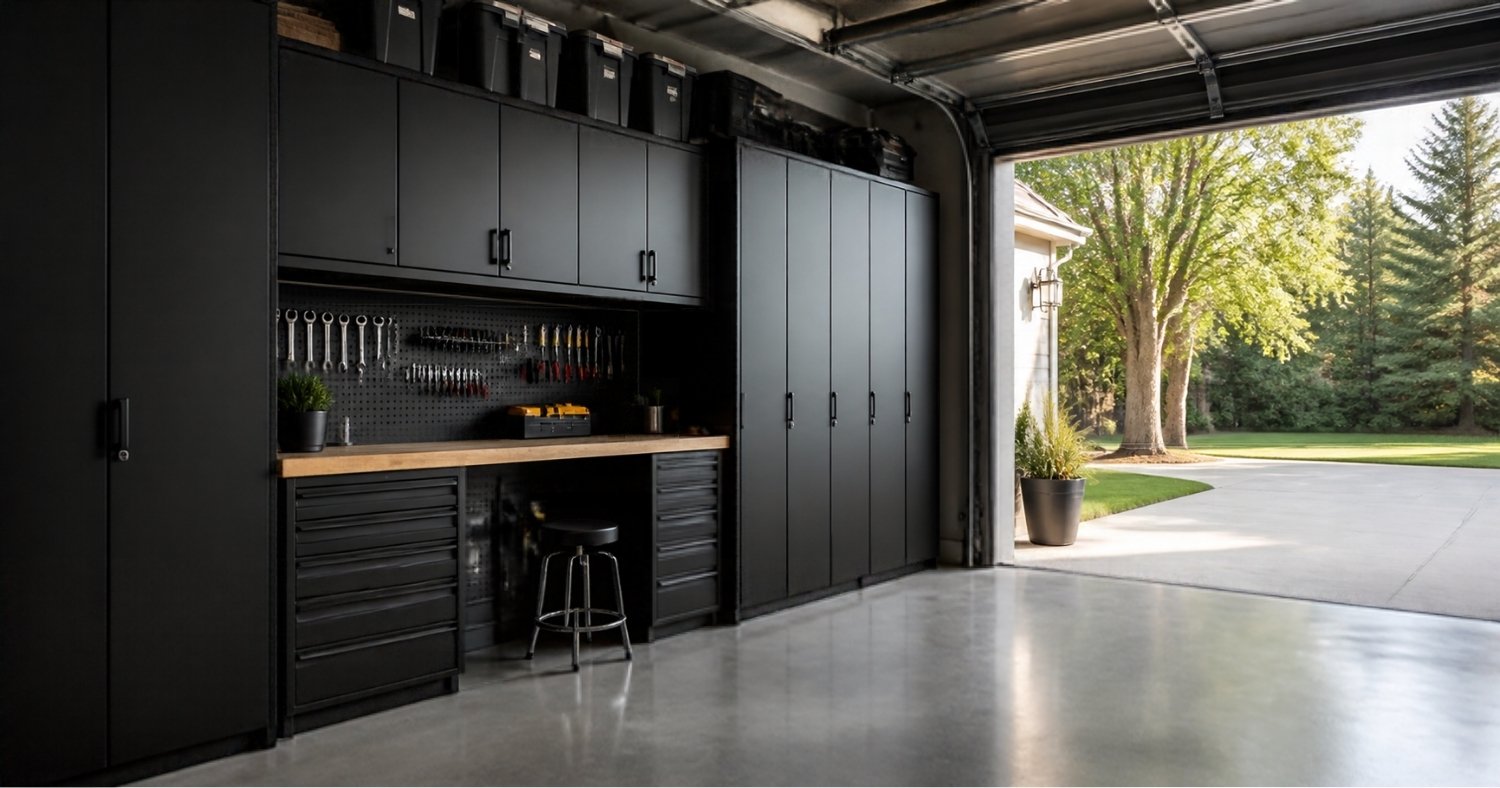
The best garage cabinets are not a single model.
What separates one from another is a short list: what it is made of, how it is fixed, how deep it is, and what it is rated to carry. Two of those four you settle yourself, with a tape and a set of scales. The other two are on the product page, and the load figure is usually given per shelf rather than for the cabinet as a whole.
- Four thingsMaterial, fixing, depth, and what it is rated to carry
- Per shelfHow the load figure is usually given, not for the whole cabinet
- Your gapThe depth left once the car doors are open. Not the catalog’s figure
- The exact unitTwo units in the same range can differ, so read that one
Check what is inside that wall. Scan with a detector that finds metal and live wires while the power is still on, then turn that circuit off at the panel, then drill. If anything in your garage runs on gas, a water heater, a furnace or a dryer, a gas line may run in that wall too, and that is not something to find with a drill: when you are not certain what is behind the spot you picked, have the holes placed by a licensed professional. The full list of checks is in the garage guide.
Tall units get anchored whichever type you buy, and the instructions supplied with the unit tell you which fixings suit the wall you actually have. A wall hung cabinet puts its load into the wall, so read the list of wall types the instructions approve against your own wall before you buy.
Chemicals and flammables. Store chemicals as their own labels tell you, and keep flammables away from a water heater or a pilot light.
Weigh it before you read a load figure. Page 5 of the free Garage Fit Planner asks you for one number almost nobody has: the weight of the heaviest thing you need to put away. Take it, and the rated figure on a listing becomes a yes or a no instead of a word. Five printable pages. Download the planner
📏 Settle the depth and the load before you compare prices Your leftover depth and the weight of your heaviest thing turn two catalog figures into a yes or a no. Try it ↓The best garage cabinets publish their load per shelf
Per shelf
The weight a unit is rated to carry is printed on its packaging or in the instructions supplied with it, and it is often given per shelf rather than for the cabinet as a whole. Two units in the same range can differ. Read it for the exact unit you are about to order, and buy for the heaviest thing you actually own.
A short way to choose
Step 1
Write down your wall length and your leftover depth
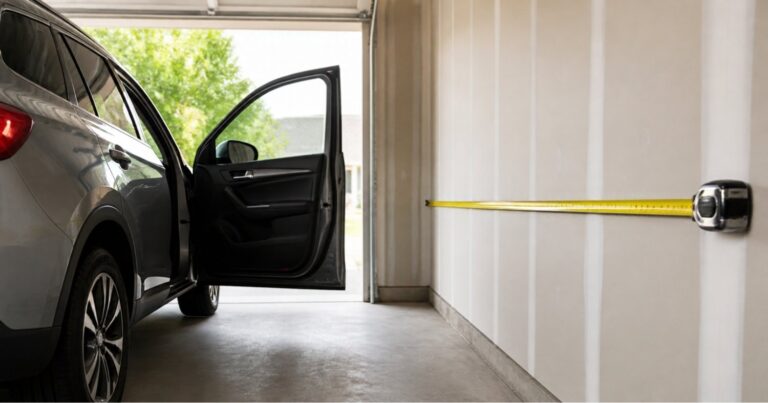
Park the car, open both doors, and measure what is left between the door and the wall. That figure, not the catalog, is your limit. The full measuring sequence is set out separately.
Step 2
Decide how much of the run is closed
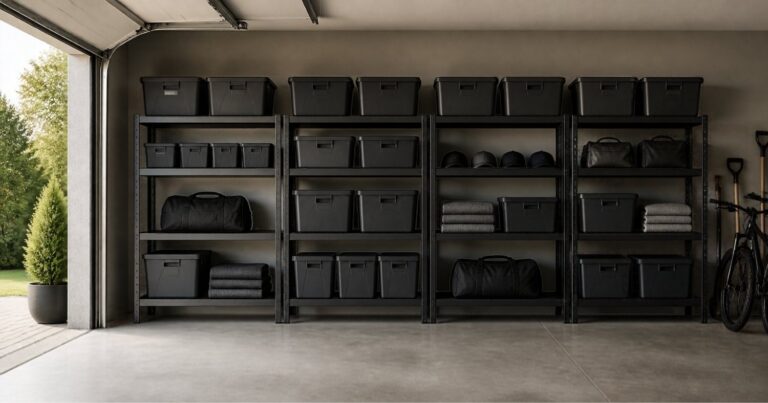
And how much is open shelving. That decision changes the quote as much as the material does.
Step 3
Check the weight rating on the exact units
Not on the range as a whole. Then pick on material and fixing, in that order. If the word custom is what brought you here, what custom actually buys you separates the three things it can mean.
Start with a steel set
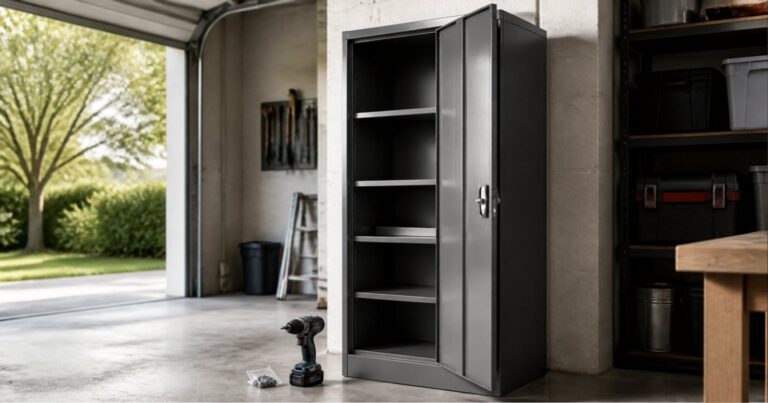
Armadillo Tough sells its garage cabinets in what the maker describes as heavy gauge steel, in preconfigured sets as well as single units.
Settle the depth and the load before you compare prices. Put your leftover depth and the weight of your heaviest thing into the tool below, with the two figures off the listing, and two catalog words turn into a yes or a no. Work it out
Does that cabinet clear your car, and carry your heaviest thing?
The two separators you can settle with a tape and a set of scales.
Park the car, open both doors, measure from the door to the wall.
The depth figure on the product page, not the one you hope for.
Weigh it. Bathroom scales will do. This is the number almost nobody has.
Leave empty if you cannot find it. It is on the packaging or in the instructions, per unit rather than per range.
Four figures, all of them yours to read: two with a tape in your own garage, two off the exact unit you are about to order. We publish no depth and no load figure of our own. The article above is where the four separators come from. Nothing you type leaves your browser.
Judge the material firststeel, board, plastic, and where to check each one
Steel. Takes damp and knocks. Heavier to handle during assembly, and the thickness of the steel is not the same from one range to another.
Melamine and board. Lighter and cheaper. A garage gets humid, and the cut edges are the part that suffers.
Plastic and resin. Easiest to live with, lightest duty. Fine for sports gear, garden tools and the bulky light things.
| What to check | Where you find it |
|---|---|
| Material | The product page |
| Weight rating per shelf | The packaging or the instructions |
| Depth | The specification, then your own wall |
| How it fixes | The fitting instructions |
| Whether it is wall hung or floor standing | The product page |
Steel takes damp and knocks. The thickness of it is what the product page has to tell you.
Then judge the fixing, and the depthfloor standing or wall hung, and what the car leaves
A floor standing cabinet carries its load down to the concrete floor. A wall hung one puts that load into the wall. The instructions supplied with it list the wall types it is approved for and the fixings each one needs, so read that list against your own wall before you buy. Everything about drilling and anchoring is in the panel at the top of this page.
Then the depth. Depth is what rules a cabinet in or out of a garage. Park the car, open both doors, and measure what is left between the door and the wall. The full measuring sequence is set out separately.
What the price tends to buyfour lines to compare before you compare prices
Price differences in a cabinet range usually show up in a handful of places, and you can check each one on the product page. The thickness of the steel. Drawers on slides instead of a fixed shelf. A countertop running across the whole set. The way the doors are hung. Compare those four lines between two models before you compare the prices.
What it does not buy is a different depth. That comes from the range.
Frequently asked questionsfive, including wall hung against floor standing
What are the best garage cabinets made of?
Steel handles damp and knocks better than board. The steel is not the same thickness from one range to another, and the product page is where each maker says what it uses.
Are wall mounted or floor standing cabinets better in a garage?
Floor standing carries its load to the concrete floor and leaves nothing under it. Wall hung frees the floor and puts the load in the wall, so check that the instructions cover your type of wall before you order.
How deep should a garage cabinet be?
Measure what is left once your car doors are open. That figure, not the catalog, is your limit.
Do garage cabinets need to be anchored?
Anchor tall units to the wall, following the instructions supplied with them, which tell you which fixings suit your type of wall.
Is a set cheaper than buying cabinets one at a time?
A set is picked to work together and arrives matched. Buying singly lets you stop when the wall is full. How each one arrives and what you assemble is covered in ready to assemble and the alternatives.
See the matched sets
Preconfigured sets take the picking out of it: the units are already chosen for you.
Saved in this browser, on this device. No account, nothing sent to us, and it goes if you clear your browsing data. See what you saved