Garage Storage Systems: The Four Families and What Each One Needs
When you buy through a link on Cozy & Tidy, we may earn a commission. It does not change the price you pay, and it does not decide what we recommend. How it works
Part of the garage organization guide.
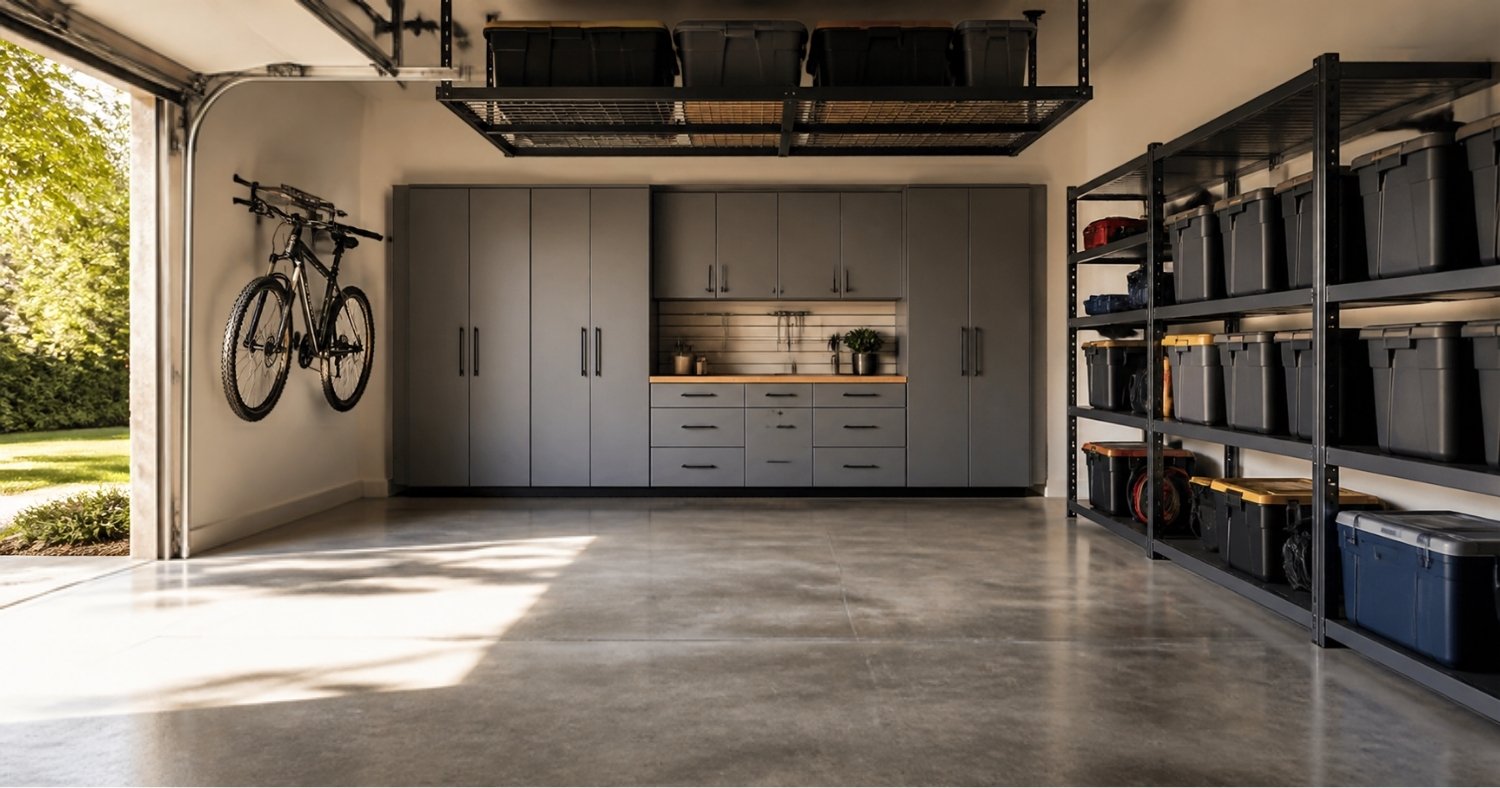
Garage storage systems come in four families, and they do not compete: cabinets, shelving, wall tracks and overhead racks. Most garages end up using two or three of them, each doing the job the others cannot.
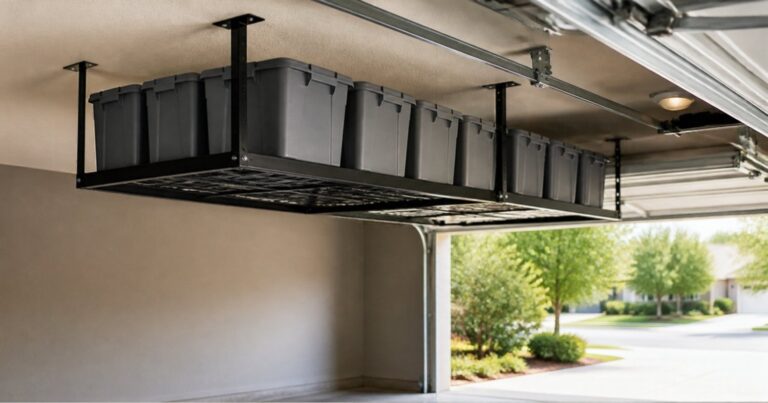
Three of the four systems in one garage: cabinets, shelving, and a rack overhead. Few garages use only one.
- 4families, and they do different jobs
- Athe wall length you intend to line
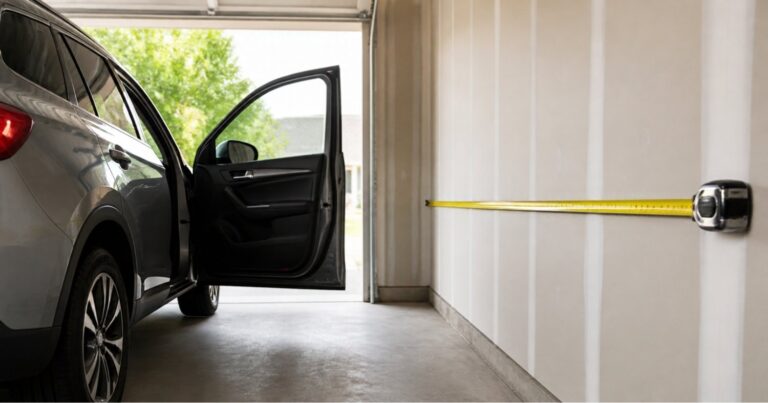
- Bthe depth left once the car doors open
- Cthe gap between the door track and the ceiling
Walls. Scan with a detector that finds metal and live wires while the power is still on, then turn that circuit off at the panel. If anything in your garage runs on gas, a gas line may run in that wall too, and that is not something to find with a drill. When you are not certain what is behind the spot you picked, have the holes placed by a licensed professional. The full list of checks is in the garage guide.
Ceilings. Locate the structure with a stud finder, and stop there if it finds nothing rather than guessing. Read the instructions supplied with the rack before you buy: they say which ceiling types it is approved for and how to fix into each one. If they do not cover your ceiling, or you cannot tell what you have, ask a contractor before you drill.
Weight. Every hook, shelf and rack has its own limit printed with it. Put the heavy things on the hooks rated for them, stay under the printed limit, and fit an overhead rack with a second pair of hands. Check every weight limit on the packaging of the exact unit you order, not on a figure from a listing.
Flammables and locks. Keep flammable liquids such as gasoline, solvents and lighter fuel away from any cabinet near a water heater, a furnace or a pilot light, and store them as the product label tells you. If a cabinet holds anything a child should not open, use one that locks.
Our free Garage Fit Planner takes the four measurements that answer all of this: the wall, the car, the ceiling with the door open, and the thing you are storing. Print it and fill it in before you pick a family.
The three readings that decide which garage storage systems you can use
What to measure
The wall length, the depth left once both car doors are open, and the gap between your garage door track and the ceiling
Park the car where it normally sits, open both doors, and take B from the wall face to the furthest point the door reaches. Take C with the door up and fully open, from the top of the track to the ceiling.
The four families, one at a time
1
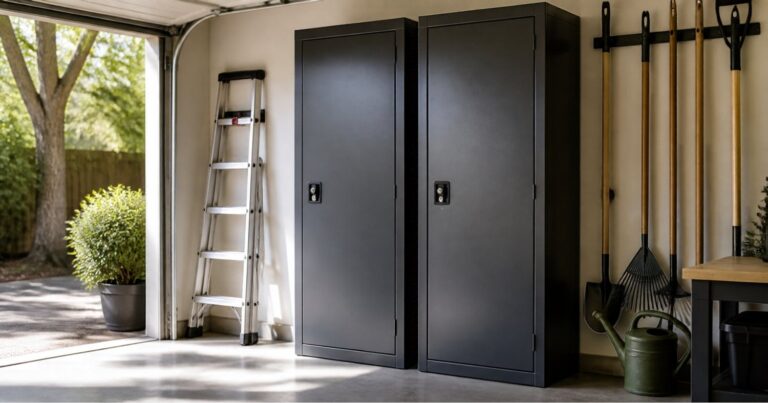
Cabinets, for anything you want out of sight
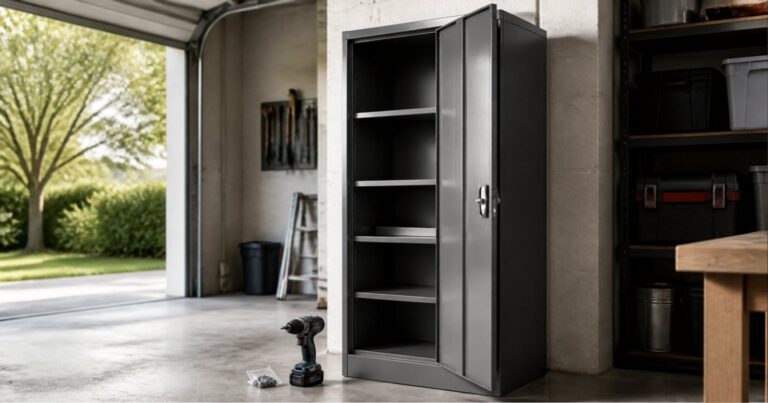
Closed storage. Dust, damp and the look of the garage all improve the moment the clutter is behind a door. The cost is depth, and the figure comes from your own garage rather than the catalog: park, open both car doors, and measure what is left. What custom buys you covers the grades, and the layout sequence covers the measuring.
2
Shelving, for the bins and boxes you reach often
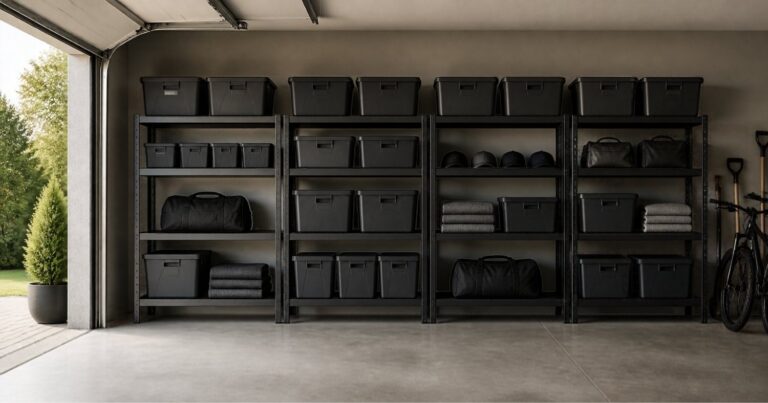
Open storage, the most capacity for the money. Free standing units carry their load to the floor. Wall mounted units free the floor and put the load in the wall. Garage shelving solutions compares the three mountings, and wall mounted shelving covers the wall itself. Put matching bins on open shelves: matching bins make an open shelf look finished.
3
Wall tracks and hooks, for the awkward shapes
A rail fixed across the wall, with hooks that move along it. This is the system for a ladder, a string trimmer, a bike, a wheelbarrow. The rail has to go into something solid, and the instructions supplied with it tell you what that is for your wall. It is also the easiest system to change your mind about: a track lets you move a hook without making a new hole.
4
Overhead racks, for what you rarely reach for
The ceiling is space you may not be using at all. Overhead racks hang from the structure above and hold the things you rarely reach for. Three things decide whether you can use one: the height between your garage door track and the ceiling, what your ceiling is built from, and the weight limit printed with the rack. Overhead garage storage covers the door clearance and the fixing in full.
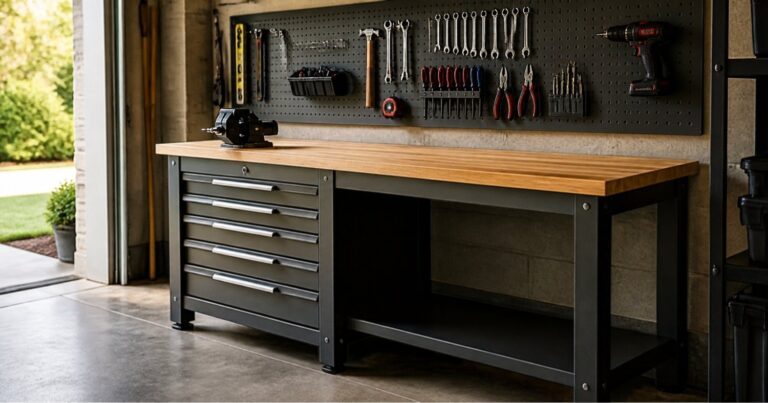
Armadillo Tough sells three of the four in one range: garage cabinets, free standing, wall mounted and ceiling mounted shelving and racks, workbenches and accessories, in what the maker describes as heavy gauge steel. See the full range
What each family asks of youthe four side by side
| System | What it is for | What it asks of you |
|---|---|---|
| Cabinets | Anything you want out of sight | Wall length, and depth once the car doors open |
| Shelving | Bins and boxes you reach often | The same depth, plus somewhere to stand |
| Wall tracks and hooks | Long tools, bikes, ladders | A wall you can fix into |
| Overhead racks | What you rarely reach for | Ceiling height, and what the ceiling is built from |
How garage storage systems work togethera typical two car garage
Cabinets along one wall for the things you want hidden. Shelving on a second wall for bins. A track by the door for the long tools. Racks overhead for the seasonal boxes.
You may not need all four. One on its own rarely covers a whole garage.
The order to buy infour steps, cheapest mistakes first
Measure the wall length and the leftover depth first.
Buy for what is currently on the floor. That is the part that stops you parking.
Leave the overhead rack until the walls are done. It holds what you are not going to miss.
Check every weight limit on the packaging of the exact unit you order.
Frequently asked questionssix answers
What is the best garage storage system?
They do different jobs. Cabinets hide clutter, shelving gives the most capacity for the money, tracks take the awkward shapes, overhead racks take what you rarely touch.
Should I use cabinets or shelves in a garage?
Cabinets for what you want out of sight and protected from dust. Shelves for the bins you open often. There is room for both, on different walls, and how to judge a cabinet covers the choosing.
Is overhead garage storage safe?
Establish what your ceiling is built from first, then follow the instructions supplied with the rack, which say which ceiling types it is approved for. Keep to the weight limit printed with them, and ask a contractor if your ceiling is not covered. Put the things you rarely reach for up there.
How do I start organizing a garage?
Clear the floor first, then measure the wall you intend to line and the depth left once the car doors are open. Buy to those two figures.
Do I need to fix garage shelving to the wall?
Wall mounted shelving fixes to the wall by definition, and the instructions tell you which fixings suit your wall. Free standing units stand on the floor, and tall ones still get anchored, following those same instructions.
What should go in garage cabinets?
Whatever suffers from dust or belongs behind a door: paint, power tools, car products, anything small hands should not reach. The two cautions about flammable liquids and locking cabinets are in the safety box at the top of this article.
Four measurements, four families
Each family asks a different thing of your garage, and our free Garage Fit Planner takes the four measurements that answer them: the wall, the car, the ceiling with the door open, and the thing you are storing. Print it and fill it in before you pick a family.
Compare the systems in one range
Cabinets, shelving, ceiling racks and workbenches, all from one range.
Saved in this browser, on this device. No account, nothing sent to us, and it goes if you clear your browsing data. See what you saved