
Home / Garage
Room guide
Garage organization
Garage organization with cabinets, shelving, wall tracks and overhead racks. What each one is for, the measurements to take first, and what to check before you drill.
Measure before you shop. Our free Garage Fit Planner takes the four figures this guide keeps coming back to: the clear wall, the depth your car leaves, the height under the open door, and what you are storing.
Check it fits before you order
Type in the measurement you took, and the tool tells you whether the thing on screen will go in.
The floor is the whole problem
A garage fills from the floor up. Things come in, they get put down, and once the floor is gone the room stops being a garage and becomes storage you walk around.
Every fix below does the same job: give each thing a place that is not the middle of the floor.
Two measurements rule most of what you can buy. The length of the wall you intend to line, and the depth left once your car doors are open. Take the second one with the car where it actually lives, not with the garage empty. Planning a garage cabinet layout walks through the sequence, and adds the third one: the length of your longest item.
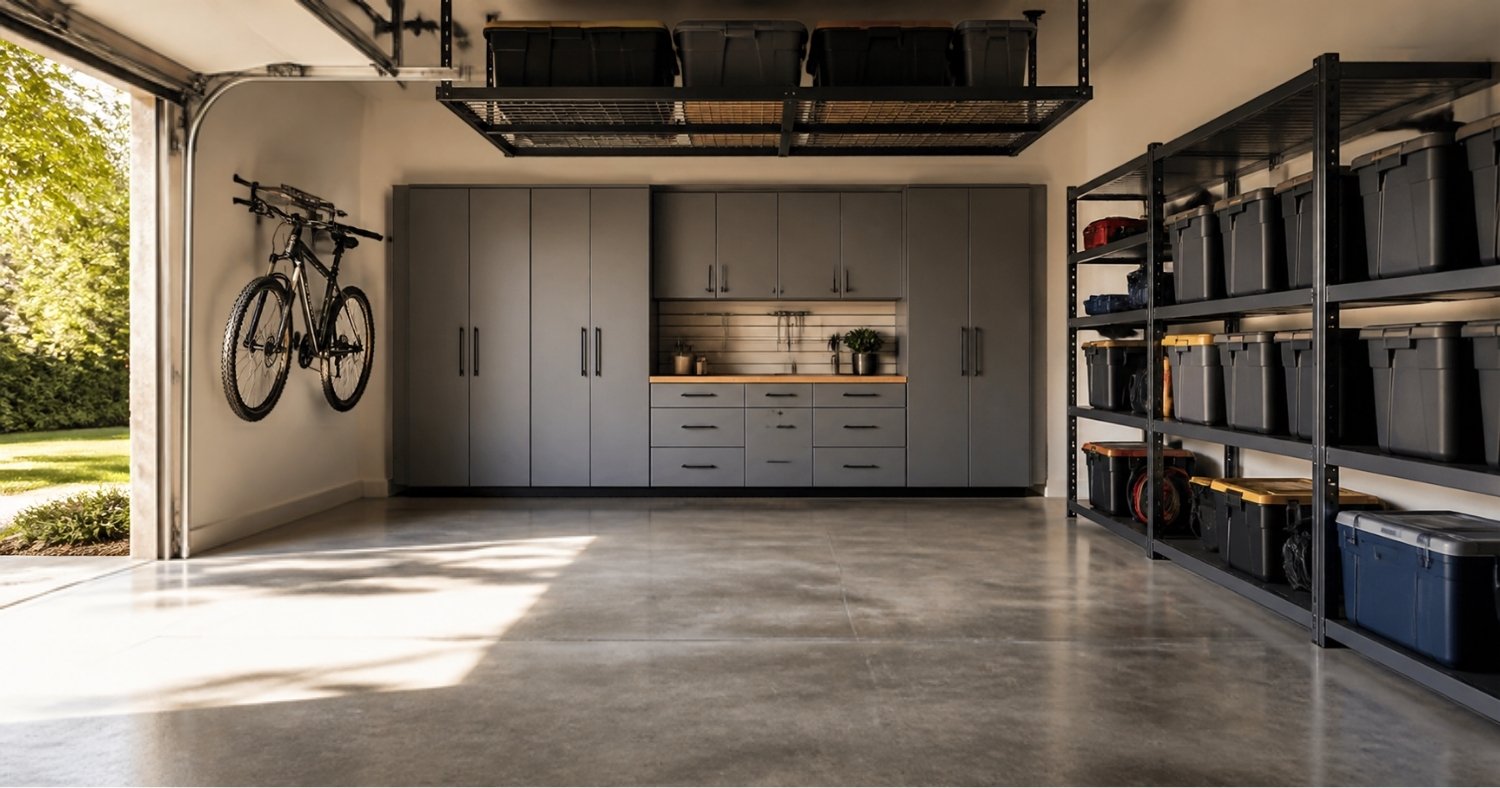
Four systems, and they do not compete. Cabinets for what you want out of sight, shelving for the bins you reach often, wall tracks and hooks for the awkward shapes, overhead racks for what you rarely touch. Pick the ones your things actually need, and expect to use more than one.
Check the weight limit for the exact unit you are buying, on its packaging or in its instructions, and stay under it. On shelving it is often given per shelf rather than for the whole unit, and on a hook rail each hook carries its own limit, so read which one you are looking at. Install everything the way its own instructions say, for the wall or ceiling you actually have.
Start here
Garage storage systems: the four families
What each system is for, what it costs you, and how to tell which one a given pile of stuff belongs in.
Read the guide →
Free printables
The Garage Fit Planner
Before you drill anything
This is the part of a garage where a mistake hurts someone, so it comes before the shopping.
Find out what is behind the wall before you buy. What a shelf or rack has to be fixed to is named in the instructions that come with it, and that is the line to read first. Use a stud finder to locate what is there and mark it before you buy. What is behind a garage wall is not something I can tell you from here. Take a photo of your wall and ask at the store which anchor yours needs, or have the unit installed. If the detector finds nothing along the whole wall, that is not an answer and it does not mean nothing will hold there: it means you have not identified your wall yet. Take a photo and ask at the store which anchors your wall needs, or have the unit installed.
Assume cables and pipes are there even where nothing shows. An outlet, a switch, the breaker panel, a faucet or a water heater all tell you something runs nearby, but a bare stretch of wall tells you nothing. Scan first, with the power still on, using a detector that finds metal and live wires: a circuit you already switched off will not show up on the live-wire setting. Then turn that circuit off at the panel, and if you cannot tell which breaker feeds that wall, turn off the main breaker instead and work with a flashlight or a battery lamp. Keep your holes away from anything you cannot account for, and treat a clean scan as a reason to be careful rather than a green light. Wear eye protection.
If anything in your garage runs on gas, a water heater, a furnace, a dryer, then a gas line may run inside that wall, and a detector that finds metal will not tell you what the metal is. Nothing about a gas line is worth finding with a drill. If you have gas appliances and you are not certain what is behind the spot you picked, have the holes placed by a licensed professional rather than drilling yourself. Same answer if the wall carries the breaker panel or the water supply: an electrician or a plumber places the holes.
Keep the breaker panel clear. Nothing gets built, stacked or stored in front of it. Can anything at all be stored in front of your electrical panel? That is a question for an electrician or your local building inspector, not for a storage guide. Until you have that answer, treat the panel and the floor in front of it as off limits: your run of cabinets stops short of it on both sides, and nothing gets stacked there, not even temporarily.
Leave the water heater and the furnace alone. Do not block their vents, their air openings or the space a technician needs to reach them, and do not judge that clearance by eye. The clearances are in the instructions for the appliance. If you cannot find them, ask a plumber or a heating technician before you order anything for that wall.
If nothing will hold in your wall, do not force it. Stay with low, free standing units and keep the heavy things at the bottom.
Cabinets are bought on depth
What rules a cabinet in or out is its depth against your open car door. That figure comes from your own garage, not from the catalog, and it is the one measurement worth taking twice.
Once it fits, closed storage is what changes how a garage reads. Dust is slowed, and the clutter stops being the first thing you see. How to judge a cabinet covers the rest: material, mounting, and what it is rated to carry.
The word custom covers three different purchases, and only one of them changes the cabinet itself. What custom actually buys you separates them, and what arrives in the box decides what your delivery day looks like.
Open shelving, and what it is for
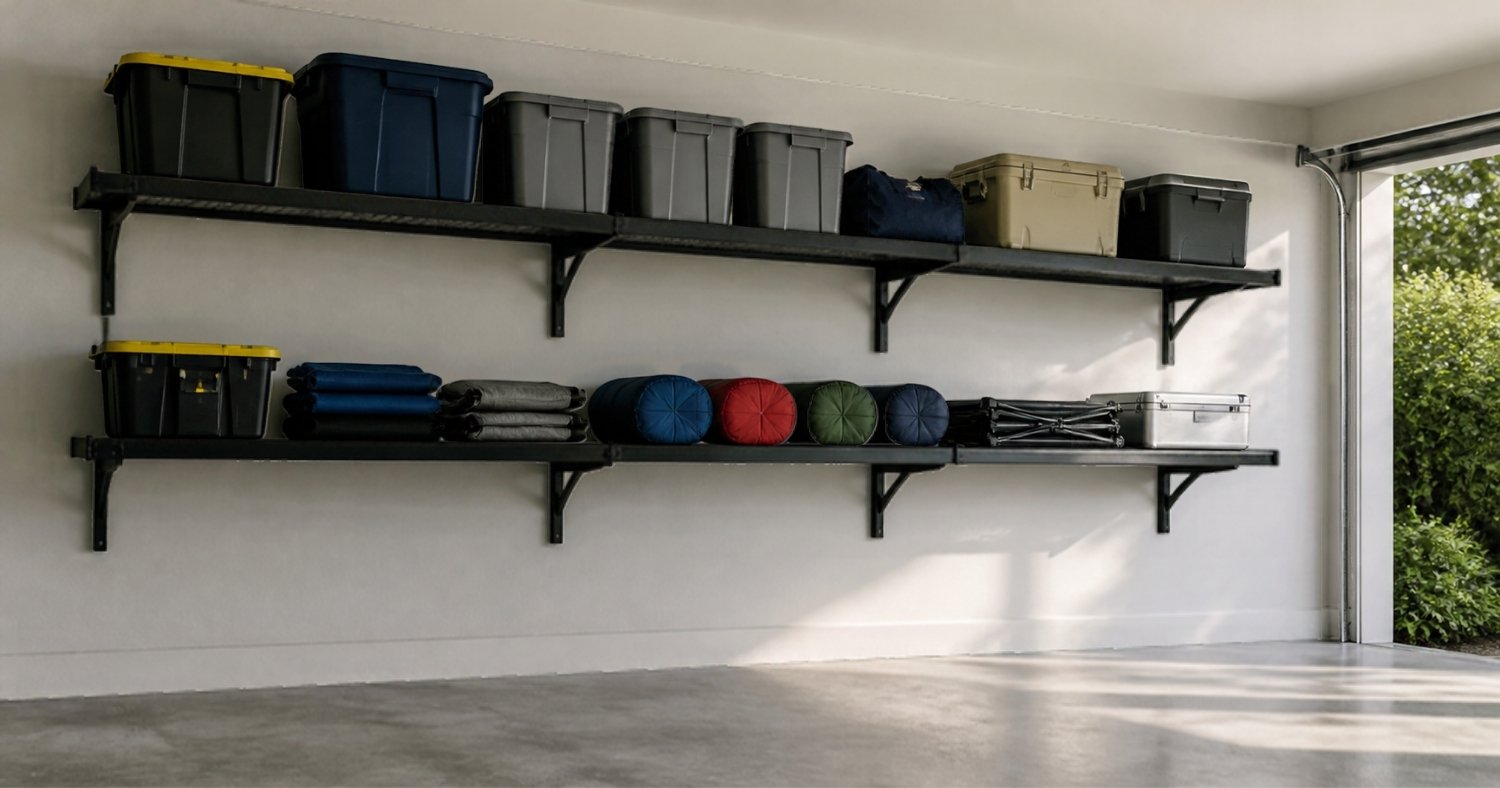
Open shelving puts a lot on a wall and shows everything on it. Matching bins are what make that read as finished rather than chaotic.
Your floor decides the mounting, not the shelf. If you can park and still walk around the car, free standing works. If you cannot, the storage goes up the wall. Either way, keep shelves clear of where the car doors swing. The three mountings are compared side by side, and wall mounted shelving covers what to check on the wall before you drill.
Weight stays low. Getting things off the floor pushes mass upwards, so decide deliberately what goes high. Anything heavy, and anything you would need two hands to carry down, belongs at hand height or below.
Wall tracks and hooks for the awkward shapes
Ladders, string trimmers, long handled tools, folding chairs and bikes are what defeat a garage laid out purely in shelves. They have no footprint worth a shelf and no shape worth a cabinet, and they end up leaning on something.
A track screwed across the wall takes hooks that move along it, so a bike and a leaf blower can share one run. The track goes into the structure like everything else, but the number that matters is the one on the hook: each hook carries its own limit, and a light hook on a strong track is still a light hook. Put the heavy things on the hooks rated for them. The four families guide covers what each system is for.
Looking up
Overhead racks hold the light, bulky things you rarely reach for: seasonal decorations, empty luggage, out of season sports equipment.
Two things decide whether your garage can take one. The gap left between the ceiling and the garage door once it is fully open, which the rack has to sit inside with room to spare rather than fill, and what your ceiling is built from. Garage ceilings are not all built the same way, and a rack approved for one is not automatically approved for another, so establish what yours is before you buy. Read which ceiling types the rack is approved for in its own instructions, and ask a contractor if your case is not covered. Overhead garage storage sets it out step by step.
Your ceiling decides whether a ceiling rack is possible at all. Use a stud finder on the ceiling to find out what is up there and mark it before you buy anything. If it finds nothing, stop there and ask a contractor what your ceiling is built from rather than guessing. Never fix a rack to the garage door track, the opener or its rails, and hang nothing from them.
Install it with someone else there, and wear eye protection: you are drilling above your own head. Once the rack is up, run the door through a full open and close and watch from a safe distance that nothing on the rack comes near the moving panel.
Not everything goes up there. Chemicals, paint and car products stay at hand height, and so does anything heavy or anything you need two hands to carry. What goes up is light and bulky, nothing else. On the ladder, keep both hands for the ladder: whatever you cannot carry down one handed does not go up there in the first place.
Tall gear, and the things that need a lock
Tall closed units take the long handled things out of sight. Garage closet systems covers closed storage built for garage conditions.
A tall unit gets anchored back to the wall before anything goes inside, into the structure behind it, following the instructions supplied with it. Do it even if the unit feels heavy enough on its own. Tip-over is the subject of Anchor It, a public campaign from the Consumer Product Safety Commission, and its pages are where to read what they publish on anchoring a tall unit.
Keep flammable liquids out of the warm end of the garage. Gasoline, solvents and lighter fluid go nowhere near the water heater, the furnace or anything else with a flame or a pilot light, and nowhere near a cabinet standing next to one. Store them the way the product label tells you, and keep gasoline in a container sold for gasoline.
Propane does not belong in the garage at all. The Minnesota State Fire Marshal is explicit that cylinders above the small camping size must not be stored or used indoors at a home, and says that covers attached and detached garages. The grill tank lives outside.
What does belong behind a lock: paint, power tools, blades, car products, or anything else small hands should not reach. Use a unit that locks. If nothing you own locks, pick the place a child cannot get into rather than simply the highest one, and keep paint and car products off the ceiling rack.
Somewhere to actually work
A run of cabinets along the whole wall leaves you storage and nowhere to use it. Leave a working section, and decide its length before you order the cabinets rather than after. Planning the bench covers what goes underneath it.
Common garage organization questions
Where do I start if the garage is full?
Clear the floor, then park the car and measure twice: the length of the wall you want to line, and the depth left once the doors are open. Buy to those figures, plus the length of your longest item. Floor clutter is what stops you parking, and that is where to start.
Cabinets or shelves?
Cabinets for what you want out of sight and away from dust, shelves for the bins you open often. There is room for both, on different walls.
Is overhead storage safe?
It depends on what your ceiling is built from, which is the thing to establish before you buy. Fix the rack into the structure above, following the instructions for that ceiling type, and ask a contractor if your case is not covered. Leave room between the rack and the garage door when it is fully open, stay under the weight limit printed for that rack, keep it off the door track and the opener, and put only the light things you rarely reach for up there.
Fixes by problem
Watch the fix
Sixty seconds, one spot, no music
Shop this look
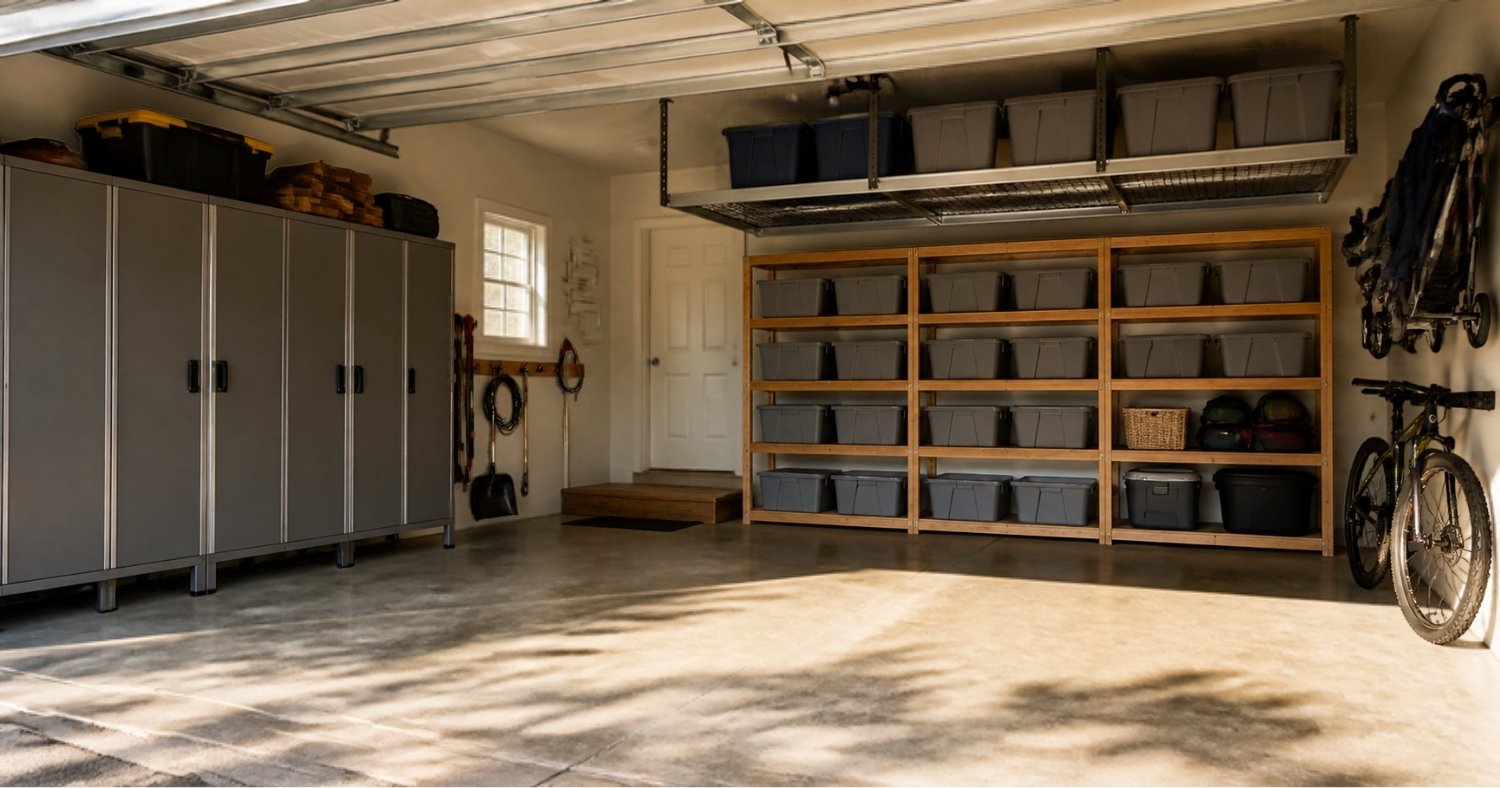
Everything in this photo, with the figure that decides it
Each number on the photo is one product, with the measurement its own listing publishes.
-
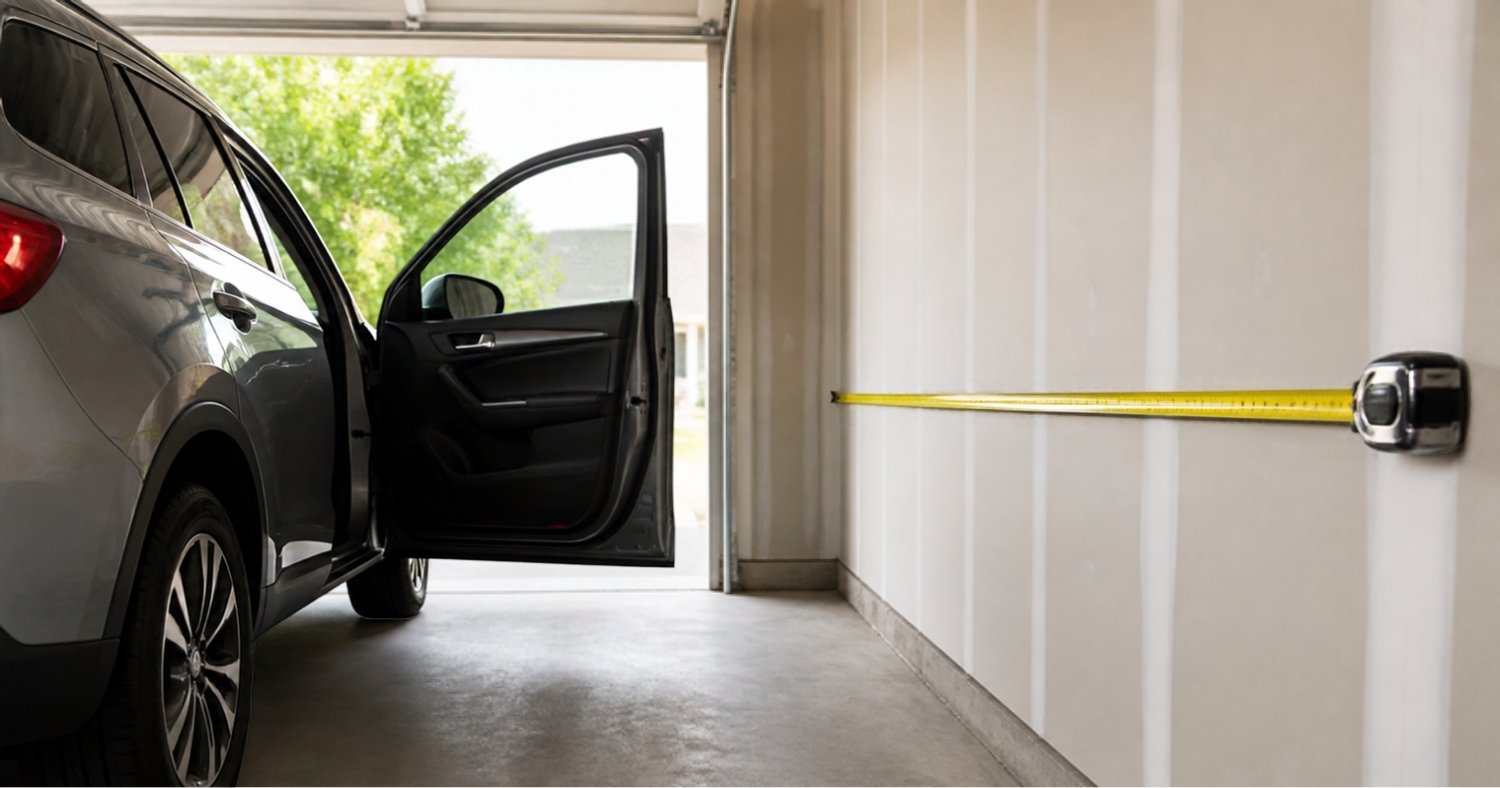
Garage Cabinet Design: Four Decisions, in Order
Read the fix →
-
-
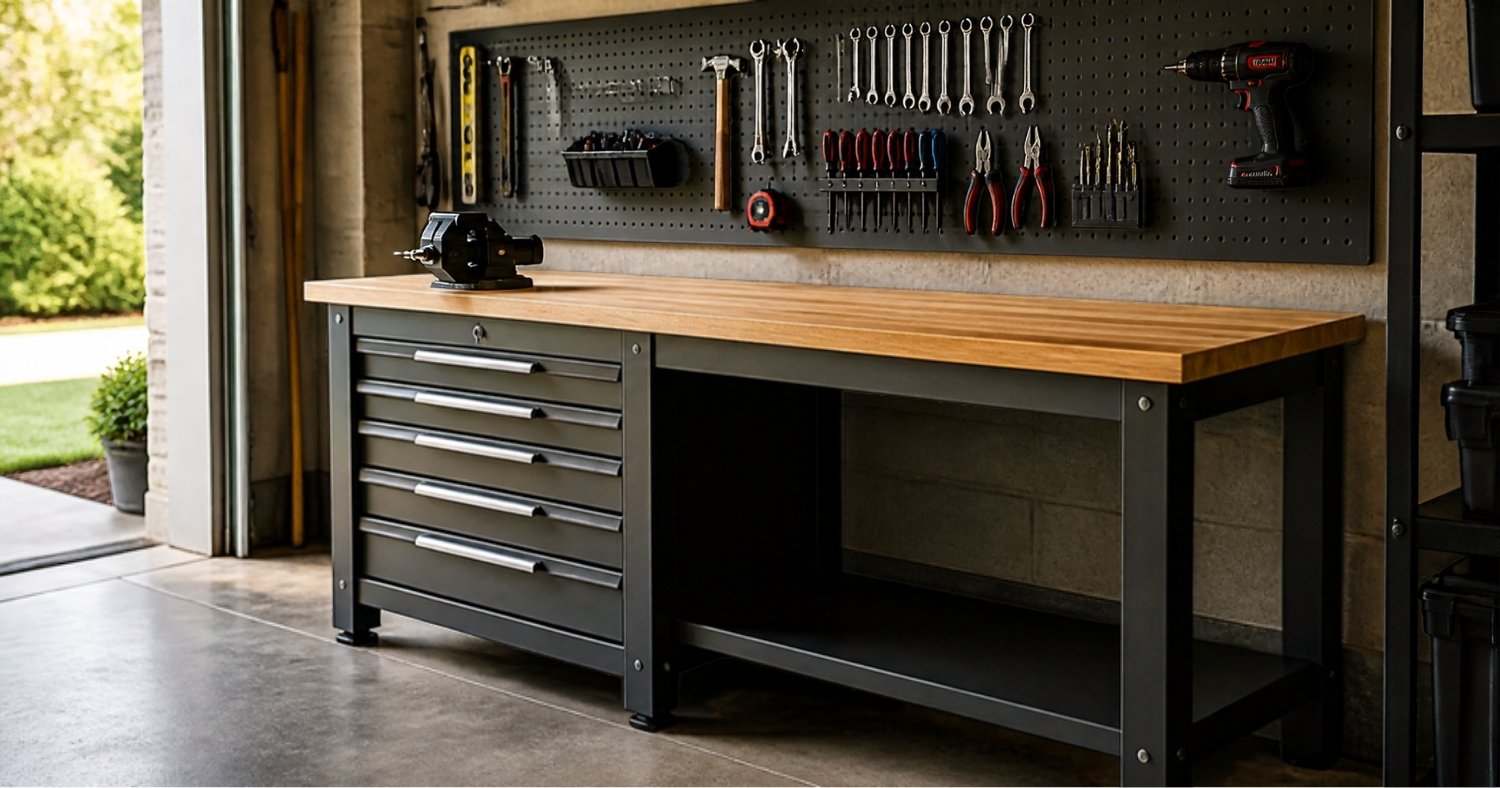
Custom Garage Workbench: The Four Things to Decide First
Read the fix →
-
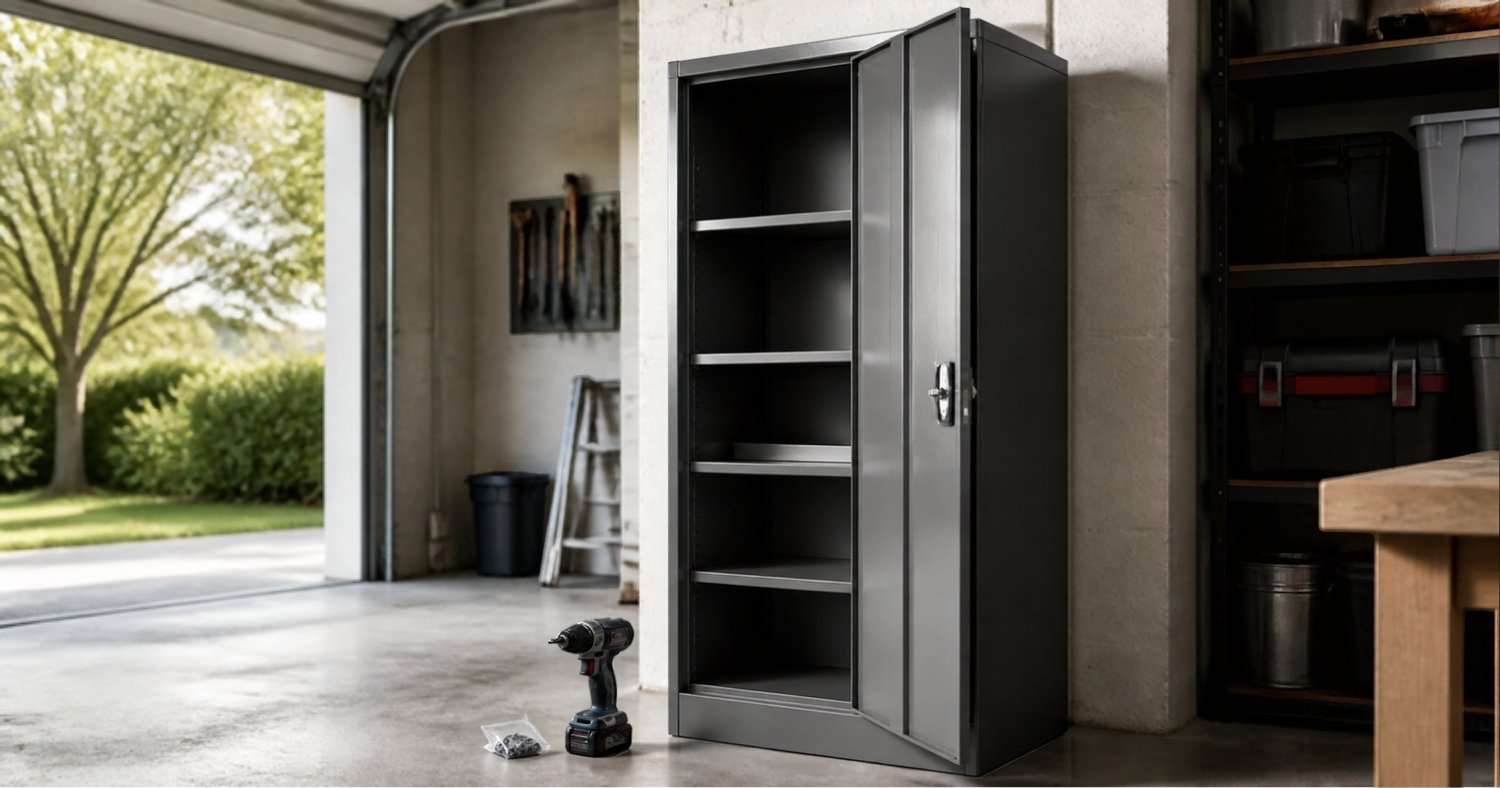
RTA Garage Cabinets: What Actually Arrives in the Box
Read the fix →
-
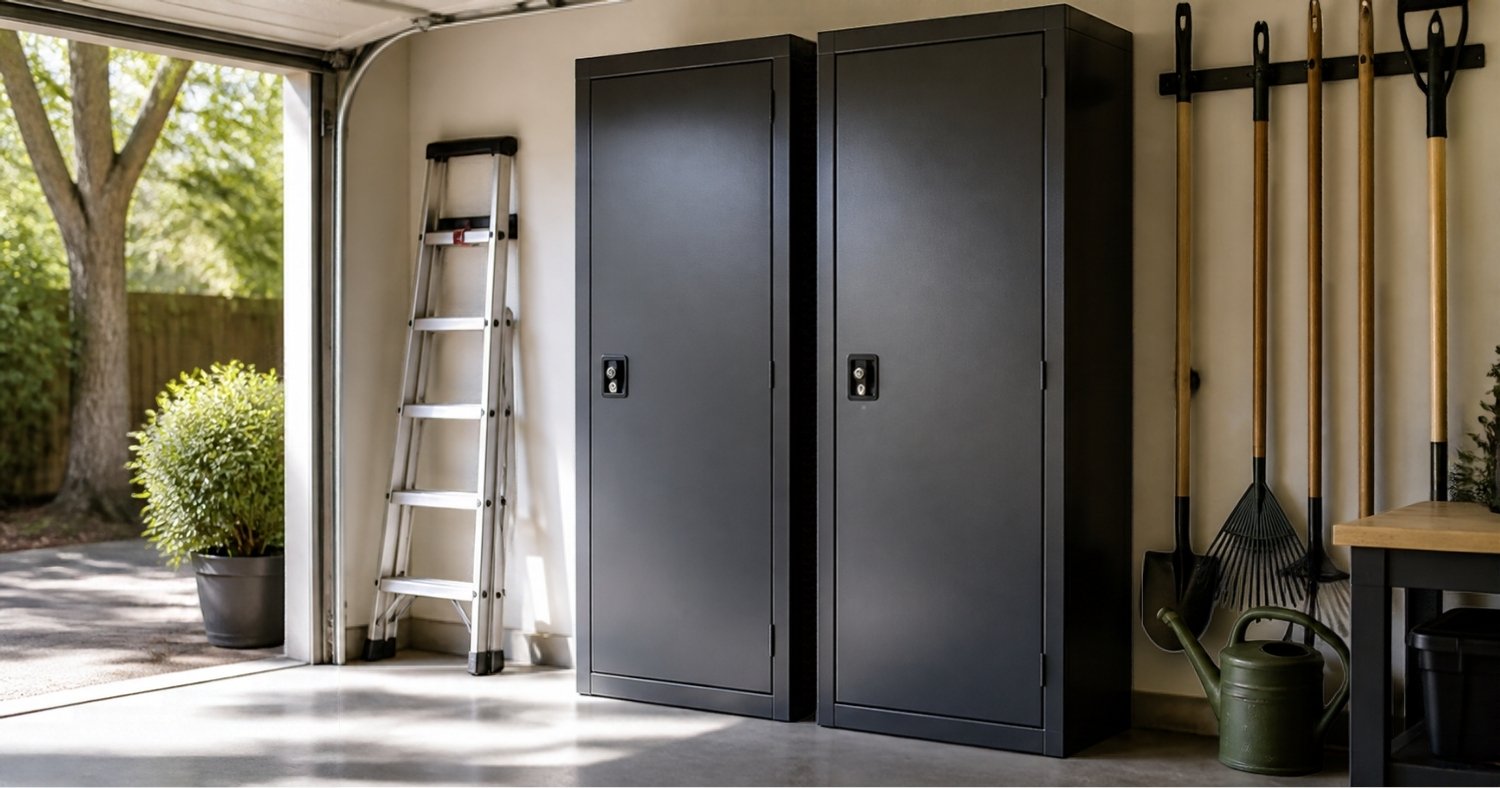
Garage Closet Systems: Closed Storage That Survives a Garage
Read the fix →
-
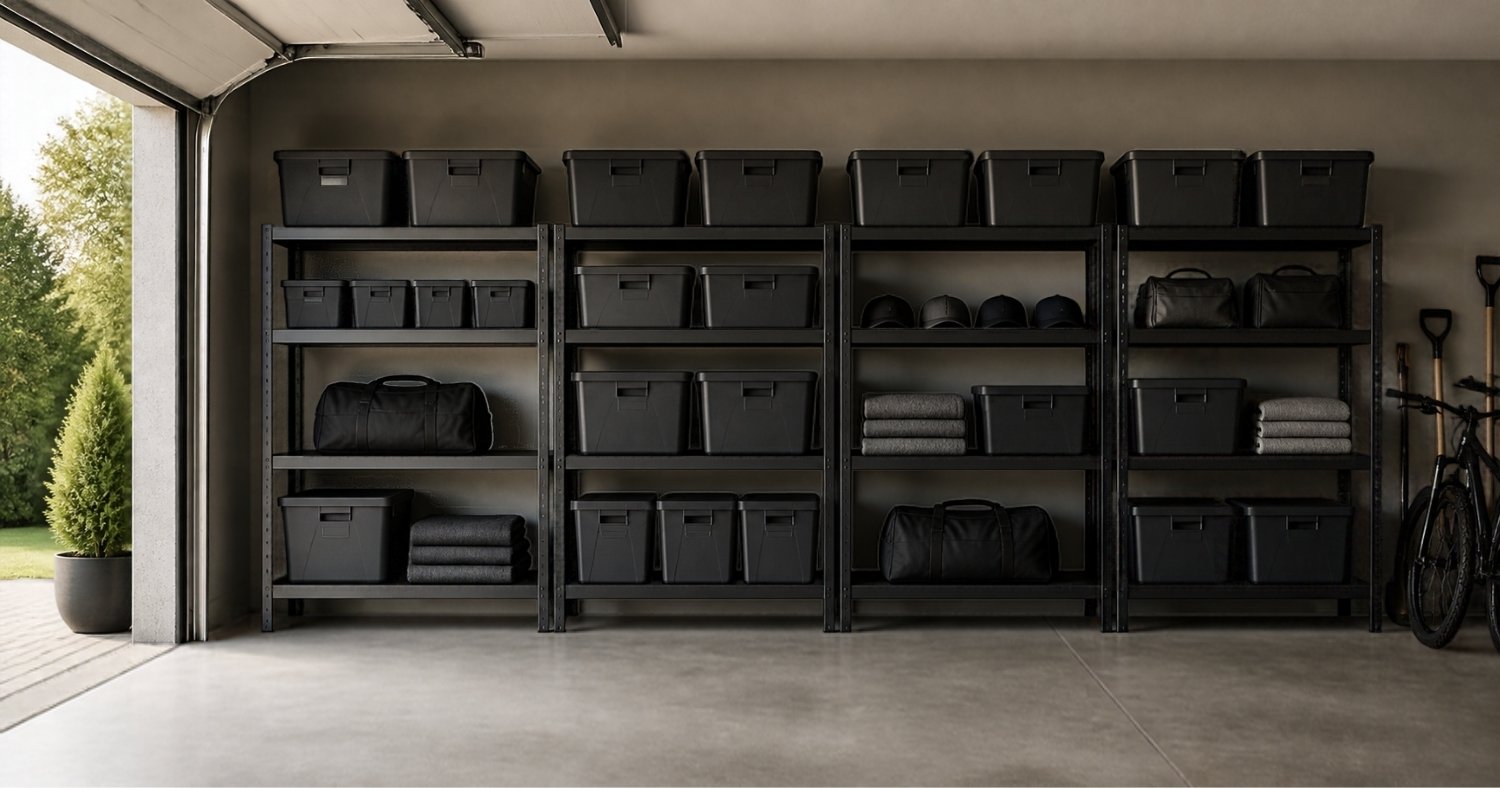
Garage Shelving Solutions: Three Mountings, One Choice
Read the fix →
-
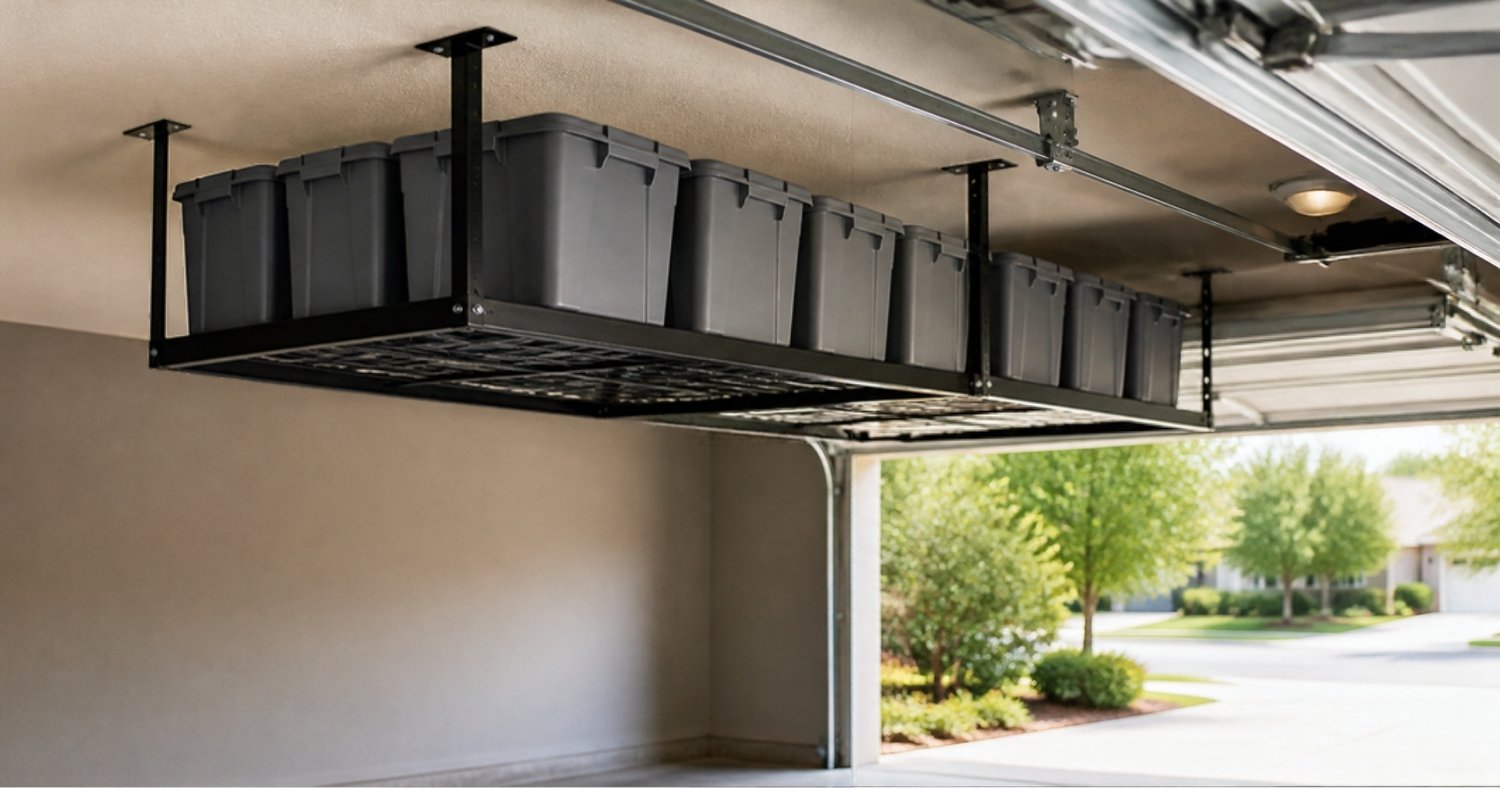
Overhead Garage Storage: What Your Ceiling Has to Give You
Read the fix →
-
-
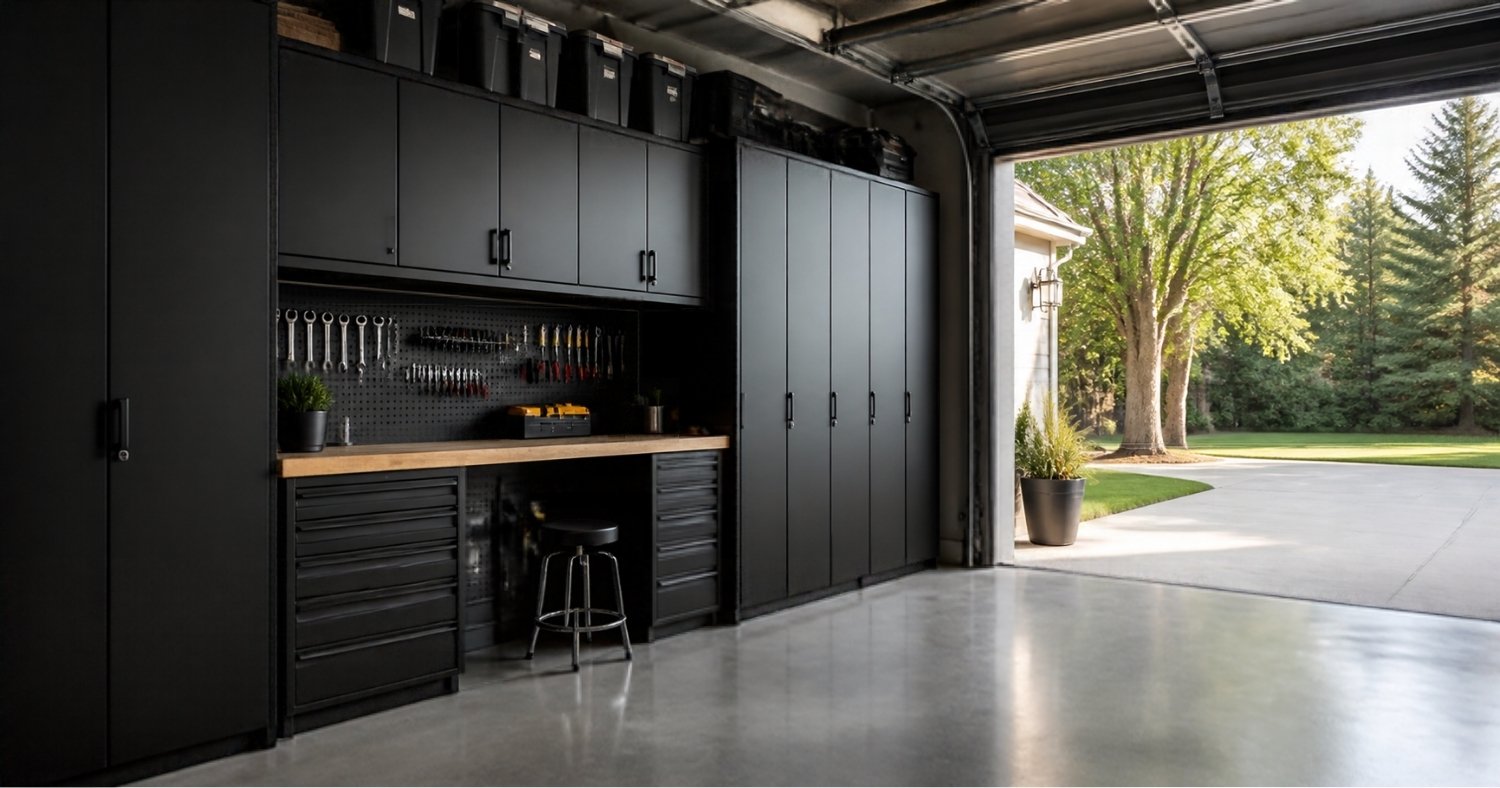
Best Garage Cabinets: The Four Things That Separate Them
Read the fix →
-
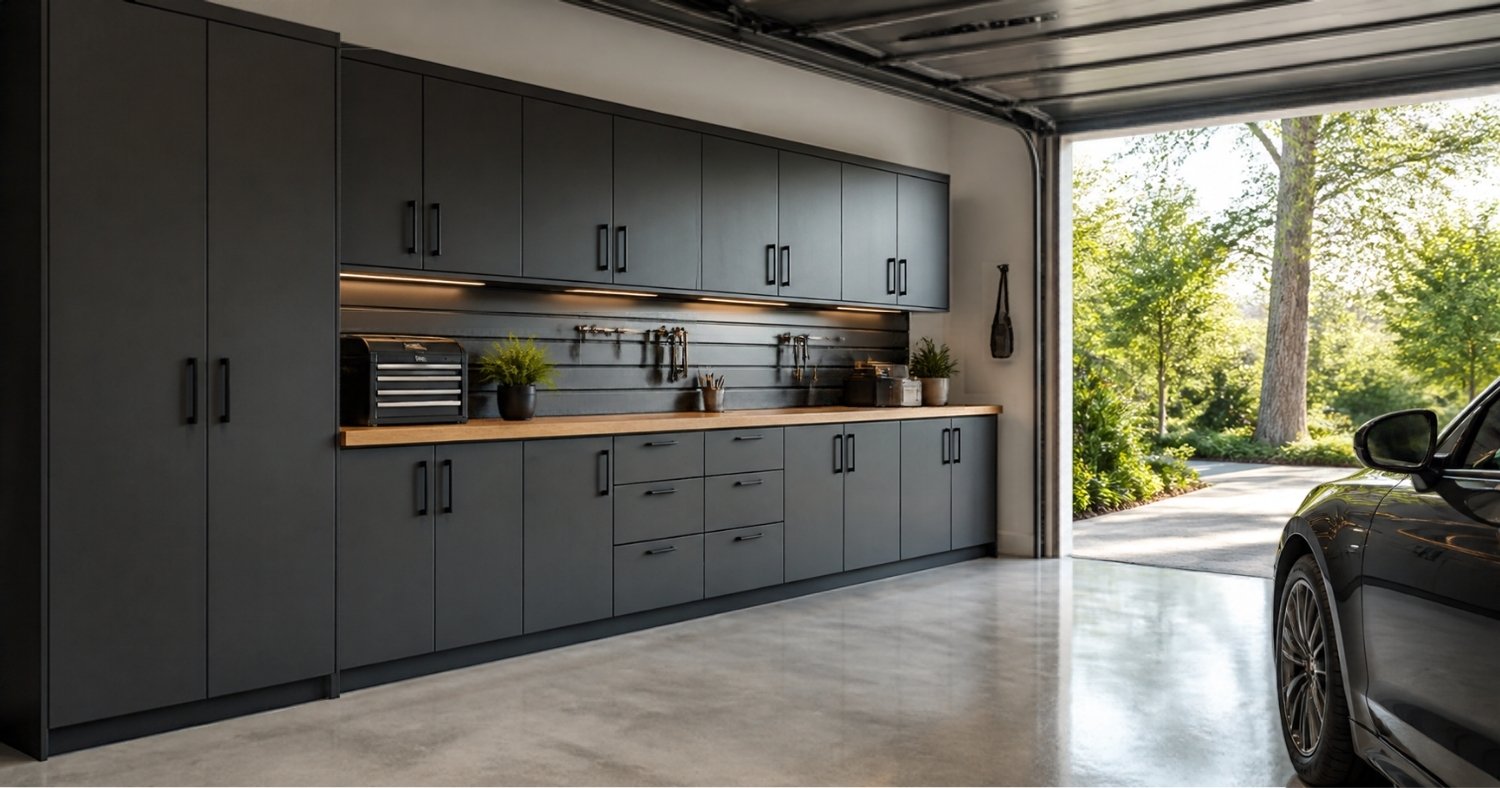
Custom Garage Cabinets: What You Are Actually Paying For
Read the fix →