Affordable Closet Systems: What You Give Up Going Down a Grade
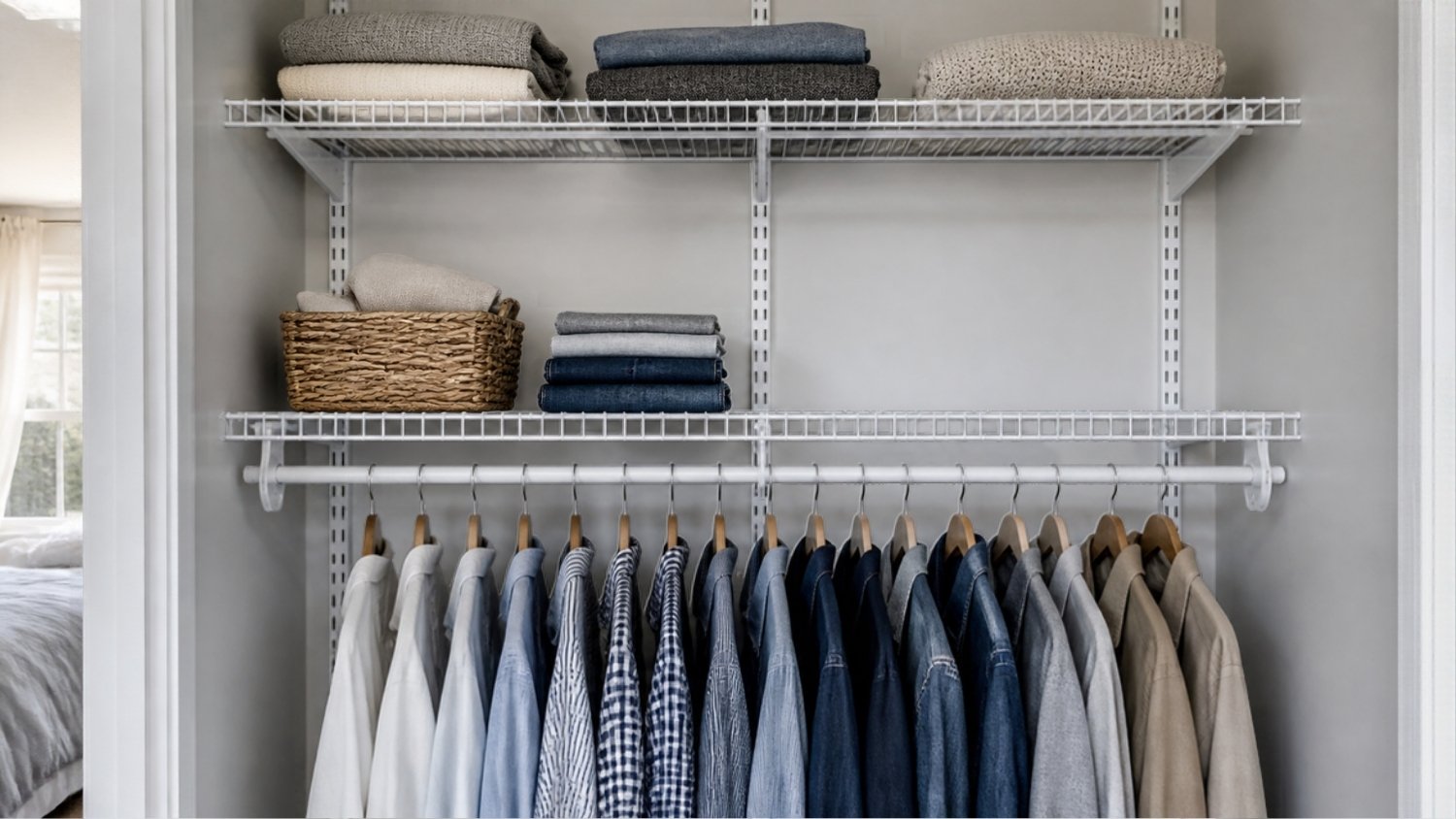
Going down a grade to affordable closet systems does not mean worse storage. It means a different set of compromises, and they are predictable.
What the money buys at the top is panels rather than brackets, drawer runners that close themselves, and a layout drawn for your closet before anything is cut. What it does not buy is height: a rod hangs where you fix it. So the honest question is not which grade, it is where to put the money inside whichever grade you pick.
- SameRod heights, shelves that move, drawers, a layout cut to your width
- DifferentThe built-in look, hidden hardware, soft close
- Spend onThe rod and its fixing. That is what carries weight
- Buy lastDrawers, once you know what is left after hanging
Cap the cut end. If you have the shelf cut to your width, the cut end needs finishing, and ClosetMaid says so in its own words: “Shelf Caps should be placed on the cut ends of shelving to protect clothing.”
On what the shelf will carry, use the figure for the product you bought. The grade changes the fixing and the span between supports, which is the part that carries the weight, so a capacity quoted for one system tells you nothing about another. Look yours up on the maker’s own page and read the whole sentence around the figure, including what the hardware has to go into. If a shelf dips in the middle, that is a sign to stop filling it and go back to the figure its maker publishes.
Spend it on the right thing. The free Closet Layout Planner gives you a measuring sheet, so what you buy fits. Get the free planner
What affordable closet systems actually change
The heights
A rod hangs where you fix it, and a shirt does not care what the rod cost. The grade shows in the hardware and the finish. It also changes the fixing and the span between supports, which is the part that carries the weight, and that is where the money is worth spending.
How to spend the least and lose the least
Step 1
Put the money into the rod and its fixing
That is what carries weight. Everything else on the wall is finish, and finish does not fail.
Step 2
Accept visible brackets
What they cost you is the built-in look, and nothing else. A liner under folded knitwear deals with the marks the wires leave.
Step 3
Cut the shelves to your width
Rather than building the closet around a stock size. ClosetMaid says shelving “can be cut to your closet measurements, usually right at the store.” Made to measure exists at the top of the market too, as a paid option. In the wire family it is the standard way of selling it.
Step 4
Buy the drawers last
Once you know what is left over after hanging. Drawers are the part of a budget system that ages fastest, and the part you are most likely to over-order.
Measure, then spend. Print the sheet, fill it in, and buy in that order. Get the free planner
What you lose and what you keepfour of each, side by side
| What you lose | What you keep |
|---|---|
| A built in look | The same rod heights |
| Hidden hardware | Shelves that move |
| Soft close drawers | Drawers |
| A layout made to measure | A layout cut to your width |
What the money buys at the top
Panels rather than brackets, which is what reads as built in. Drawer runners that close themselves. A layout drawn for your closet before anything is cut.
What it does not buy
Height. A rod hangs where you fix it, and a shirt does not care what the rod cost. What the grade does change is the fixing and the span between supports, which is the part that carries the weight.
Where cheap is not a compromise at alland the two places it does cost you
Cutting to width. ClosetMaid says shelving “can be cut to your closet measurements, usually right at the store.” Made to measure exists at the top of the market too, as a paid option. In the wire family it is the standard way of selling it.
Changing your mind. On a track system, moving a bracket is a slide along the track. On a bracket screwed into the wall, it is a new hole. Moving a screwed wood panel is an afternoon and some filler.
Where it does cost you
Visible hardware. Brackets and tracks show. Liners help under folded knitwear.
Drawers. Fabric drawers on a frame lose their shape sooner than a drawer on runners.
Finish. The cut end of a wire shelf needs a cap, which is the point in the warning above.
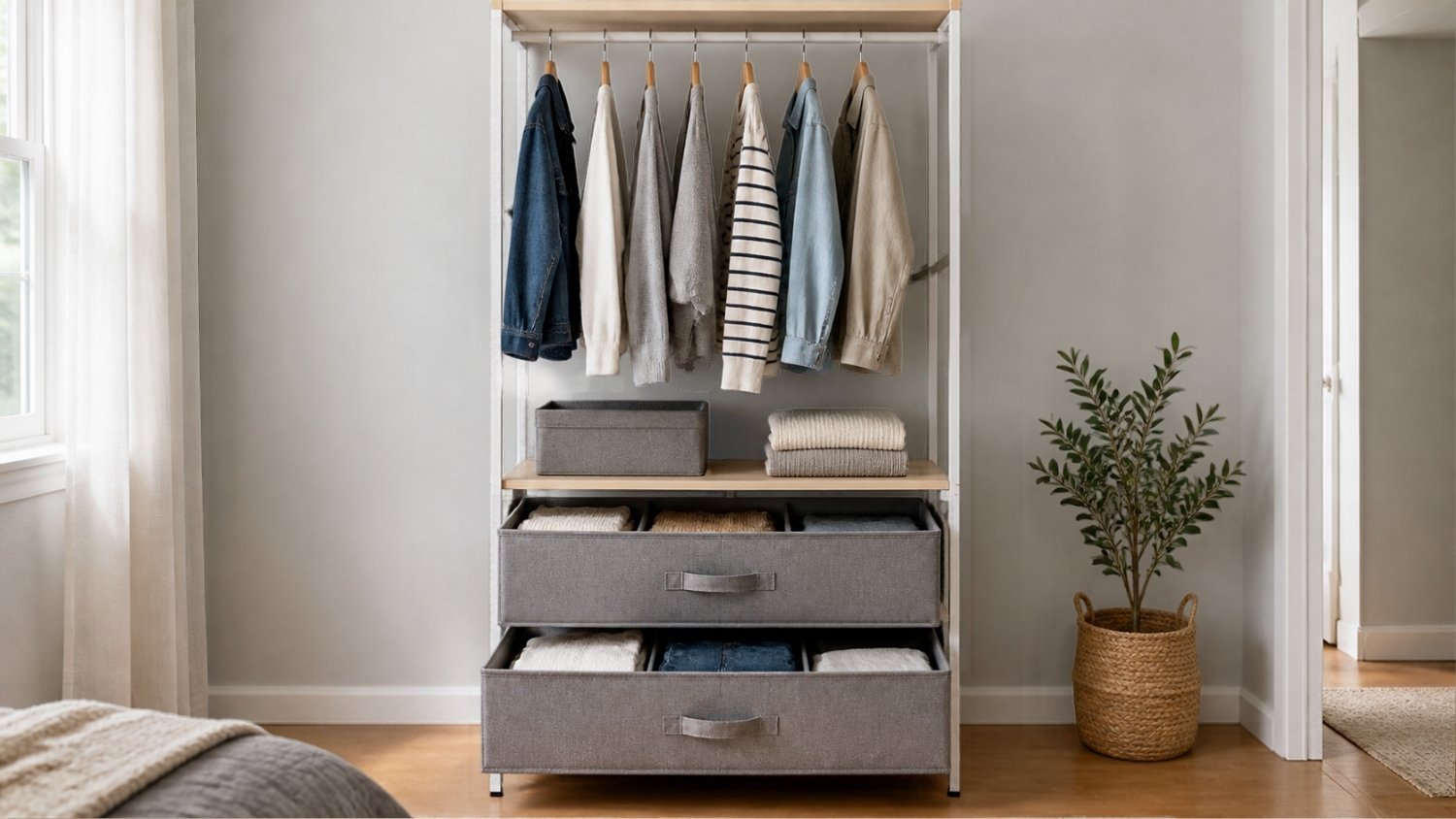
Where this sits in the closet guidesthe families, the reach-in, and the heights
The grades sit inside four families, set out in closet systems, and which of them fit a reach-in is a separate question. If you are taking the door off instead, see open closets.
The rod height to put the money into is on closet rod height, the shelf above it on standard closet shelf height, and the measuring comes first on how to measure a closet.
Questions people ask3 questions
Is a cheap closet system worth it?
It hangs your clothes at the same heights. What you give up is the built in look, hidden hardware and self closing drawers.
What is the cheapest way to organize a closet?
Add a second rod to the short garment section and get the shoes off the floor. Neither needs a system.
Do cheap closet systems last?
The rod, its fixing and the span between supports decide that, so put the money there. Fabric drawers are the part that loses its shape first.
Measure, then spend
Five printable pages: a measuring sheet for your own numbers, the standard rod heights and shelf depths, three layouts that work, and a shopping checklist.
More closet fixes, one problem at a time, in our closet organization guide.
Saved in this browser, on this device. No account, nothing sent to us, and it goes if you clear your browsing data. See what you saved