
Home / Closet
Room guide
Closet organization
Every closet organization problem, one fix at a time. Start with yours.

Start here
The five numbers to measure first
Almost every closet mistake is a measuring mistake, and here is how to measure a closet properly. Take these five numbers before you buy anything, and nothing goes back in the box.
Free printable
Closet Layout Planner
The 5 numbers that decide whether an organizer fits, and 3 layouts that work in a real closet. 5 printable pages, free.
The three kinds of closet, and the question each one asks
Closet organization advice contradicts itself because the word closet covers three different spaces. Each has a different bottleneck, and fixing the wrong one is why a closet can be full of organizers and still not work.
The reach in closet. One wall, a door you stand outside of, usually a single rod and a shelf above it. Width is fixed and cannot be bought. The only question that matters here is how much of the height you are using, because the band between the hanging clothes and the shelf is almost always empty air. Our narrow closet layout guide works through this one.
The walk in closet. You stand inside it, so part of the floor is corridor and cannot hold anything. The question here is the corners, where two walls of hanging clothes meet and the end of each rod becomes hard to get at. A walk in closet with rods on three walls holds less than people expect for exactly that reason.
No closet at all. A garment rack, a chest of drawers, an armoire, or some combination standing in the room. The question is what holds weight, because nothing is attached to the structure of the house. A garment rack is sold by width and used by weight, and the figure that matters is the one its listing publishes under load.
Wire, modular, or custom: what each tier actually buys you
Closet systems come in three tiers, and the gap between them is less about quality than about who does the thinking.
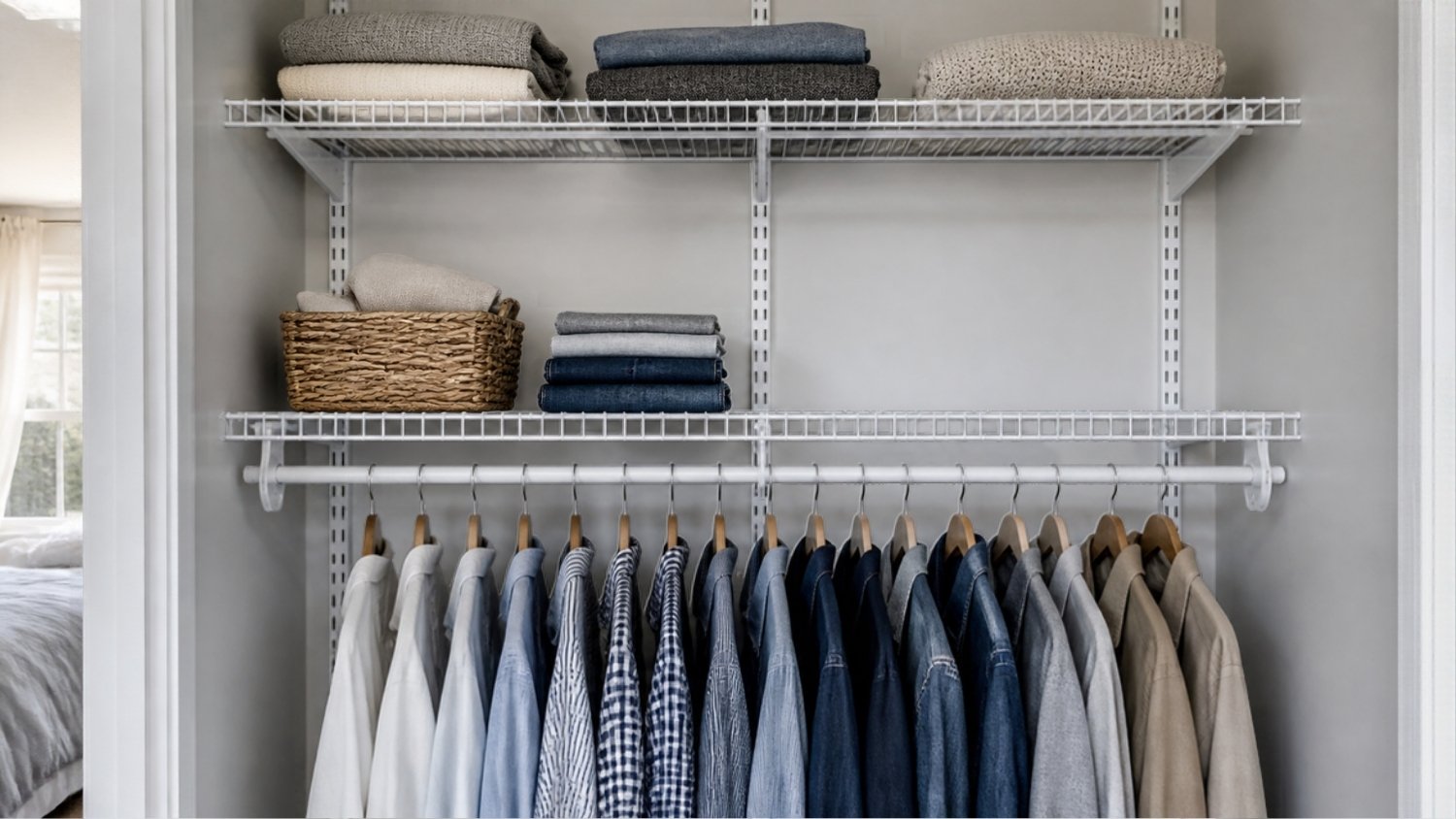
Wire closet shelving is what came with the house. It hangs off the wall rather than standing on the floor, which leaves the closet floor clear, and it is the tier most people already own. Two things to know about it. The fixed bracket version builders install is not adjustable: moving a shelf means new holes, and it is the track hung version that lets you change your mind later. And small or soft things fall through the wires or tip over, which a shelf liner cut to size takes care of for the price of the liner.
A modular closet organizer system is ready made panels, rods, shelves and drawer units that you combine yourself. You are buying components that are already sized to fit each other, which removes the measuring and cutting. This is the tier most closet system comparisons are about, and the version with drawers costs more than the version without, because a drawer is a box with hardware and a shelf is a board.
Custom closet design means someone measures your closet and builds to it. You are paying for the measuring, the fitting and the finish. It is the right answer for an awkward shape, a sloped ceiling or a room where the closet is furniture you will see every day. It is the wrong answer for a standard reach in closet, where a modular system lands in the same place for less. We set out what drives the price in what closet built-ins cost.
Double the rod before you buy anything
Doubling the rod is usually the cheapest way to gain real hanging space, and it needs one measurement.
Shirts, blouses, jackets and folded pants do not need the full height of the closet. Hang the longest of those items on the rod, measure from the rod down to the hem, and that is the depth of your top band. Everything below it is room for a second rod.
What cannot be doubled: dresses, coats, long skirts and anything full length. Those need one tall section, and the usual layout is a double hung run across most of the closet with a single full height section at one end. Our measuring guide has the numbers that set each band.
Doubling the rod is also what makes the rest of the closet work, because it is what frees the floor and the shelf for everything that is not on a hanger.
Closet shelving: what goes in which band
A closet has three horizontal bands and they are not interchangeable. Between knee and shoulder is the band you use without thinking, and it should hold what you reach for daily. Above shoulder height is for the weekly and the seasonal. Below the knee is for shoes and for anything in a bin you pull out rather than reach into.
Shelf depth is set by what you fold, not by the closet. Fold your bulkiest sweater the way you actually fold it and measure that. A shelf deeper than that grows a row at the back you stop seeing, and a shelf shallower than that means every stack overhangs.
Bins and baskets are what make a deep or high shelf usable, because they turn a shelf you reach into blindly into a container you take down. Match the bin to the shelf before you buy, in that order. We go through the sizes that actually fit in closet bins and baskets.
Shoes, and the one measurement that decides the rack
Shoes are the category that defeats most closets, because the pairs multiply and they all want floor.
A closet shoe rack on the floor is the fastest to use and the first thing to look untidy. A hanging shoe organizer uses the rod and costs you hanging space. A shelf keeps shoes visible and off the floor, which tends to be the version that stays tidy.
Whichever you pick, your tallest boot sets the spacing. Measure it standing up, and if the answer is a boot that will not fit any shelf spacing you are willing to give it, store boots separately rather than sizing the whole rack around them. There is more in closet shoe organizers.
Questions we get about closet organization
Wire shelving or solid shelves?
Wire if it is already there and you are working to a budget, with liners on the shelves that hold small things. Solid if you are putting shelving in from scratch and you fold more than you hang. A liner evens out a wire shelf, but a solid shelf is still flatter under a tall stack, which is what stops the stack leaning.
Do slim hangers actually gain space?
Yes, and the reason is simple geometry rather than marketing: a thinner hanger takes less width on the rod, so the same rod holds more garments. The gain is real and it is also finite. If your rod is already full of slim hangers, the next gain comes from doubling the rod, not from thinner hangers.
Can I put a closet system in a rental?
Check your lease first, then choose by how it mounts. A floor standing modular unit usually takes one bracket into the wall, and the unit's own instructions name what that bracket is and where it goes. One screw, one hole you fill when you leave. A wall hung system goes into the wall in several places instead of one, and what each of those places has to be is named in the system's own instructions. In a rental the honest order is: over the door first, then freestanding with its one bracket, then anything that drills to carry weight.
Where do I start if the closet is completely full?
Not with a product. Take everything out, put back only what you have worn in the last year, and measure what is left. Buying storage for a closet you have not emptied is how people end up with organizers that fit the closet and not the clothes.
Check it fits before you order
Type in the measurement you took, and the tool tells you whether the thing on screen will go in.
Watch the fix
Sixty seconds, one closet, no music
Shop this look
Everything in this closet, with the figure that decides it
Each number on the photo is one product, with the measurement its own listing publishes.
Fixes by problem
-
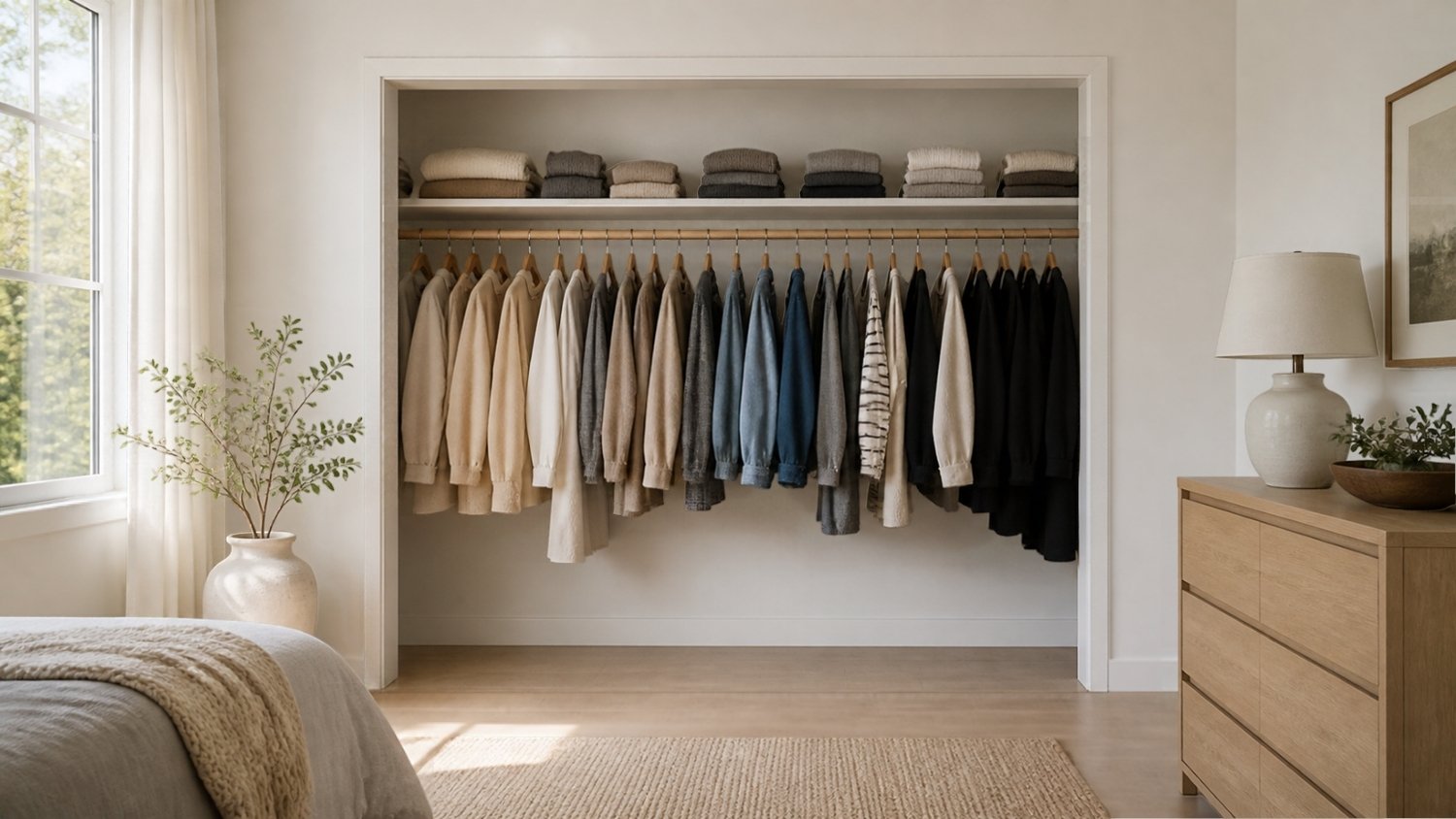
Open Closets: What Changes Without a Door
Read the fix →
-
-
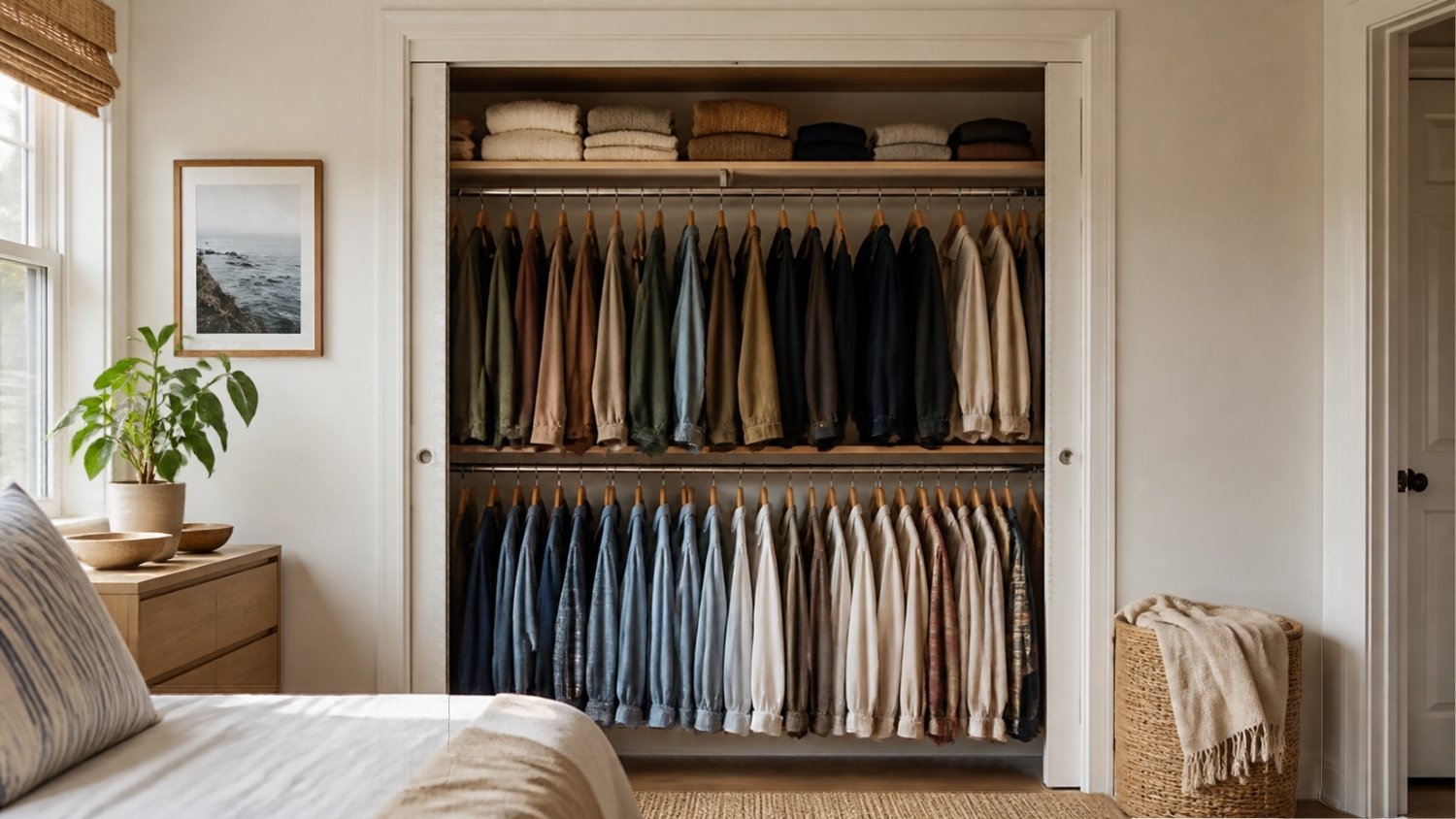
Reach-In Closet Systems: What Fits a Shallow Closet
Read the fix →
-
-
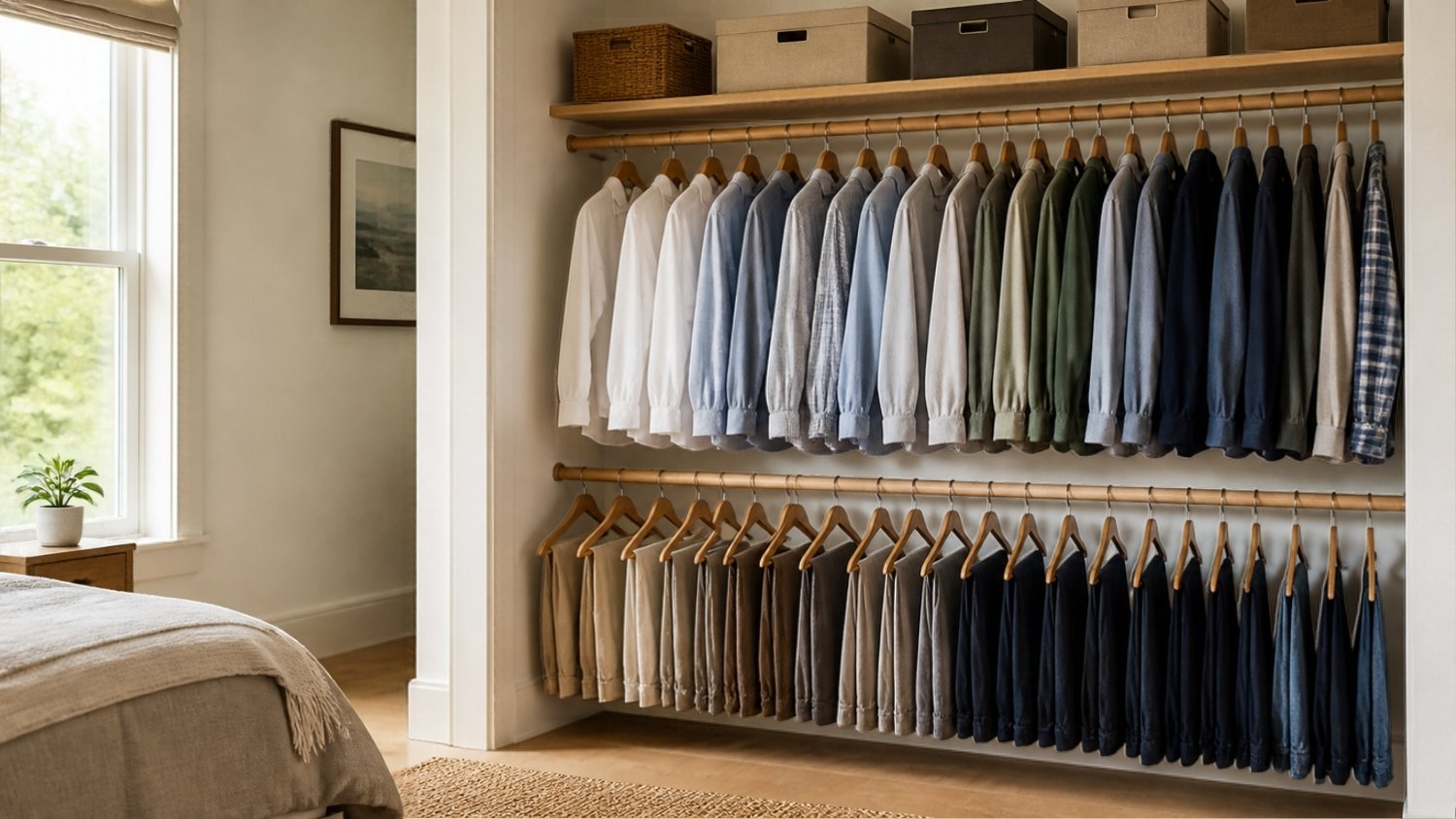
Double Hang Closet Heights: 42 and 84 Inches
Read the fix →
-
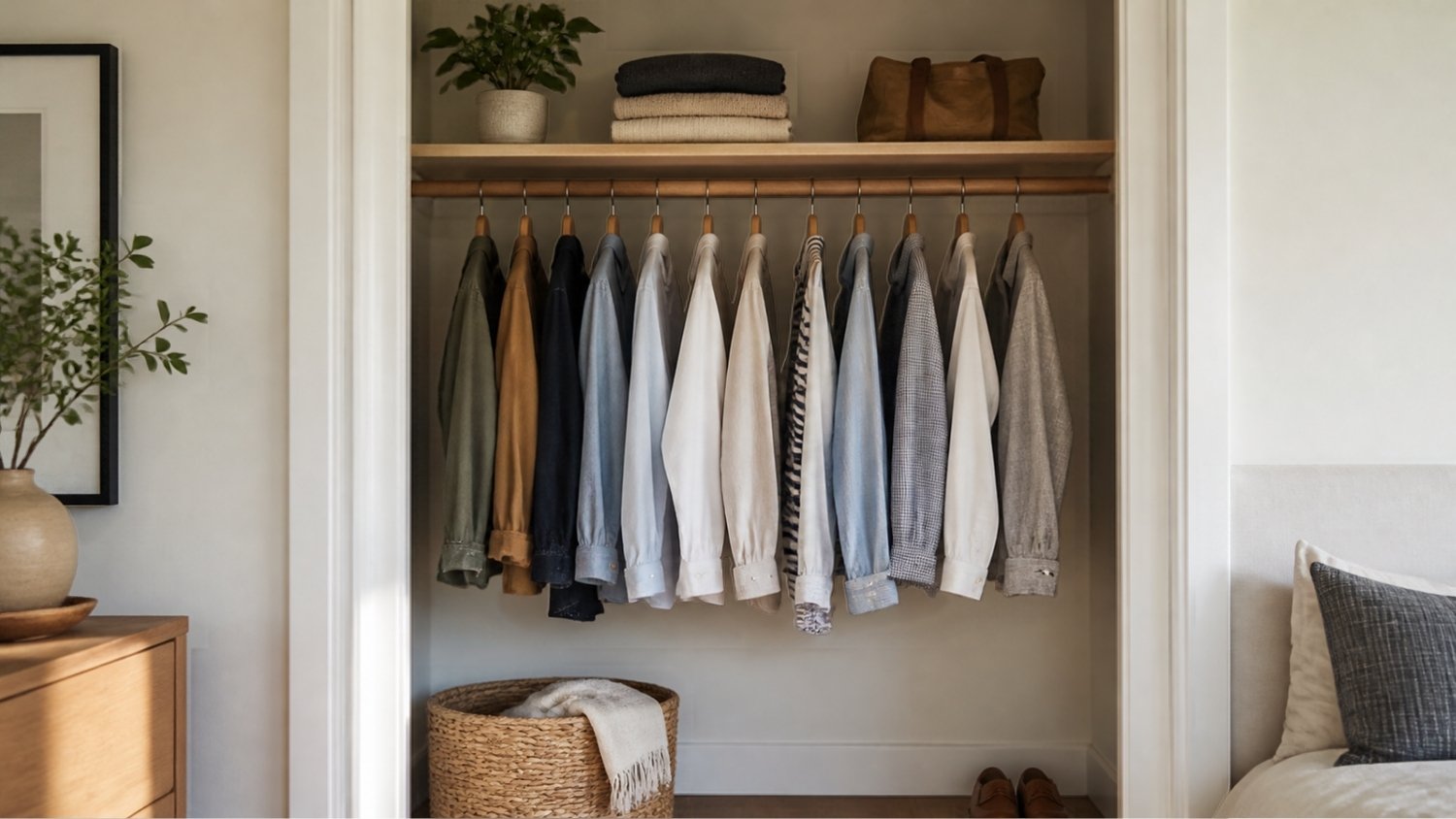
How Deep Should a Reach-In Closet Be? The Sources Disagree
Read the fix →
-
-

-

Standard Closet Shelf Height: What Each Source Publishes
Read the fix →
-
-

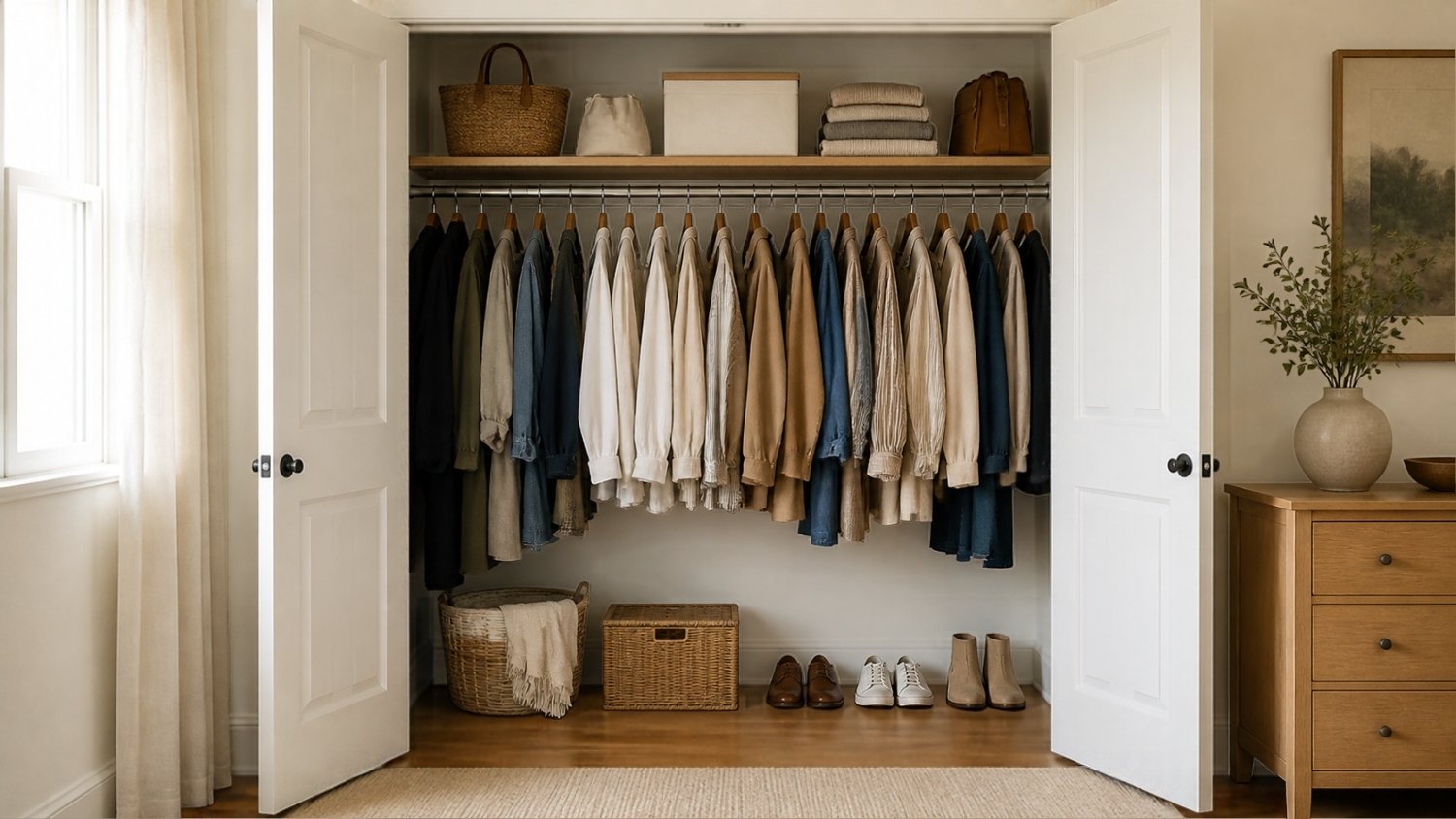
How to Measure a Closet, Step by Step
Read the fix →
-

Closet Storage Bins and Baskets: The Sizes That Actually Fit
Read the fix →
-

-
-

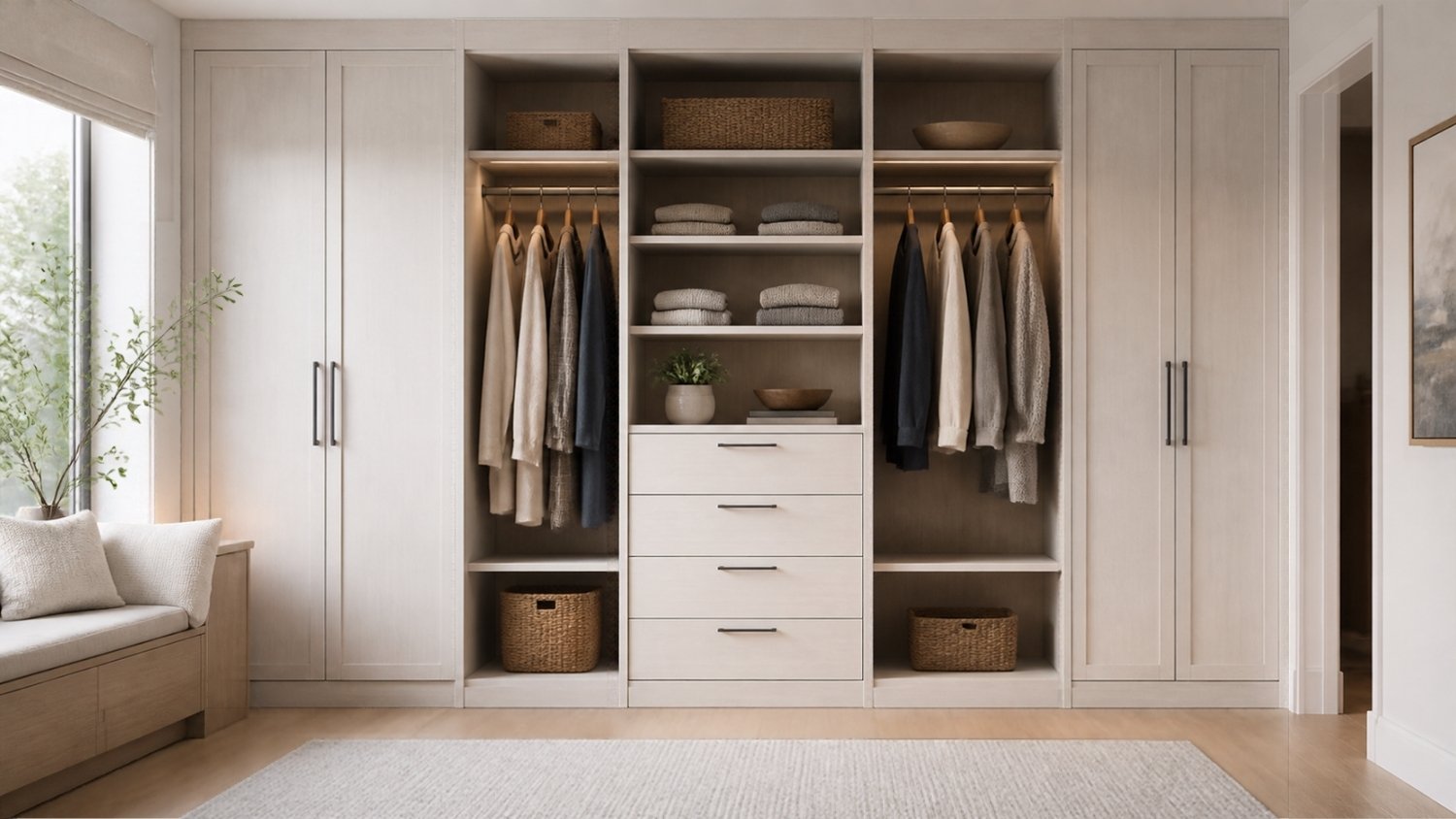
Narrow Closet Layout: How to Fit Far More In
Read the fix →
-
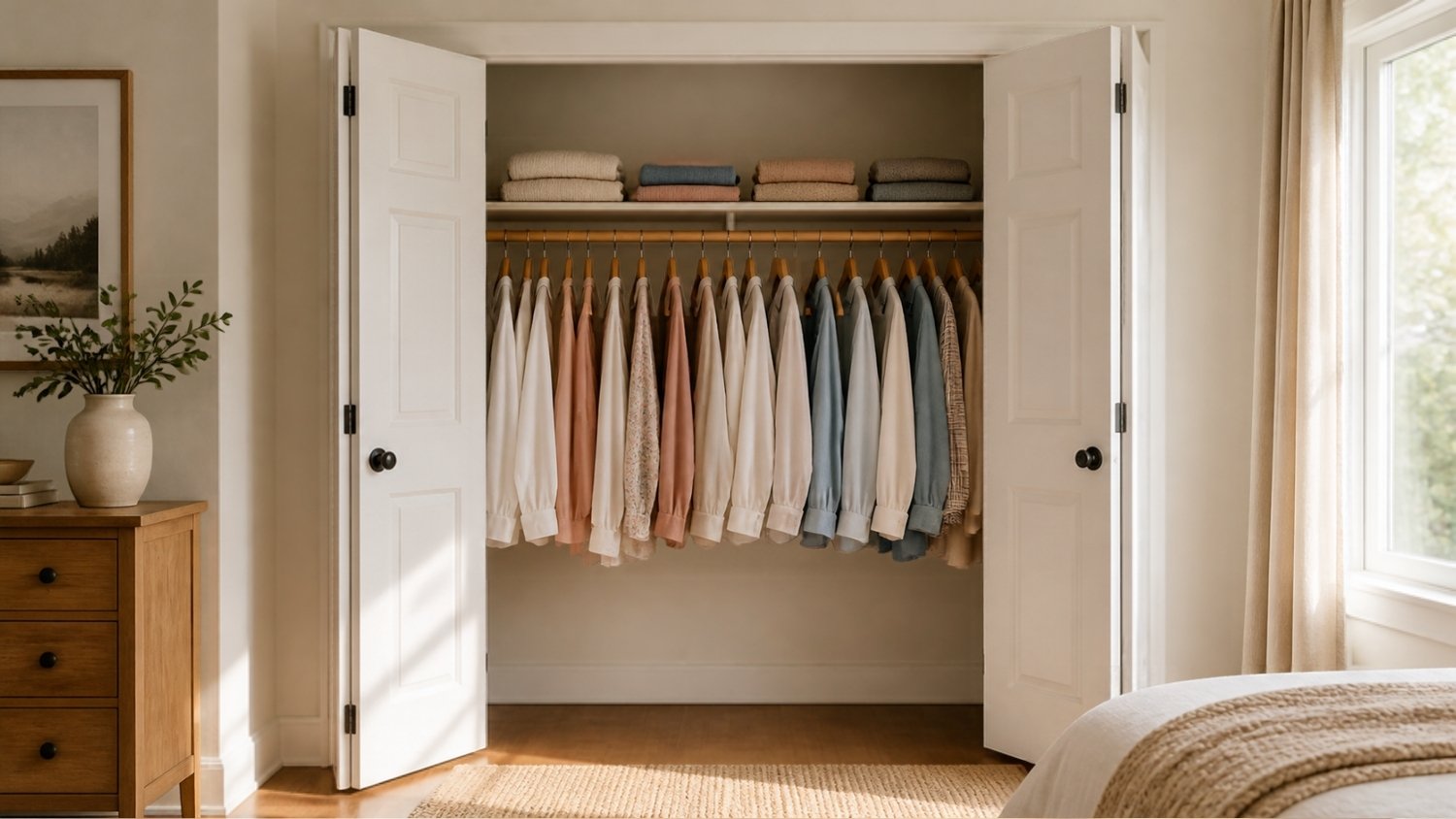
Closet Layout Dimensions: The 5 Numbers to Measure First
Read the fix →